Category: Technology

  • SOC 2 Compliance Automation: The Enterprise Playbook for Accelerating B2B Growth in 2026

    SOC 2 Compliance Automation: The Enterprise Playbook for Accelerating B2B Growth in 2026

    SOC 2 Compliance Automation title card featuring a digital security shield and cloud infrastructure icons for FreeDeets.
    Figure 1: Streamlining enterprise cybersecurity audit readiness with integrated compliance automation platforms.

    In the high-stakes world of B2B SaaS and enterprise technology, trust is the primary currency. When your prospective clients—whether they are Fortune 500 banks or HIPAA-regulated healthcare providers—review your platform, their number one concern isn’t your feature set or your pricing; it is your data security posture.

    If you cannot demonstrate verifiable data governance and cybersecurity controls, your deal will stall at the procurement stage. Historically, achieving this level of assurance, particularly the coveted SOC 2 Type II report (Service Organization Control 2), was a multi-month, manually intensive bottleneck. It involved endless spreadsheets, chaotic evidence collection, and six-figure consulting fees.

    In 2026, that manual approach is an unacceptable risk. Organizations prioritizing B2B growth and enterprise acquisition must shift toward SOC 2 Compliance Automation. This strategic investment streamlines the entire audit lifecycle, provides continuous control monitoring, and equips sales teams with the undeniable security proof required to accelerate deal velocity. Let’s explore the architecture of this critical framework.


    1. The Compliance Bottleneck: Why Manual SOC 2 Preparation Fails at Scale

    The core philosophy of SOC 2 is demonstrating that your internal security controls satisfy the Trust Services Criteria (TSC): Security, Availability, Processing Integrity, Confidentiality, and Privacy. A SOC 2 Type I report verifies your controls at a point in time, while Type II verifies they worked continuously over a period (usually 6 to 12 months).

    Manually preparing for a Type II audit involves gathering hundreds of items of evidence: policy documents, server configuration logs, employee training records, change management logs, and pen-test results. For any organization using cloud infrastructure (AWS, Azure, GCP) or distributed DevOps workflows, this process is an operational nightmare.

    🛑 Traditional SOC 2 Preparation Pitfalls

    • Operational Overhead: Hundreds of hours stolen from engineering and DevOps teams just to collect logs and screenshots.
    • Human Error & Data Gaps: A single missing screenshot during the observation period can lead to a qualified audit opinion (audit failure).
    • Point-in-Time Visibility: Continuous Type II monitoring is impossible with spreadsheets, leading to compliance drift.
    • Sales Friction: Inability to provide proof of security during security questionnaires delays deals by months.

    2. Unlocking Commercial Velocity: Strategic Benefits of SOC 2 Compliance Automation

    Shifting from manual preparation to compliance automation is not just an IT expense; it is a fundamental business strategy that pays clear dividends across every commercial vertical:

    A. Significant Acceleration of Enterprise Sales Velocity

    The single greatest cause of deal fatigue in B2B enterprise sales is the procurement security review. A standard security questionnaire can include hundreds of technical questions about encryption protocols, IAM policies, and incidence response workflows.

    Compliance automation tools generate an auditable, real-time “Trust Center” or “Security Portal.” Sales teams can instantly share this dynamic overview, proving compliance Type II status and accelerating procurement approvals by up to 50%.

    B. Continuous Data Security & Threat Governance

    Standard manual preparation focus on creating compliance proof only when an audit is upcoming. Automation changes this from episodic compliance to continuous security monitoring.

    These platforms integrate directly into your cloud provider (AWS IAM, GCP security groups) and SaaS tools (Jira change logs, GitHub PR approvals). If a control deviates from its compliant state—for instance, if an IAM policy grants public access to an S3 bucket—the system generates an instant alert for remediation, preventing both security breaches and audit failure.

    C. Radical Cost Optimization & Resource Allocation

    Manual SOC 2 Type II readiness often requires six figures in consulting fees to external CPAs and advisors just for evidence gathering. Automation eliminates the majority of this manual labor. By automating up to 80-90% of evidence collection, organizations significantly lower total audit costs while liberating valuable engineering talent from administrative tasks.


    3. The Integrated Compliance Stack: Connecting Automation to Enterprise Databases

    Automated compliance workflow diagram illustrating data ingestion, classification, continuous monitoring, and remediation steps for FreeDeets.

    The effectiveness of compliance automation depends entirely on its connectivity. It is not an isolated tool; it acts as an orchestration layer connecting your entire technical ecosystem.

    1. Cloud Infrastructure & Telemetry (AWS, Azure, GCP): For continuous monitoring of network security configurations, storage encryption status, and server access logs.
    2. Identity & Access Management (Okta, Azure AD): Automatically verifying that least-privilege principles are enforced and terminated employee accounts are instantly deactivated.
    3. DevOps & Version Control (GitHub, GitLab, Jira): Proving change management compliance—verifying every code deployment has passed code reviews, security testing, and required approvals.
    4. HRIS & Policy Management (Rippling, Gusto, Slack): Streamlining employee security awareness training, policy acknowledgment workflows, and background check verification during onboarding.

    4. Compliance Governance and Cybersecurity Insurance in 2026

    Achieving SOC 2 verification isn’t just about closing B2B deals; it is now critical for maintaining complex corporate governance structures and securing high-value cyber liability insurance policies.

    As cyber risks evolve in 2026, insurance carriers are increasingly demanding proof of rigorous data security controls during underwriting. A clean SOC 2 Type II report—coupled with continuous monitoring—demonstrates a lower risk profile, directly impacting cyber insurance premium costs and coverage limits.


    Enterprise corporate building overlay with cybersecurity shield matrix symbolizing SOC 2 compliance governance and B2B scale for FreeDeets.

    5. Blueprint for Success: Deploying Compliance Automation for B2B Growth

    Phase 1: Gap Analysis & TSC Scoping — Use the automation platform to perform an instant gap analysis against your required Trust Services Criteria to prioritize remediation.

    Phase 2: Policy & Procedure Remediation — Leverage standard, CPA-vetted policy templates provided by the platform, adapting them to your corporate governance requirements.

    Phase 3: Deep Technical Integration — Connect the platform to your critical systems (cloud, IAM, CI/CD) and configure automated alerts for control failures.

    Phase 4: Select Your Audit Firm Early — Automation speeds up readiness, but you still need an independent CPA firm for the actual Type II audit. Choose a firm that is experienced in reviewing evidence from compliance automation platforms.


    Enterprise SOC 2 Compliance FAQs

    What is the difference between SOC 2 Type I vs SOC 2 Type II?

    A SOC 2 Type I report verifies your security controls are properly designed at a specific point in time. A SOC 2 Type II report—which is what most enterprise procurers require—verifies that those same controls were operating effectively continuously over an observation period, usually 6 to 12 months.

    Does compliance automation replace the need for an external auditor?

    No. Automation prepares you for the audit by collecting evidence and monitoring controls, but the actual SOC 2 report must be issued by an independent, licensed CPA (Certified Public Accountant) after they review the evidence collected.

    How much does enterprise SOC 2 compliance automation cost?

    Pricing for SOC 2 automation typically uses a tiered SaaS model, scaling with the organization’s employee count, infrastructure complexity, and required Trust Services Criteria. For mid-sized enterprises, implementation costs can range from $15,000 to $60,000+ per year, significantly lowering consulting overhead.

    Final Thoughts

    In 2026, data security is the fundamental requirement for B2B success. Organizations prioritizing scalable growth cannot afford the operational drag of manual compliance preparation. SOC 2 compliance automation is the essential corporate investment that accelerates enterprise sales, provides verifiable data governance, and empowers sales teams to close larger deals faster.

  • Unleashing the Power: The Strategic Advantages of Cutting-Edge Technology in the Modern Enterprise

    Unleashing the Power: The Strategic Advantages of Cutting-Edge Technology in the Modern Enterprise

    A futuristic visualization of cutting-edge technologies as a powerful central hub. A stream of blue and purple light flows from a central node, transforming into neural network structures (AI), secure linked cubes (Blockchain), and qubits (Quantum Computing), radiating across a modern cityscape. The scene includes stylized binary code, circuit patterns, and cloud icons. Text at the top reads "UNLEASHING THE POWER".

    In an era defined by relentless digital transformation, relying on legacy systems is a silent growth killer. Today’s global market demands hyper-efficiency, real-time decision-making, and robust cybersecurity frameworks. Cutting-edge technology—spanning Enterprise Generative AI, Quantum Computing, Autonomous Edge Networks, and Zero-Trust Cybersecurity—has shifted from a competitive luxury to an absolute operational imperative.

    For modern businesses operating in high-velocity markets like the United States, integrating next-generation tech architectures unlocks unprecedented operational leverage, drastically lowers customer acquisition costs (CAC), and builds long-term enterprise value.

    Key Strategic Takeaways

    • Operational Scalability: Cloud-native architectures and hyper-automation allow organizations to scale operations exponentially without linear overhead costs.
    • Predictive Intelligence: AI-driven data pipelines convert raw enterprise data into actionable, high-precision forecasting models.
    • Risk Mitigation: Advanced cryptographic protocols and Zero-Trust frameworks shield organizations against evolving global cyber threats.
    • Market Dominance: Early adoption of disruptive technologies creates high barriers to entry against industry competitors.

    Defining the Next-Gen Tech Stack: What Powers Modern Enterprises?

    To understand the strategic advantages of cutting-edge innovation, enterprise leaders must first understand the core pillars driving modern digital architecture. The current technology landscape is governed by six foundational pillars:

    1. Enterprise Artificial Intelligence and Machine Learning (AI/ML)

    Artificial Intelligence has evolved far beyond automated rules-based systems. Modern machine learning models utilize deep neural networks to process unstructured data, generate natural language code, automate complex financial modeling, and handle multi-channel customer interactions autonomously. High-CPC sectors like fintech and insurtech heavily rely on predictive ML algorithms to assess risk profiles in milliseconds.

    2. Edge Computing and Autonomous Systems

    By shifting computational processes away from centralized cloud data centers and closer to the data source (IoT sensors, smart machinery, connected vehicles), edge computing drastically reduces latency. This enables sub-millisecond execution essential for real-time applications such as autonomous logistics fleet management, remote surgical systems, and automated high-frequency trading.

    3. Next-Generation Cloud Architectures & Serverless Infrastructure

    Modern enterprises are migrating from traditional monolithic servers to cloud-native, microservices-driven serverless architectures. This allows dynamic resource allocation, meaning businesses only pay for the exact compute power consumed per millisecond, dramatically optimizing capital expenditure (CapEx).

    4. Blockchain, Smart Contracts & Distributed Ledger Technology (DLT)

    Beyond digital assets, enterprise DLT provides immutable, cryptographically secure record-keeping. Smart contracts eliminate middleman friction in international trade, supply chain verification, real estate transactions, and complex legal escrow agreements.

    5. Zero-Trust Cyber Architecture and Quantum-Resistant Encryption

    As cyber attacks grow in sophistication, legacy perimeter-based security models are obsolete. Cutting-edge cybersecurity enforces a continuous verification model (“Never Trust, Always Verify”) backed by AI-driven threat mitigation and post-quantum cryptographic standards.

    6. Quantum Computing (The Next Frontier)

    While still emerging, quantum processing leverages qubits to compute complex, multi-variable simulations in seconds—tasks that would take classical supercomputers millennia to solve. Early adopters in pharmaceuticals, material science, and financial risk modeling are already laying the groundwork for market dominance.

    6 Core Strategic Advantages of Implementing Advanced Technology

    1. Exponential Productivity Gains via Autonomous Workflows

    Manual data entry, multi-step approvals, and repetitive reporting consume vast operational resources. Through Hyperautomation—combining Robotic Process Automation (RPA), Optical Character Recognition (OCR), and Generative AI—organizations can fully automate back-office and front-office workflows. This operational pivot frees elite human talent to focus on business development, strategic planning, and creative innovation.

    2. Hyper-Personalization and Superior Customer Experience (CX)

    Today’s North American consumer demands instant, friction-free customer support. AI-driven personalization engines evaluate historical browsing behavior, purchase history, and real-time intent metrics to offer hyper-targeted recommendations. Augmented Reality (AR) tools let consumers preview physical goods in their homes prior to purchase, significantly boosting conversion rates while reducing product return rates by up to 30%.

    3. Precision Decision-Making via Big Data Analytics

    Data is the most valuable raw asset of the 21st century. However, raw data without context is useless noise. Advanced analytics platforms aggregate vast data silos into centralized dashboards, delivering predictive insights regarding supply chain bottlenecks, customer churn probabilities, and market shifts before they manifest in financial statements.

    4. Structural Cost Optimization and Resource Allocation

    While adopting cutting-edge technology requires upfront capital expenditure, its long-term ROI is profound. Serverless computing reduces idle server infrastructure costs, predictive maintenance algorithms prevent costly industrial machinery breakdowns before they happen, and automated energy management systems drastically reduce utility costs in smart facilities.

    5. Enterprise-Grade Security and Compliance Automation

    Data breaches cost enterprises millions in direct financial damages, legal penalties, and reputational loss. Implementing state-of-the-art security postures—such as automated threat detection, end-to-end encryption, and continuous compliance monitoring for SOC 2, HIPAA, and GDPR—ensures data integrity and maintains customer trust in regulated environments.

    6. Building Long-Term Enterprise Moats

    Businesses that systematically test and deploy emerging technologies construct formidable competitive moats. By establishing superior operational speed, proprietary algorithmic workflows, and network-effect data loops, technological first-movers often capture the majority market share in their respective niches.

    Industry Breakdown: Impact of Advanced Technology Across US Sectors

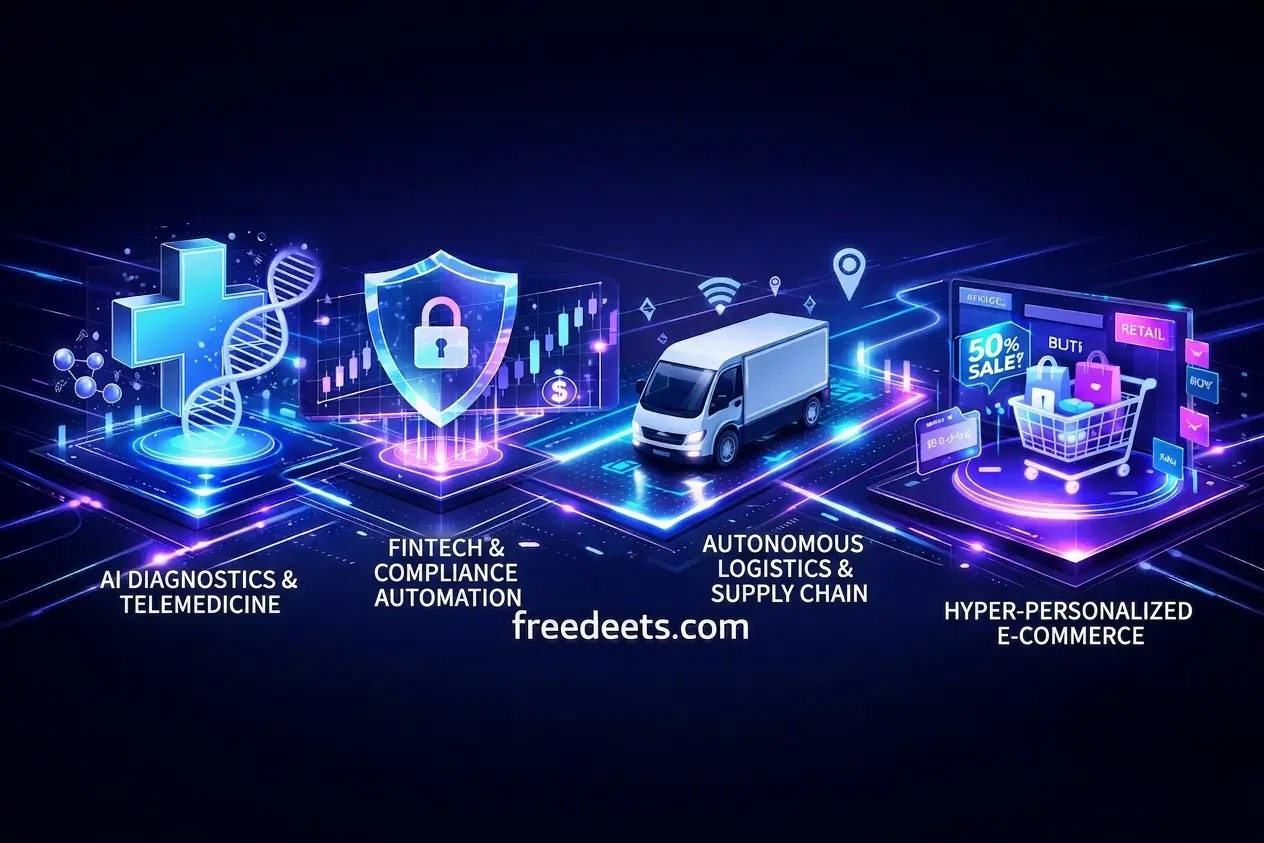
    Isometric digital illustration depicting the impact of cutting-edge technology across healthcare, fintech, supply chain logistics, and retail sectors.

    Industry Sector Cutting-Edge Application Core Strategic Benefit
    Healthcare & Biotech AI Diagnostics, Telemedicine, Genomic Sequencing Accelerated drug discovery, early disease detection, reduced patient care overhead.
    Financial Services (Fintech) Algorithmic Risk Models, DLT Escrow, Quantum Analytics Instant credit underwriting, zero fraud latency, automated compliance auditing.
    Supply Chain & Logistics IoT Sensors, Autonomous Delivery, Predictive Stocking Zero-waste inventory management, end-to-end cargo visibility, lower freight costs.
    E-Commerce & Retail Visual AR Try-Ons, Spatial AI, Dynamic Pricing Engines Increased cart conversion, optimized pricing margins, tailored buyer journeys.
    Cybersecurity & Defense Zero-Trust Enclaves, AI Anomaly Detection Real-time threat containment, protection of intellectual property and consumer privacy.

    Implementation Framework: How to Deploy Next-Gen Tech Successfully

    Deploying complex tech solutions without a structured playbook can lead to scope creep, budget overruns, and organizational friction. Enterprise leaders should execute deployment through a structured four-phase roadmap:

    Phase 1: Strategic Alignment and Needs Assessment

    Avoid adopting technology simply for the sake of novelty. Audit current business processes to identify clear operational bottlenecks, revenue leaks, or customer friction points. Quantify the target Return on Investment (ROI) and key performance indicators (KPIs) before selecting software or hardware vendors.

    Phase 2: Legacy Infrastructure Modernization

    Cutting-edge applications require modern foundations. Ensure your data pipelines are cleansed, unified, and accessible via secure APIs. Refactor legacy monolithic databases into scalable cloud-based environments capable of supporting high-frequency API calls and compute-heavy workloads.

    Phase 3: Up-skilling, Change Management, and Culture

    Technology is only as effective as the workforce operating it. Address internal skill gaps through comprehensive training bootcamps or strategic hiring. Establish a culture that encourages digital literacy, iterative testing, and cross-departmental collaboration.

    Phase 4: Pilot Testing, Iteration, and Scaling

    Begin implementation with a controlled Proof of Concept (PoC) within a single business unit. Measure performance metrics against baseline KPIs, iterate based on user feedback, and systematically scale the solution across the wider organization once stability and security are proven.

    Navigating Challenges: Risk Mitigation & Ethical Governance

    While the advantages of cutting-edge technology are immense, organizations must navigate clear risks to protect their operational continuity:

    • Algorithmic Bias and Ethical AI: Ensure machine learning models are trained on unbiased data sets to prevent discriminatory outcomes in lending, hiring, or medical triaging.
    • Data Privacy Regulations: Ensure strict adherence to regional and international data protection laws (e.g., CCPA/CPRA in California, GDPR in Europe) to avoid severe regulatory fines.
    • Vendor Lock-In: Avoid over-reliance on proprietary vendor systems by prioritizing open-source standards, multi-cloud strategies, and interoperable software frameworks.

    Conclusion: Embracing the Technological Horizon

    The pace of technological innovation will never be as slow as it is today. As artificial intelligence, edge computing, and distributed networks continue to mature, the gap between tech-forward leaders and legacy laggards will widen exponentially. For organizations targeting sustainable growth in competitive markets like the United States, adopting cutting-edge technology is not merely a strategic option—it is the foundational key to unlocking future value, scale, and resilience.

    By taking a proactive, strategically aligned, and ethically governed approach to technology adoption, enterprises can navigate digital disruption and build an enduring market leadership position in the global economy.

  • Beyond the Chatbot: How Enterprise Agentic AI is Redefining Customer Experience in 2026

    Beyond the Chatbot: How Enterprise Agentic AI is Redefining Customer Experience in 2026

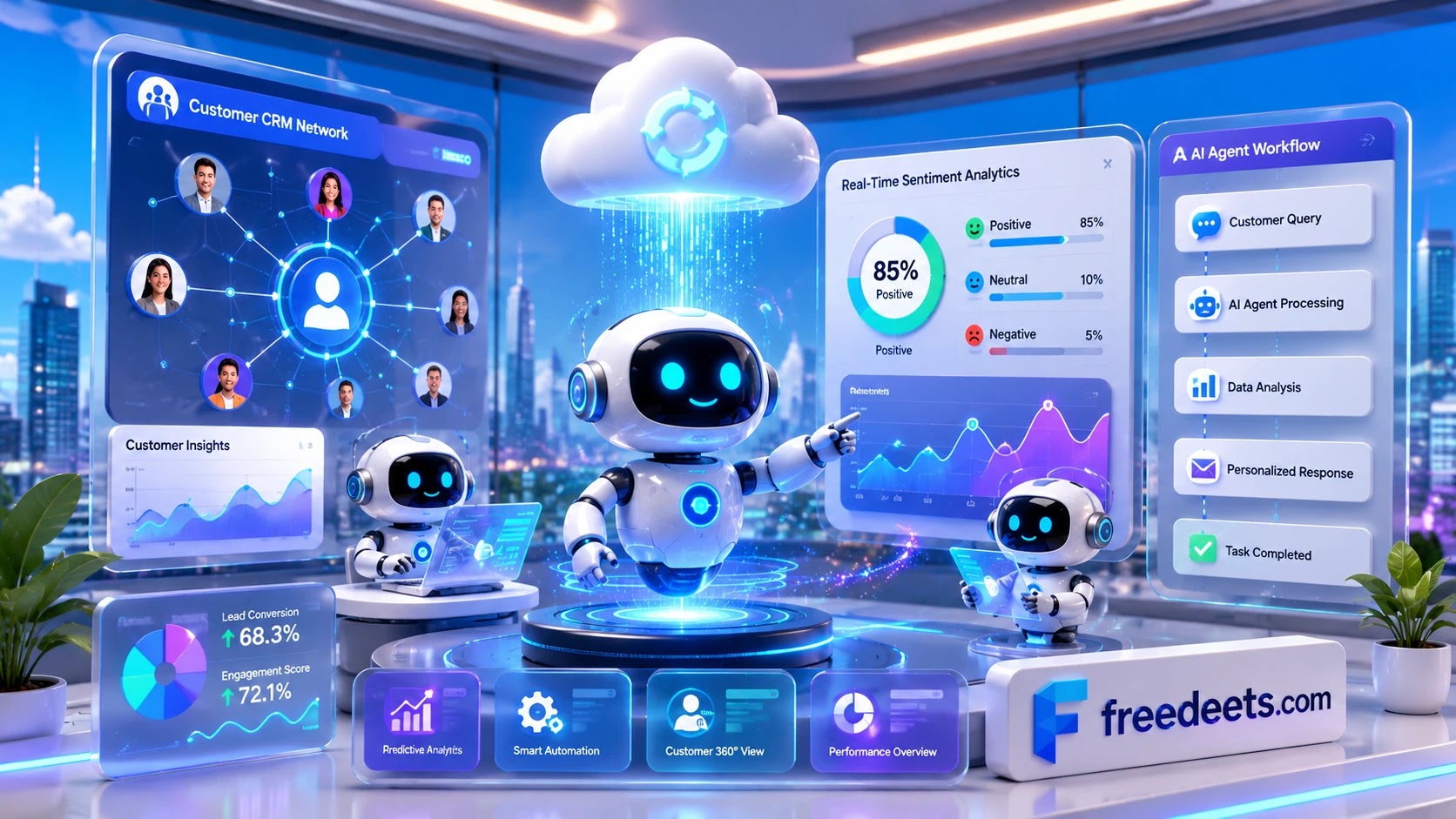
    Enterprise Agentic AI workflow banner showing autonomous artificial intelligence interacting with customer experience analytics and CRM data

    If you have interacted with a corporate customer support channel recently, you have likely noticed a massive shift. The era of clunky, rigid decision-tree chatbots that endlessly loop you through automated prompts is officially dead.

    In 2026, Artificial Intelligence has matured from basic text-generation experiments into sophisticated, enterprise-grade Agentic AI models. Today’s CX landscape relies on autonomous digital workers that possess situational context, execute real-time backend software actions, predict consumer intent before a query is typed, and blend seamlessly with human escalation teams.

    For modern businesses—ranging from fast-growing e-commerce stores to Fortune 500 enterprise SaaS providers—delivering an exceptional Customer Experience is no longer a luxury cost center. It is the single greatest competitive moat in a saturated global market. Let’s explore how artificial intelligence is fundamentally rewriting the playbook on customer engagement, brand loyalty, and operations.


    1. The Evolution of CX: From Reactive Support to Proactive Orchestration

    Historically, customer service departments operated under a purely reactive paradigm: a customer experienced a issue, submitted a support ticket or made a phone call, and waited for an agent to manually review their account records. This process was notoriously slow, costly, and prone to human error.

    AI-driven CX completely flips this architecture upside down. Rather than waiting for friction to occur, enterprise AI engines continuously monitor telemetry data, user behavior, and transaction pipelines to address issues in real time.

    📊 The 2026 CX Paradigm Shift

    • Legacy CX (2018–2022): Keyword-matching bots, delayed ticket queues, fragmented customer data silos, and rigid business hours.
    • Generative CX (2023–2024): Automated email drafting, smart summary notes for agents, and generative FAQ responses.
    • Agentic CX (2025–2026+): Autonomous multi-modal execution, proactive anomaly resolution, real-time sentiment analysis, and zero-friction cross-platform synchronization.

    According to research from leading tech advisory firms, enterprise organizations deploying agentic AI across their CX operations report an average 30% to 50% reduction in resolution times alongside significant improvements in Net Promoter Scores (NPS).


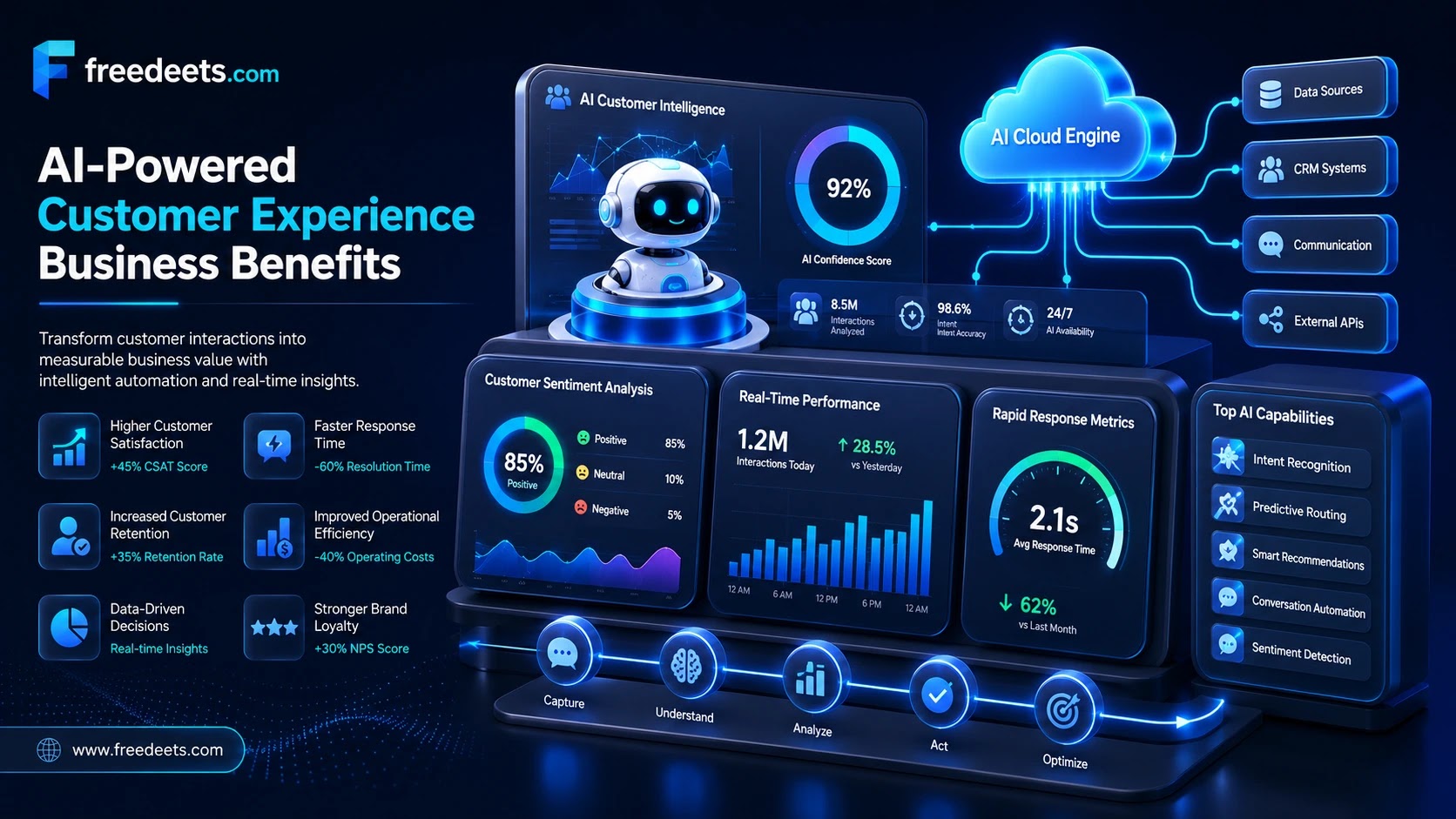
    Infographic displaying the enterprise benefits of AI in customer experience, including 24/7 autonomous support and real-time analytics

    2. Strategic Business Benefits of AI in Customer Experience

    Implementing artificial intelligence within your customer touchpoints provides tangible economic and operational returns across every metric that matters to executives.

    A. Hyper-Personalization at Unlimited Scale

    Traditional marketing and support personalization used to mean inserting a first name tag into an automated email. Modern AI algorithms process terabytes of unstructured customer data—browsing velocity, past purchasing cycles, device types, geographical patterns, and even real-time mouse movements—to construct dynamic user profiles. This enables brands to present tailored offerings, content, and solutions unique to every individual user simultaneously.

    B. 24/7/365 Autonomous Operational Capability

    Consumers in the United States and globally expect instantaneous gratification. Modern AI agents do not log off at 5:00 PM, take holiday breaks, or suffer from fatigue during high-volume promotional events like Black Friday. They ensure every customer query receives an intelligent response instantly, drastically curbing abandon rates and cart abandonment.

    C. Drastic Cost Optimization & Agent Empowerment

    By automating routine tier-1 queries (such as shipping status checks, password resets, and simple return processing), AI drastically reduces ticket handling costs. More importantly, it liberates human customer service professionals from monotonous tasks, allowing them to step into high-value roles that demand emotional empathy, executive judgment, and complex negotiation.

    Metric / Feature Human-Only CX AI-Orchestrated CX
    Average Response Time 15 minutes – 24 hours Instant (< 2 seconds)
    Operational Availability Standard Business Hours 24/7/365 Continuous
    Cost Per Resolved Ticket $6.00 – $12.00 $0.25 – $1.50
    Data Processing Volume Limited to active logs Petabytes in real-time

    3. Key AI Technologies Driving Modern Customer Touchpoints

    To understand the full scope of this transformation, we must unpack the technical core enabling modern CX tools:

    • Large Language Models (LLMs) & Natural Language Understanding (NLU): Enables software to comprehend context, slang, typos, and emotional undertones rather than matching isolated keywords.
    • Predictive Analytics & Machine Learning: Forecasts churn probability and flags customers who are showing signs of dissatisfaction before they issue a cancellation request.
    • Real-Time Sentiment Analysis: Monitors active voice calls or text chats for tone shifts, automatically routing escalated cases to specialized senior managers.
    • Autonomous API Execution (Agentic AI): Allows the AI system to actually perform operations inside databases—such as processing a refund in Stripe, updating a address in Salesforce, or rebooking a flight reservation.

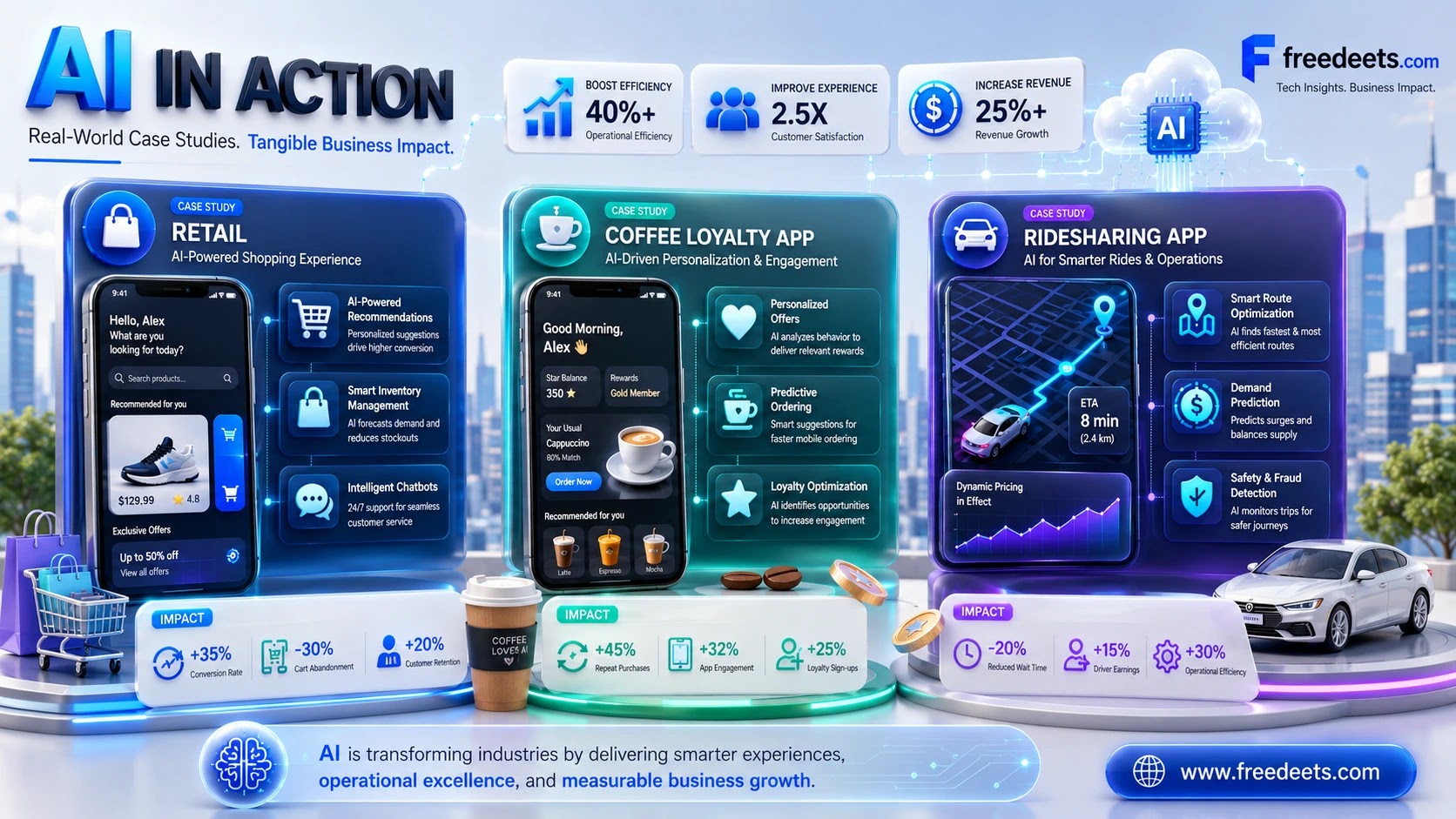
    Infographic representing real-world AI implementation case studies in mobile retail, beauty personalization, and smart mobility

    4. Enterprise Case Studies: AI Transformation in the Real World

    Leading global enterprises are showcasing the true potential of AI integration across their consumer operations:

    ☕ Starbucks: Conversational Ordering & Loyalty Intelligence

    Starbucks integrated AI into its mobile ecosystem, allowing users to place complex, highly customized food and drink orders via natural voice and text interactions. The underlying engine cross-references local store inventory, personal ordering history, and weather patterns to offer contextually relevant upsells, driving higher average order values and shorter drive-thru queues.

    💄 Sephora: Computer Vision & Personalized Beauty Matchmaking

    Sephora utilizes AI-driven virtual shade matching and personalized recommendations. By analyzing facial geometry and skin tone via smartphone camera sensors, the AI accurately maps products to individual users. This interactive experience bridges the gap between online shopping and physical retail, decreasing return rates significantly.

    🚗 Uber: Dynamic Route Optimization & Predictive Support

    Uber relies on deep learning models to predict traffic congestion, calculate precise ETAs, dynamically balance pricing structures, and manage automated support tickets. If a ride deviates significantly from the expected route, AI safety protocols automatically initiate check-ins with the passenger, ensuring both safety and quality control.


    5. Navigating Ethical Considerations, Data Governance, and Trust

    While the business potential of AI is immense, leaders must navigate critical ethical and operational risks to build long-term consumer trust:

    1. Data Privacy & Security Compliance: AI systems ingest massive amounts of sensitive personal user data. Companies operating in the US and Europe must adhere strictly to regulations such as GDPR and CCPA, guaranteeing robust encryption and clear data opt-outs.
    2. Algorithmic Bias Mitigation: ML models trained on flawed historical data can perpetuate discrimination. Regular AI auditing and diverse training sets are mandatory to preserve corporate reputation and fairness.
    3. Transparency & Human Oversight: Consumers dislike feeling deceived. Organizations must always state when an user is interacting with an AI agent and maintain a seamless option to transfer to a human specialist when needed.

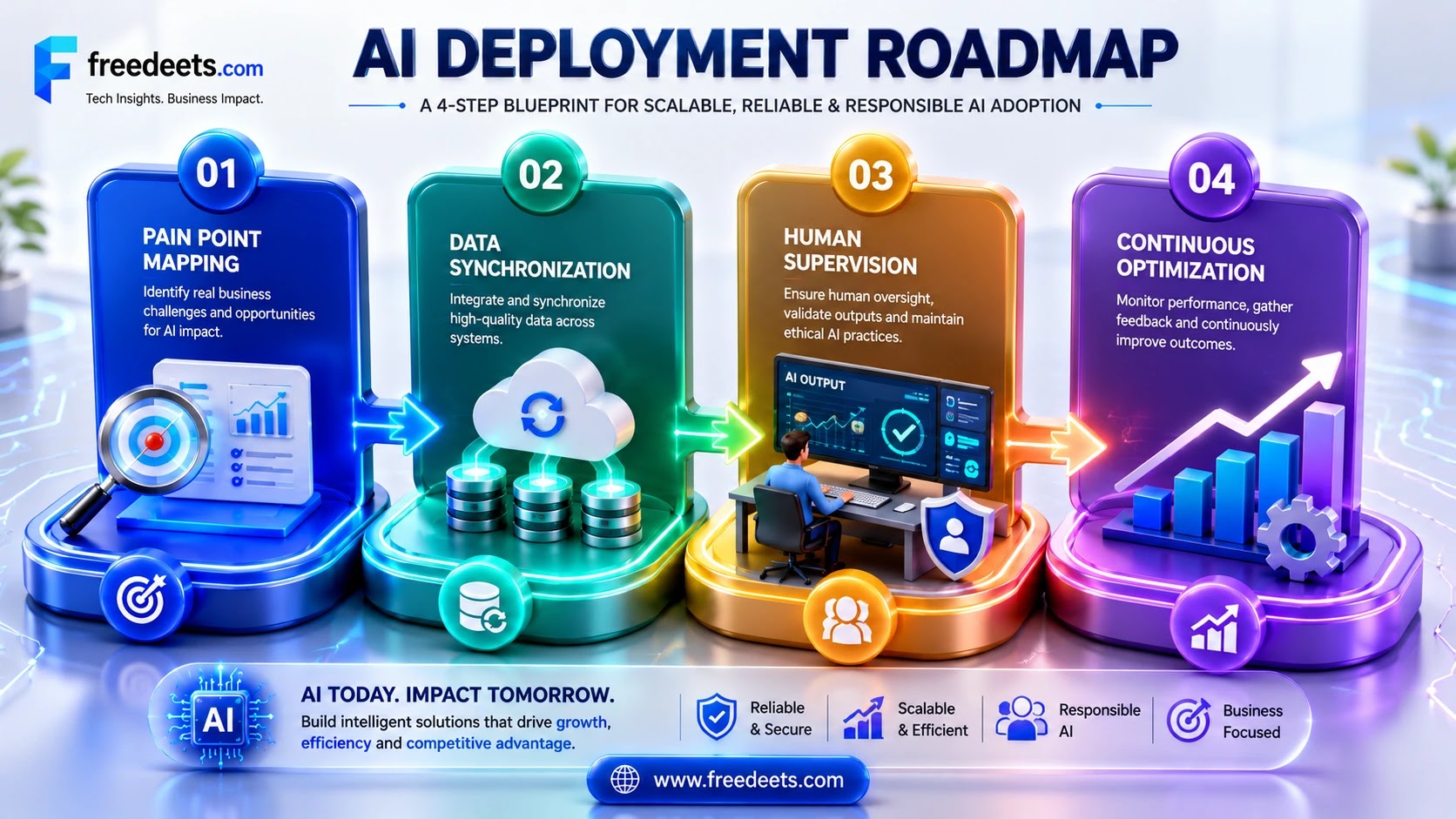
    4-step enterprise implementation blueprint showing how to deploy AI in customer experience strategy

    6. Implementation Blueprint: How to Execute an AI-First CX Strategy

    Successfully deploying enterprise AI requires a strategic, phased approach:

    Step 1: Map Core Pain Points
    Analyze existing customer support channels to identify high-volume, low-complexity tickets suitable for automation.

    Step 2: Unify Customer Data Systems
    Break down data silos by linking your CRM (Salesforce, HubSpot) directly to your AI orchestration pipeline.

    Step 3: Pilot with Managed Human Supervision
    Launch AI tools as “copilots” for human agents first, allowing the system to learn from human corrections before granting full autonomy.

    Step 4: Continuous Optimization & Sentiment Tracking
    Continuously evaluate CSAT, resolution metrics, and model halluncination rates to refine training parameters.


    Frequently Asked Questions (FAQs)

    Will artificial intelligence completely replace human customer service reps?

    No. While AI handles high-volume routine inquiries, human representatives remain essential for dealing with emotionally charged situations, high-stakes enterprise relationships, and highly complex technical troubleshooting. AI enhances human capabilities rather than eliminating them entirely.

    What is the typical ROI on AI customer service implementations?

    Most enterprises achieve a positive Return on Investment (ROI) within 6 to 12 months, driven by lowered cost-per-ticket, reduced churn rates, increased cross-selling opportunities, and improved human agent retention.

    How do small businesses leverage AI customer experience tools without massive budgets?

    Modern SaaS platforms offer plug-and-play AI integrations directly into platforms like Shopify, WordPress, and Zendesk, allowing small businesses to deploy sophisticated conversational AI without needing custom software engineering teams.

    Final Thoughts

    Artificial Intelligence is no longer a futuristic concept—it is the modern foundation of elite customer experience. Organizations that embrace autonomous, hyper-personalized, and ethical AI strategies today will set the benchmark for customer loyalty, operational efficiency, and revenue growth for decades to come.

    “

  • What is Modern Information Technology? The 2026 Enterprise Playbook for Cloud, AI, and Cyber Resilience

    What is Modern Information Technology? The 2026 Enterprise Playbook for Cloud, AI, and Cyber Resilience

    Modern Information Technology graphic featuring Cloud 3.0, Agentic AI, and Zero-Trust Cybersecurity over a city skyline


    Executive Takeaway

    Information Technology is no longer just “fixing office printers” or “running network cables.” In 2026, IT is the digital engine driving corporate valuation, real-time decision intelligence, automated supply chains, and zero-trust cybersecurity defenses.


    The Big Shift: Why Information Technology Means Something Entirely Different Today

    If you asked someone a decade ago to define Information Technology (IT), they’d probably picture a server rack tucked away in a chilly basement or a helpful tech desk resetting forgotten passwords.

    Fast forward to today, and that quiet back-office department has taken center stage in corporate boardrooms across the United States.

    Modern IT isn’t just an operational expense—it is the strategic bedrock of business survival. From small e-commerce setups to Fortune 500 financial institutions, every single enterprise relies on a tightly woven web of hardware, software, cloud networks, and automated data pipelines.

    When you stream a movie, process a contactless payment, or receive an AI-assisted health diagnostic, you are interacting with complex information systems working in microsecond harmony.

    Let’s demystify what Information Technology actually looks like today, break down its core pillars, explore its highest-value applications, and understand how modern organizations protect their digital infrastructure against evolving risks.


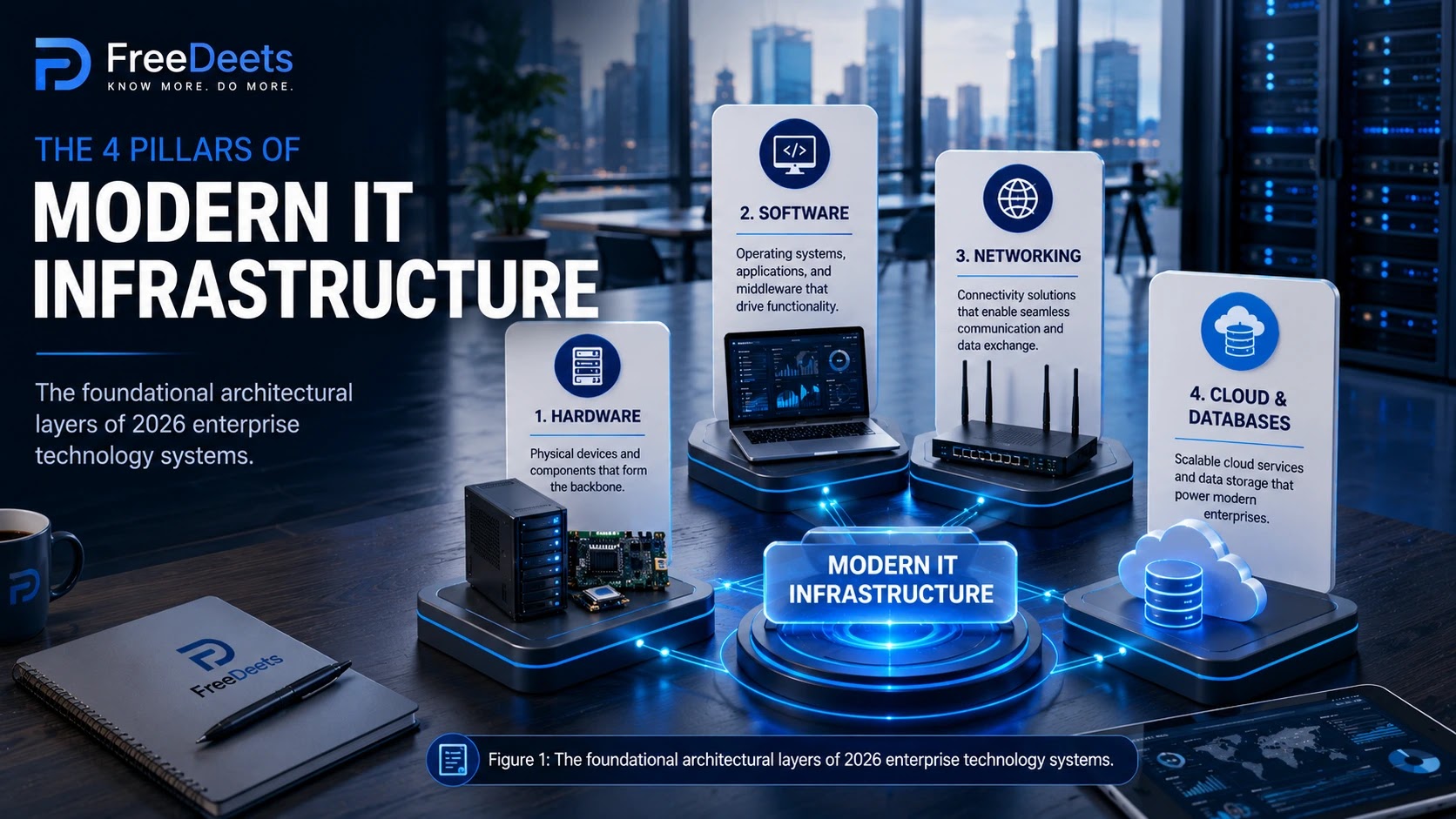
    Infographic diagram showing the 4 core pillars of modern IT infrastructure: Hardware, Software, Networking, and Cloud Databases

    The 4 Core Pillars of Modern IT Infrastructure

    To understand how enterprise technology functions, it helps to look at it as a multi-layered ecosystem. Every digital service—whether a mobile app or a global banking platform—rests on four essential foundation blocks.

    Stack Layer Modern Enterprise Components
    1. Hardware Bare-Metal, Edge Computing, High-Density GPU Clusters
    2. Software Agentic AI Systems, Enterprise SaaS, Microservices Architecture
    3. Networking SASE Frameworks, SD-WAN, Post-Quantum Cryptographic Protocols
    4. Databases Cloud 3.0 Architecture, Real-Time Vector Data Stores, NoSQL

    1. High-Performance Hardware Architecture

    Hardware represents the physical foundation of computation. While everyday consumer hardware includes laptops, tablets, and smartphones, enterprise IT hardware focuses on raw computational density and uptime reliability:

    • High-Density GPU Clusters: Specialized processing hardware built specifically for running large-scale Artificial Intelligence models and real-time machine learning inference.
    • Bare-Metal & Co-Location Servers: Dedicated physical servers housed in hyper-scale data centers designed to run mission-critical enterprise workloads without latency.
    • Edge Computing Appliances: Miniaturized processing units stationed physically close to where data is generated (like industrial IoT sensors or smart retail kiosks), drastically reducing processing delay.

    2. Microservices & Enterprise Software

    Software is the set of instructions that commands hardware what to do. Enterprise software has evolved from clunky, monolithic desktop applications into agile, cloud-native solutions:

    • System Software: Operating systems, hypervisors, and kernel software that manage system resources and virtual machines.
    • Application Software: Business-facing platforms such as Enterprise Resource Planning (ERP), Customer Relationship Management (CRM), and automated payroll systems.
    • Microservices & APIs: Modular software components connected through Application Programming Interfaces (APIs), allowing distinct systems to exchange data without breaking the overall system.

    3. SASE, SD-WAN, and High-Speed Networking

    Without networking, computers are isolated islands. Modern enterprise networks don’t just connect devices through physical Ethernet cables; they orchestrate massive, secure data movement across continents:

    • Software-Defined Wide Area Networks (SD-WAN): Intelligently routes network traffic across public and private channels to optimize bandwidth and minimize connection drops.
    • Secure Access Service Edge (SASE): Combines network management with cloud security protocols so remote employees can access company databases safely from anywhere.
    • Post-Quantum Cryptographic Protocols: Modern encryption frameworks engineered to protect data transport against emerging computational decryption threats.

    4. Distributed Cloud Databases & Vector Data Stores

    Data is useless if you can’t organize, index, and retrieve it at a moment’s notice. Database management systems (DBMS) organize raw bytes into actionable intelligence:

    • Relational Databases (SQL): Structured data stores (e.g., PostgreSQL) ideal for financial ledgers and transactional records requiring absolute accuracy.
    • NoSQL & Vector Databases: Unstructured data repositories designed to process massive streams of video, audio, text, and high-dimensional vector embeddings used in modern generative AI systems.

    What Does IT Actually Do? The 3 Primary Engine Functions

    Strip away the complex jargon, and Information Technology exists to fulfill three primary business objectives: automating manual tasks, transforming raw data into strategic insights, and ensuring seamless communication.

    Engine Function Business Value & Strategic Impact
    Automated Data Processing Replaces manual data workflows with autonomous AI agents, eliminating human error and drastically boosting operational throughput.
    Multi-Channel Communications Powers secure high-speed video channels, unified SASE network fabrics, and real-time remote collaboration worldwide.
    Predictive Decision Intelligence Transforms unstructured data streams into real-time business intelligence and automated forecasting models for corporate leadership.

    Function #1: Data Processing and Lifecycle Governance

    At its core, IT ingests raw information, cleanses it, transforms it into usable formats, and stores it securely. Consider a major retail store: every time a barcode scans at checkout, the IT system updates inventory logs, notifies supply chain vendors, records financial ledger entries, and updates customer loyalty points within milliseconds.

    Function #2: Intelligent Workflow Automation

    Manual data entry and repetitive administrative tasks waste thousands of human work hours every year. Enterprise IT uses Intelligent Process Automation (IPA)—combining software robotics with AI models—to automatically review invoices, process insurance claims, route customer support inquiries, and perform software quality assurance tests without human fatigue or manual error.

    Function #3: Predictive Decision Intelligence

    Modern business moves too fast for gut-feeling management decisions. By deploying centralized Business Intelligence (BI) platforms and machine learning analytics engines, IT teams give executives real-time access to operational metrics, demand forecasting, customer attrition predictions, and financial risk models.


    Real-World Applications: How IT Powers Key American Industries

    To understand the economic engine behind IT enterprise software spend, let’s look at how specific high-revenue US industries utilize advanced tech stacks to dominate their markets.

    1. Healthcare Informatics & Remote Telemedicine

    In modern US healthcare, IT systems save lives as much as medical devices do.

    • Electronic Health Records (EHR): Interoperable database systems allow emergency room physicians to pull up a patient’s medical history, drug allergies, and past surgeries instantly.
    • AI Diagnostic Imaging: High-speed cloud GPUs analyze MRI and CT scans to flag early-stage abnormalities faster than traditional manual review.
    • HIPAA-Compliant Cloud Platforms: Encrypted communication layers ensure video appointments and remote patient metrics meet strict privacy regulations.

    2. High-Frequency FinTech & Automated Banking

    The US financial market depends entirely on ultra-low latency infrastructure.

    • Algorithmic Risk Management: Automated systems scan billions of daily card transactions worldwide to detect and block fraudulent charges in real time.
    • Core Banking Modernization: Migration away from legacy mainframe code to cloud microservices allows banks to launch mobile features, loan approvals, and Instant FedNow payment processing.

    3. Smart Logistics & Supply Chain Optimization

    Global trade requires continuous visibility.

    • IoT Asset Tracking: Cargo shipping containers equipped with satellite sensors monitor location, ambient temperature, and humidity levels across ocean transit.
    • Predictive Inventory Replenishment: ERP software connected directly to retail POS systems automatically triggers factory re-orders before store shelves run empty.

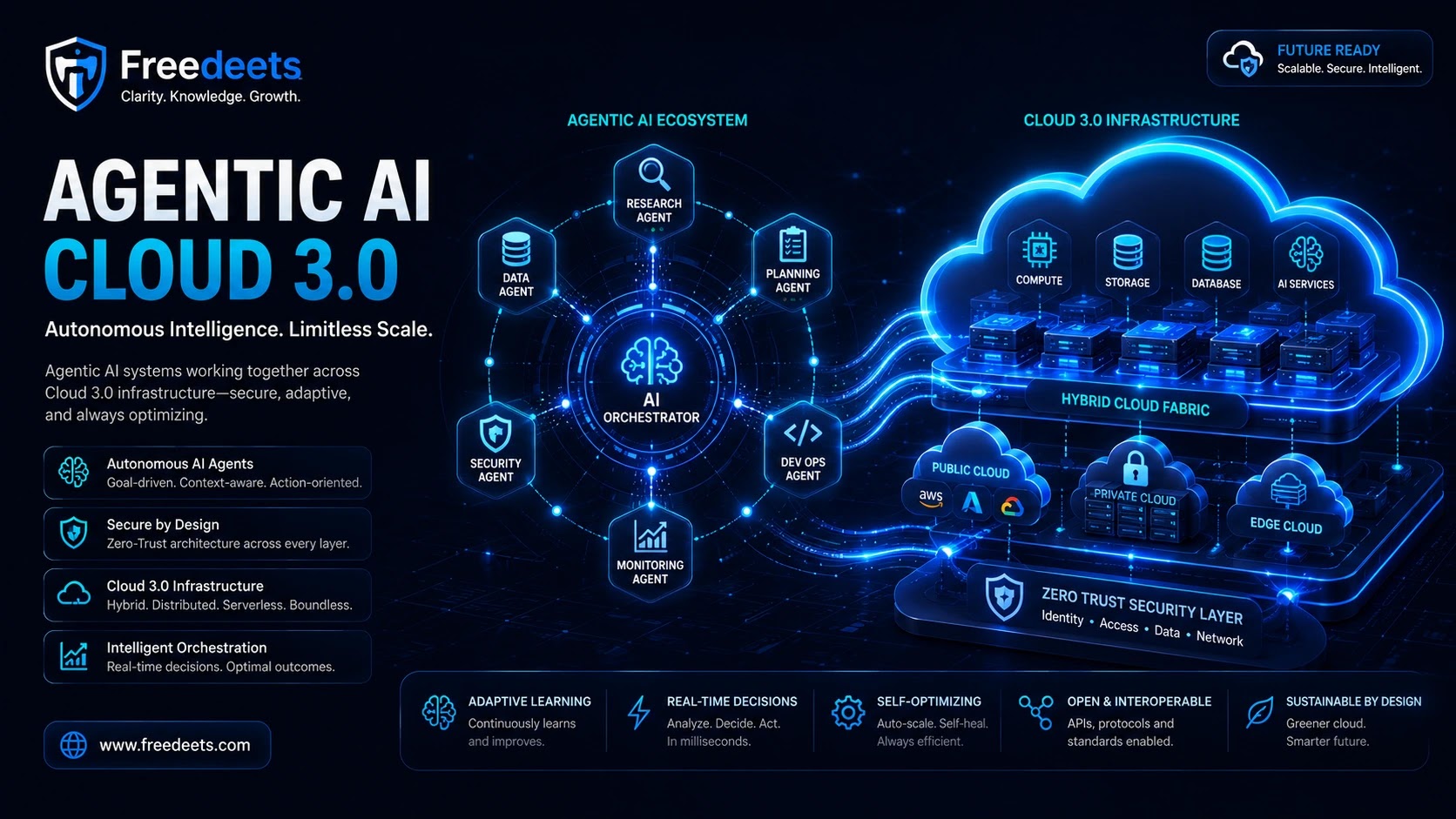
    Abstract neural network connecting Agentic AI models to hybrid cloud enterprise servers

    Cloud 3.0, Agentic AI, and Next-Gen Innovations

    Technology never stands still. We have moved past basic cloud adoption into an era of hyper-specialized, autonomous digital ecosystems.

    Innovation Pillar Architectural Direction & Evolution
    Cloud 3.0 Architecture Multi-cloud orchestration, specialized hybrid environments, and regional sovereign compliance setups.
    Agentic AI Systems Intent-driven autonomous workflows capable of multi-step problem solving without step-by-step human prompts.
    Post-Quantum Tech Lattice-based security frameworks and quantum-resistant encryption algorithms designed for future-proof safety.

    Cloud 3.0: Hybrid, Sovereign, and Multi-Cloud Frameworks

    The initial era of “move everything blindly to the public cloud” is over. Organizations have realized that keeping everything in a single public cloud can lead to unexpected costs and vendor lock-in. Cloud 3.0 focuses on a balanced, multi-cloud strategy:

    • Private Clouds: Dedicated local infrastructure reserved for confidential corporate IP and strictly regulated customer data.
    • Public Cloud Scalability: Utilizing providers like AWS, Microsoft Azure, or Google Cloud for elastic compute spikes during peak customer demand.
    • Sovereign Clouds: Regionally bounded cloud platforms engineered specifically to comply with localized data residency laws and federal privacy mandates.

    Agentic AI Systems: Moving Beyond Standard Chatbots

    While initial generative AI tools simply responded to text prompts with written text, Agentic AI represents a structural leap forward. Agentic systems are designed with autonomy: you provide a high-level goal (e.g., “Audit our server logs for the past 24 hours, identify security anomalies, and draft patch reports for the engineering team”), and the system breaks down the task, selects tools, writes necessary code, and executes the sequence independently.

    Edge Computing and Industrial IoT Integration

    As 5G networks mature, computing power is moving out of distant data centers and onto local hardware edge devices. Autonomous vehicles, factory assembly robots, and smart city traffic sensors process data right where it happens, eliminating network transmission delays entirely.


    Cybersecurity & Risk Management: Protecting the Modern Enterprise

    Digital cybersecurity shield protecting cloud servers and enterprise network nodes in a Zero-Trust architecture

    As organizations become deeply dependent on digital infrastructure, their exposure to sophisticated cyber threats scales exponentially. Modern cybersecurity is no longer an afterthought—it is a core business requirement.

    Zero-Trust Network Architecture (ZTNA) Guiding Principles
    1. Continuous Verification Enforce Hardware-backed MFA, biometric authentication, and active FIDO2 security tokens.
    2. Network Micro-Segmentation Isolate subnets so a breach at an endpoint device cannot spread laterally to core financial assets.
    3. Universal Encryption Encrypt all active data streams continuously, whether in-transit across networks or at-rest in databases.
    4. Automated Containment Deploy real-time threat intelligence software to instantly isolate compromised cloud instances.

    The Modern Threat Landscape

    • Ransomware-as-a-Service (RaaS): Cybercriminal networks deploy specialized malware that quietly encrypts an organization’s databases, demanding massive payments to unlock critical operational files.
    • API Infiltration & Data Exfiltration: Malicious actors search for unpatched software endpoints to bypass perimeter firewalls and extract proprietary customer records.
    • Social Engineering & AI-Generated Phishing: Attackers use convincing, AI-synthesized emails and audio cloning to trick corporate employees into releasing master passwords.

    The Gold Standard Security Blueprint: Zero-Trust Network Architecture (ZTNA)

    Traditional security relied on the “Castle and Moat” strategy—trusting anyone once they managed to log into the internal office network. Modern enterprise security enforces Zero-Trust Architecture: “Never trust, always verify.”

    1. Continuous Identity Authentication: Enforcing hardware-backed Multi-Factor Authentication (MFA) and continuous session token verification.
    2. Network Micro-segmentation: Dividing internal corporate networks into isolated subnets. If an attacker breaches one workstation, micro-segmentation prevents them from accessing core financial servers.
    3. Immutable Backups & Disaster Recovery (DRaaS): Storing off-site, read-only data backups that cannot be modified or encrypted by ransomware attacks, ensuring rapid business restoration following an incident.

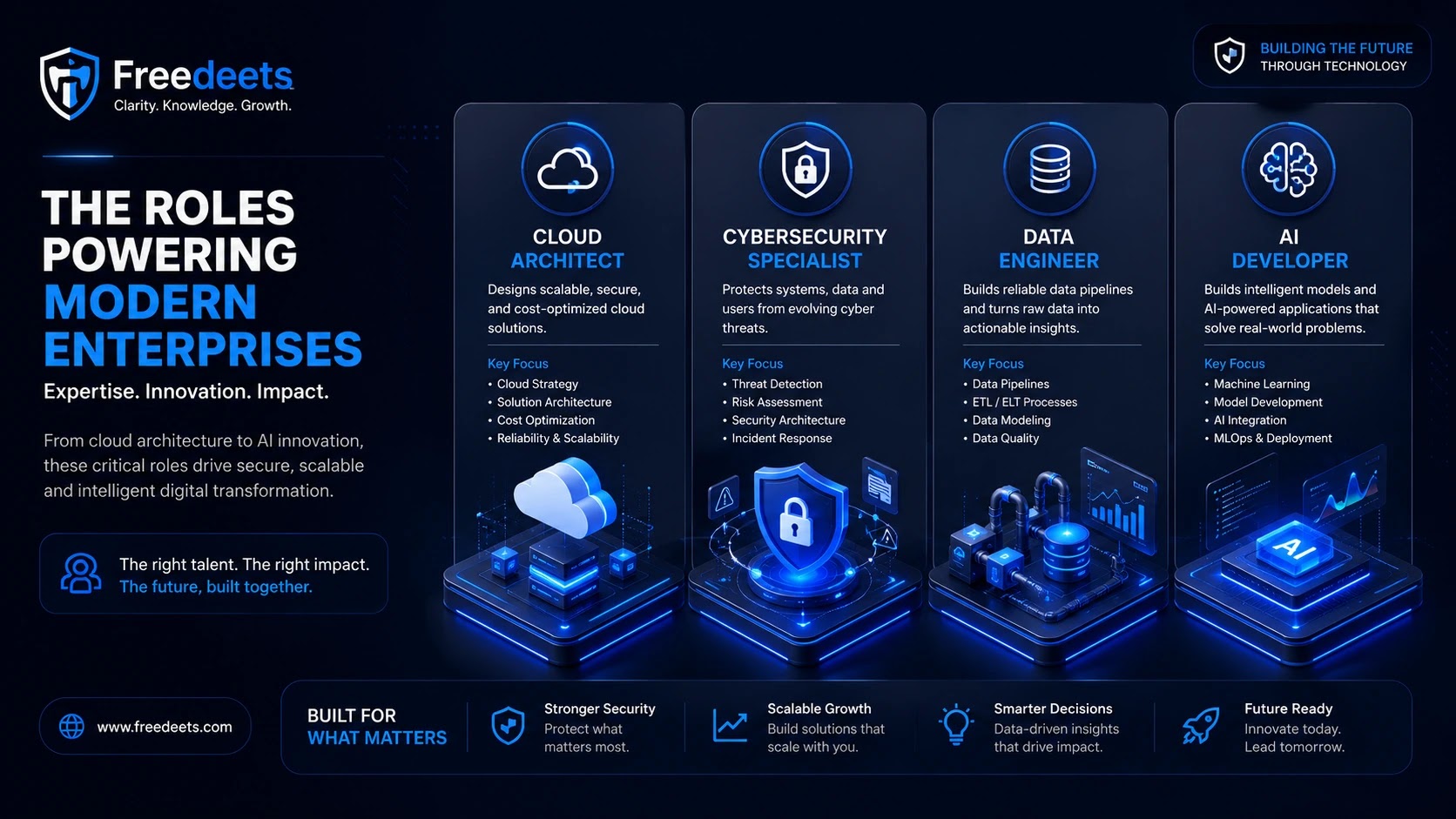
    Infographic representing high-demand technology careers including Cloud Architect, Cybersecurity Specialist, and AI Engineer

    In-Demand IT Careers: Roles That Drive Tech Growth

    The rapid expansion of enterprise cloud technology, machine learning, and cybersecurity has created high demand for specialized tech professionals.

    High-Paying Tech Role Primary Focus Area Core Technical Stack
    Cloud Solutions Architect Infrastructure Engineering AWS, Azure, GCP, Terraform, Kubernetes
    Zero-Trust Security Engineer Cybersecurity & Defense SIEM, SASE, Pen-Testing, IAM Frameworks
    Data Platform Engineer Enterprise Data Engineering Python, SQL, Apache Kafka, Vector DBs
    AI Systems Integrator Software & ML Integration LLM Orchestration, Python, REST APIs, Microservices
    DevOps / SRE Specialist System Reliability & Deployment CI/CD Pipelines, Docker, Linux Kernel, Monitoring

    Why Keeping Pace with Technology is Essential for Business Survival

    The rate of technological advancement is exponential, not linear. Companies that delay modernizing their IT stacks risk sudden disruption from smaller, agile competitors who run leaner, cloud-native operational models.

    Upgrading IT systems isn’t just about adopting shiny new gadgets. It’s about building organizational resilience:

    • Operating Cost Optimization: Replacing heavy legacy maintenance contracts with efficient cloud software.
    • Regulatory Compliance Assurance: Meeting stringent US consumer data privacy acts (like CCPA and CPRA) without manual paperwork bottlenecks.
    • Talent Retention: Giving your workforce clean, fast, reliable software tools instead of forcing them to fight clunky, outdated legacy applications.

    Frequently Asked Questions (FAQ)

    What is the primary difference between Computer Science and Information Technology?

    Computer Science focuses on the mathematical foundations of computation, code theory, and software development. Information Technology focuses on the operational application, architecture design, cloud integration, security, and day-to-day management of hardware and software systems to solve real-world organizational problems.

    How does Zero-Trust Architecture improve company cybersecurity?

    Zero-Trust Architecture operates on the strict principle that no user or device—whether inside or outside the company office—should be trusted by default. Every access request is authenticated, encrypted, and granted based on the bare minimum privileges required, preventing malicious lateral movement inside corporate networks.

    What is “Cloud 3.0” and how does it differ from traditional cloud hosting?

    While traditional cloud hosting focused primarily on moving local physical servers to public cloud vendors, Cloud 3.0 focuses on hybrid multi-cloud orchestration. It strategically mixes local private servers, specialized GPU clusters, public cloud instances, and regional sovereign clouds to optimize operational cost, speed, and regulatory compliance.

    Why are US enterprises investing heavily in Agentic AI over simple automation?

    Standard software automation follows strict, fixed “If-This-Then-That” rules that break whenever unexpected data appears. Agentic AI can evaluate context, make logical decisions, select necessary digital tools, and complete multi-step complex workflows without requiring constant human intervention.

    Is Information Technology a stable career path for the future?

    Yes. As industries across finance, healthcare, manufacturing, and retail continue to digitize their operations, specialized professionals skilled in cloud architecture, cybersecurity, enterprise database engineering, and AI integration remain among the most sought-after and resilient talent pools in the global economy.


    Key Takeaway for Readers & Business Leaders

    Mastering Information Technology isn’t about learning every single line of code written in the world. It’s about understanding how hardware, cloud software, intelligent networks, and secure data pipelines connect together to turn complex business ideas into seamless everyday digital experiences.

  • Quantum Computing & Mechanics Guide 2026: Commercial Tech, Cryptography & US Trends

    Quantum Computing & Mechanics Guide 2026: Commercial Tech, Cryptography & US Trends

    /*
    www.freedeets.com CUSTOM STYLING TOOLKIT
    Theme: Deep Space Navy & Quantum Cyan High-Tech
    */
    .fd-container {
    font-family: ‘Segoe UI’, Roboto, -apple-system, BlinkMacSystemFont, Helvetica, Arial, sans-serif;
    line-height: 1.88;
    color: #1e293b;
    max-width: 860px;
    margin: 0 auto;
    font-size: 17px;
    }

    .fd-container p, .fd-container ul, .fd-container ol {
    margin-bottom: 25px;
    }

    /* QUANTUM CYAN HEADING WRAPPER (H2) */
    .fd-heading-cyan {
    margin-top: 45px;
    margin-bottom: 25px;
    padding: 16px 22px;
    background: linear-gradient(135deg, #0b132b 0%, #1c2541 100%);
    border-left: 6px solid #00f5d4;
    border-radius: 0 10px 10px 0;
    box-shadow: 0 4px 14px rgba(11, 19, 43, 0.15);
    }

    .fd-heading-cyan h2 {
    font-size: 1.6em !important;
    font-weight: 700 !important;
    color: #ffffff !important;
    margin: 0 !important;
    padding: 0 !important;
    line-height: 1.3 !important;
    border: none !important;
    letter-spacing: -0.2px;
    }

    /* SUB-HEADING (H3) */
    .fd-h3-cyan {
    font-size: 1.25em;
    font-weight: 700;
    color: #0b132b;
    margin-top: 32px;
    margin-bottom: 12px;
    line-height: 1.3;
    display: flex;
    align-items: center;
    gap: 10px;
    }

    .fd-h3-cyan::before {
    content: ”;
    display: inline-block;
    width: 8px;
    height: 18px;
    background-color: #00b4d8;
    border-radius: 3px;
    }

    /* HIGH-TRUST CALLOUT BOX */
    .fd-cyan-box {
    background-color: #f0fdfa;
    border: 1px solid #ccfbf1;
    border-left: 5px solid #0d9488;
    padding: 22px;
    border-radius: 8px;
    margin: 28px 0;
    box-shadow: 0 2px 8px rgba(13, 148, 136, 0.05);
    }

    /* MODERN DATA TABLE */
    .fd-table-wrapper {
    overflow-x: auto;
    margin: 30px 0;
    border-radius: 8px;
    box-shadow: 0 2px 10px rgba(0, 0, 0, 0.05);
    }

    .fd-matrix-table {
    width: 100%;
    border-collapse: collapse;
    text-align: left;
    font-size: 0.95em;
    }

    .fd-matrix-table th {
    background-color: #0b132b;
    color: #ffffff;
    padding: 14px 18px;
    font-weight: 600;
    letter-spacing: 0.3px;
    }

    .fd-matrix-table td {
    padding: 14px 18px;
    border-bottom: 1px solid #e2e8f0;
    color: #334155;
    }

    .fd-matrix-table tr:nth-child(even) {
    background-color: #f8fafc;
    }

    .fd-matrix-table tr:hover {
    background-color: #f0fdfa;
    }

    Quantum computing and mechanics enterprise guide hero banner featuring dilution refrigerator and [www.freedeets.com](https://www.freedeets.com) logo.

    For more than a century, classical physics provided humanity with an exceptionally reliable framework for navigating the macroscopic world. From Newtonian mechanics governing planetary orbits to Maxwellian electrodynamics powering modern electrical grids, traditional physics accurately predicted observable reality. However, as 20th-century physicists began probing deeper into atomic structures, classical formulas fractured. Subatomic particles consistently violated deterministic rules, giving rise to Quantum Mechanics—the foundational branch of physics describing matter and energy at atomic and subatomic scales.

    In 2026, quantum mechanics has transcended pure theoretical physics and academic chalkboards. It has emerged as the primary technological engine driving global high-tech innovation. Today, US enterprise tech giants, defense contractors, financial institutions, and pharmaceutical pioneers are deploying quantum physics principles to build fault-tolerant quantum computers, construct post-quantum cryptographic networks, and synthesize novel molecular compounds.

    In this comprehensive enterprise guide on www.freedeets.com, we explore the core principles of quantum mechanics, unpack the mechanics of commercial quantum computing hardware, examine the imminent threat to legacy RSA encryption, and evaluate multi-billion-dollar market opportunities across major US business sectors.


    1. The Four Core Pillars of Quantum Mechanics

    To grasp how quantum technologies operate at a commercial scale, one must first understand the counterintuitive physical phenomena that govern subatomic systems. Unlike classical bits that exist strictly as binary states (0 or 1), quantum systems exploit micro-level anomalies that redefine computational capability.

    1. Wave-Particle Duality

    First conceptualized by Louis de Broglie and validated through Thomas Young’s famous double-slit experiment, wave-particle duality dictates that subatomic entities (such as photons and electrons) exhibit properties of both localized particles and continuous waves. Light behaves as localized energy packets (photons) while simultaneously forming interference patterns characteristic of physical waves. In modern technology, wave-particle duality underpins semiconductor physics, electron microscopy, and laser optics.

    In classical computing, a bit is physically constrained to represent either a state of 0 or 1 at any given instant. Under quantum superposition, a quantum bit (qubit) can exist in a linear combination of both 0 and 1 simultaneously. The qubit remains in a probability wave function until an external measurement is performed, forcing the system to collapse into a definite binary state. Superposition enables quantum algorithms to process exponentially vast computational search spaces concurrently.

    Famously characterized by Albert Einstein as “spooky action at a distance,” entanglement occurs when two or more subatomic particles become deeply interconnected such that the physical state of one particle instantly dictates the state of another, regardless of spatial separation. If an entangled particle measured in New York is determined to have an up-spin, its entangled pair in Los Angeles immediately collapses into a down-spin. Entanglement forms the backbone of quantum teleportation, ultra-secure communication channels, and multi-qubit processing architectures.

    4. Quantum Tunneling

    Quantum tunneling describes the probability that a subatomic particle can pass through a potential energy barrier higher than its kinetic energy. While classical mechanics forbids an object from crossing a solid energy wall without sufficient energy, quantum wave functions extend across barriers, allowing electrons to “tunnel” through non-conductive layers. Quantum tunneling is essential to modern flash memory storage, atomic force microscopy, and nuclear fusion processes.

    Schrödinger’s Cat & The Measurement Problem

    Proposed by Erwin Schrödinger in 1935, the “Schrödinger’s Cat” thought experiment illustrates the paradox of quantum measurement. A cat sealed inside a chamber with a radioactive atom and poison exists in a simultaneous superposition of life and death until observed. This highlights the Observer Effect: the physical act of measurement forces a probability wave function to collapse into a single observable reality.


    2. Classical Computing vs. Quantum Computing

    To evaluate the commercial power of quantum technology, enterprise leaders must compare classical binary processing against quantum multidimensional processing. As datasets grow exponentially, traditional supercomputers hit physical performance walls driven by power consumption and thermal dissipation constraints.

    Architecture Dimension Classical Supercomputing Quantum Computing Systems
    Fundamental Unit Binary Bit (Deterministic 0 or 1) Quantum Bit / Qubit (Superposition 0 & 1)
    Data Processing Model Sequential and limited parallel processing Simultaneous multi-state vector execution
    Scaling Velocity Linear growth ($N$ bits = $N$ states) Exponential growth ($N$ qubits = $2^N$ states)
    Operating Environment Room temperature with standard air cooling Cryogenic dilution refrigerators (< 15 Kelvin)
    Primary Computational Strengths Relational databases, text, standard arithmetic Complex optimization, molecular simulation, prime factor analytics
    Error Rate Susceptibility Extremely low (1 error per $10^{17}$ operations) High susceptibility (Requires Quantum Error Correction)

    A quantum computer with just 300 fault-tolerant, fully entangled qubits can simultaneously process more states than there are atoms in the observable universe ($2^{300}$). This exponential scaling unlocks computational breakthroughs previously deemed impossible by computer scientists.


    Visual comparison chart comparing classical supercomputing bits against quantum qubits on [www.freedeets.com](https://www.freedeets.com).

    3. Leading Quantum Computing Hardware Architectures

    Building physical hardware capable of isolating fragile subatomic particles requires extreme precision engineering. Today, leading US tech corporations and research labs compete across four dominant quantum hardware modalities:

    1. Superconducting Circuits (IBM, Google, Rigetti)

    Superconducting qubits leverage microscopic electronic circuits fabricated from superconducting materials like niobium or aluminum. When cooled down to cryogenic temperatures near absolute zero (0 Kelvin / -273.15°C) inside dilution refrigerators, electrical resistance drops to zero, allowing quantum currents to flow indefinitely. Superconducting architectures feature high gate speeds, though they require massive refrigeration units to suppress thermal noise.

    2. Trapped-Ion Systems (Quantinuum, IonQ)

    Trapped-ion architectures suspend individual ionized atoms (such as ytterbium or calcium) in vacuum chambers using electromagnetic fields. Precise, focused laser beams perform gate operations and measure quantum states. Trapped-ion systems feature exceptionally long coherence times and high gate fidelities, making them highly attractive for industrial optimization problems.

    3. Neutral Atom Modalities (QuEra, ColdQuanta)

    Neutral atom systems utilize optical tweezers (laser arrays) to trap individual neutral atoms (like rubidium) in multi-dimensional grids. By exciting atoms into high-energy Rydberg states, researchers execute high-density quantum logic gates. Neutral atom systems offer remarkable spatial scalability, positioning them as major contenders for large-scale enterprise deployments.

    4. Photonic Quantum Processors (PsiQuantum, Xanadu)

    Photonic processors manipulate individual light particles (photons) traveling through room-temperature silicon photonic chips using mirrors, beam splitters, and phase shifters. Because photons rarely interact with environmental heat, photonic systems reduce cryogenic cooling requirements and integrate seamlessly with telecommunications fiber networks.


    4. High-Value US Enterprise Applications & Market Growth

    Commercial investment in quantum technology is accelerating across major US industrial verticals. Corporate leaders on www.freedeets.com are actively deploying quantum algorithms to solve complex business bottlenecks:

    1. Bio-Pharmaceuticals & Molecular Sourcing

    Simulating complex protein folding and molecular interactions requires intractable computational power on classical hardware. Quantum computers model molecular orbitals precisely, reducing drug discovery timelines from 10–15 years down to months. Major US pharmaceutical firms rely on quantum chemistry tools (like Qiskit Nature) to accelerate clinical trials and design targeted therapeutics.

    2. Financial Portfolio Optimization & Risk Analytics

    Wall Street institutions utilize quantum algorithms to analyze market volatility, evaluate complex derivative pricing, and optimize multi-asset portfolios in real time. Algorithms such as the Quantum Approximate Optimization Algorithm (QAOA) execute Monte Carlo simulations at unprecedented speeds, offering significant trading advantages.

    3. Global Supply Chain & Logistics Management

    Optimizing fleet routing, maritime container distribution, and inventory allocation across global networks involves navigating thousands of interdependent variables. Quantum annealing algorithms process complex logistical routes simultaneously, drastically cutting fuel costs, carbon emissions, and transit times for enterprise transport networks.

    Post-Quantum Cryptography (PQC) & Cyber Defense

    Shor’s Algorithm proves that a sufficiently powerful fault-tolerant quantum computer can break modern RSA and ECC encryption standards in minutes. In response, the US National Institute of Standards and Technology (NIST) finalized new Post-Quantum Cryptography (PQC) standards. US financial networks and federal defense systems are actively upgrading encryption protocols to lattice-based algorithms to defend against “Harvest Now, Decrypt Later” cyber attacks.


    5. Key Controversies & Philosophical Interpretations

    Despite its mathematical success, the fundamental interpretation of quantum mechanics remains heavily debated within the scientific community:

    The Copenhagen Interpretation

    Formulated by Niels Bohr and Werner Heisenberg, the Copenhagen interpretation asserts that physical systems exist purely as mathematical wave functions representing probabilities. Physical reality does not exist in a definite state until a measurement causes the wave function to collapse.

    The Many-Worlds Interpretation (MWI)

    Proposed by Hugh Everett III, MWI eliminates wave function collapse entirely. Instead, it posits that every quantum measurement causes the universe to branch into infinite parallel realities. In one universe, the electron collapsed into state A; in a parallel universe, it collapsed into state B.

    The Pilot Wave Theory (De Broglie–Bohm Mechanics)

    A deterministic interpretation holding that subatomic particles possess definite locations at all times, guided through space by a physical “pilot wave.” While it restores determinism, it requires non-local interactions that remain challenging to reconcile with special relativity.


    6. Roadmap for Career Professionals & Tech Executives

    Navigating the transition into the quantum economy requires intentional technical skill acquisition:

    Phase 1: Software Toolkits & Frameworks

    Developers should build hands-on proficiency with open-source quantum SDKs, such as IBM’s Qiskit, Google’s Cirq, and PennyLane for quantum machine learning. These libraries allow engineers to run quantum circuits directly on cloud-hosted quantum hardware.

    Phase 2: Master Linear Algebra & Quantum Logic

    A strong foundation in linear algebra (vector spaces, matrix multiplication, Hermitian operators, complex numbers) is essential for understanding quantum logic gates (Hadamard, CNOT, Pauli-X) and algorithm design.

    Phase 3: Corporate Post-Quantum Security Planning

    Enterprise IT directors must audit company data infrastructure, identify legacy RSA/ECC dependencies, and establish a timeline to transition cryptographic assets to NIST-approved post-quantum algorithms.


    7. Frequently Asked Questions (FAQs)

    Q1: When will quantum computers replace classical personal computers?

    Quantum computers are specialized co-processors designed for complex parallel matrix calculations, not general-purpose computing. Personal smartphones and laptops will continue utilizing classical silicon processors, while quantum operations will be accessed primarily via secure cloud platforms.

    Q2: What is “Quantum Supremacy” or “Quantum Advantage”?

    Quantum Supremacy refers to the milestone where a quantum processor executes a specific calculation that is mathematically impossible for the world’s most powerful classical supercomputer to perform within a reasonable timeframe.

    Q3: How does quantum computing impact blockchain and Bitcoin cybersecurity?

    While elliptic curve cryptography (ECDSA) used in public key signatures is theoretically vulnerable to quantum attacks, Bitcoin’s SHA-256 hash architecture remains highly resistant. Blockchain networks are actively preparing upgrades to integrate post-quantum signature schemes.

    Q4: Why do quantum computers require cryogenic temperatures?

    Thermal energy causes atoms to vibrate, introducing environmental noise that disrupts fragile qubit superposition states (a phenomenon known as quantum decoherence). Cryogenic cooling suppresses thermal vibrations, preserving computational stability.

    Q5: Which programming languages are used in quantum software engineering?

    Python is the dominant language used in quantum software engineering, serving as the foundational wrapper for primary quantum toolkits like IBM Qiskit, Google Cirq, and PennyLane, with C++ powering backend circuit execution engines.


    Explore Related Technology & Enterprise Guides on FreeDeets:

  • How Cloud-Based Call Center Technology is Revolutionizing Customer Service

    How Cloud-Based Call Center Technology is Revolutionizing Customer Service

    Cloud based call center technology

    In today’s fast-paced and technology-driven world, the demand for exceptional customer service has never been higher. Businesses are constantly looking for innovative ways to enhance their customer experience, and cloud-based call center technology is leading the charge. By moving traditional call centers to the cloud, companies are revolutionizing the way they handle customer interactions, improving efficiency, and ultimately boosting customer satisfaction. This cutting-edge technology enables businesses to seamlessly integrate multiple communication channels, such as phone, email, and chat, into one centralized platform. 

    With cloud-based call center technology, agents can access customer information instantly, providing personalized and efficient service. Additionally, this technology offers advanced analytics and reporting capabilities, allowing companies to gain valuable insights into customer behavior and preferences. As a result, businesses can make data-driven decisions to optimize their customer service strategies. With cloud-based call center technology, companies can deliver a higher level of service, improve customer loyalty, and gain a competitive edge in today’s market.

    Traditional Call Center Challenges

    Traditional call centers have long faced challenges in providing efficient and personalized customer service. These centers often rely on outdated infrastructure and fragmented communication channels, leading to inefficiencies and long wait times for customers. Additionally, agents struggle to access relevant customer information quickly, resulting in a lack of personalized service. These challenges not only impact customer satisfaction but also hinder businesses’ ability to gather actionable data on customer behavior.

    Advantages of Cloud-Based Call Center Technology

    Cloud-based call center technology offers numerous advantages over traditional systems, making it a game-changer for businesses. By moving call centers to the cloud, companies can streamline their operations and consolidate communication channels onto a single platform. This integration allows agents to handle customer interactions seamlessly across phone, email, and chat, providing a consistent and efficient experience.

    One key advantage of cloud-based call center technology is its ability to provide instant access to customer information. Agents can retrieve customer data from a centralized database, empowering them to offer personalized service and resolve issues quickly. Moreover, this technology allows for real-time collaboration among agents, enabling them to share insights and best practices.

    Key Features of Cloud-Based Call Center Solutions

    Cloud-based call center solutions come equipped with a range of features that enhance customer service. These features include automatic call distribution, interactive voice response, and skill-based routing. Automatic call distribution ensures that incoming calls are distributed evenly among available agents, minimizing wait times. Interactive voice response allows customers to navigate through menus and obtain information without waiting for agent assistance. Skill-based routing ensures that customers are connected to agents with specific expertise, improving the quality of service provided.

    Another critical feature of cloud-based call center solutions is advanced analytics and reporting capabilities. These tools enable companies to gather and analyze data on customer behavior, such as call volumes, wait times, and customer satisfaction ratings. By leveraging these insights, businesses can make data-driven decisions to optimize their customer service strategies and improve overall performance.

    Case Studies of Successful Implementation

    Numerous companies have successfully implemented cloud-based call center technology, resulting in significant improvements in customer service. For example, Company X, a leading e-commerce retailer, implemented a cloud-based call center solution that allowed them to integrate their phone, email, and chat channels. This integration enabled agents to provide seamless support across multiple channels, resulting in a 20% reduction in customer wait times and a 15% increase in customer satisfaction.

    Similarly, Company Y, a telecommunications provider, implemented a cloud-based call center solution with advanced analytics capabilities. By analyzing customer call data, they were able to identify trends and patterns, allowing them to proactively address customer issues before they escalated. This proactive approach led to a 25% decrease in customer complaints and a 10% increase in customer retention.

    How Cloud-Based Call Center Technology Improves Customer Service

    Cloud-based call center technology significantly improves customer service in several ways. Firstly, the integration of communication channels onto a single platform allows for a consistent and seamless customer experience. Customers can switch between channels without having to repeat information, resulting in a more efficient and satisfying interaction.

    Secondly, the instant access to customer information provided by cloud-based call center technology enables agents to deliver personalized service. By understanding a customer’s history and preferences, agents can tailor their approach and offer relevant solutions. This personalized service not only enhances the customer experience but also increases customer loyalty and satisfaction.

    Additionally, cloud-based call center technology offers advanced analytics and reporting capabilities that provide valuable insights into customer behavior. By analyzing data such as call volumes, wait times, and customer satisfaction ratings, businesses can identify areas for improvement and make data-driven decisions to optimize their customer service strategies.

    Tips for Selecting the Right Cloud-Based Call Center Solution

    When selecting a cloud-based call center solution, businesses should consider several factors to ensure they choose the right one for their needs. Firstly, it is essential to assess the scalability of the solution. As businesses grow, their call center requirements may change, so the solution should be able to accommodate increased call volumes and agent capacity.

    Secondly, businesses should evaluate the integration capabilities of the solution. It is crucial that the call center technology can seamlessly integrate with other business systems, such as customer relationship management (CRM) software or help desk platforms. This integration allows for the sharing of customer data across systems, providing a holistic view of the customer and enabling agents to deliver a personalized experience.

    Another consideration is the security and compliance features of the cloud-based call center solution. Given the sensitive nature of customer data, businesses must ensure that the solution complies with industry regulations and offers robust security measures to protect customer information.

    Integrating Cloud-Based Call Center Technology with Other Business Systems

    To maximize the benefits of cloud-based call center technology, businesses should integrate it with other key business systems. Integrating the call center solution with a CRM platform, for example, allows for the seamless sharing of customer information between the two systems. This integration ensures that agents have access to the most up-to-date customer data, enabling them to provide personalized and efficient service.

    Integrating the call center solution with a help desk platform is also beneficial, as it allows for the tracking and management of customer issues and inquiries. This integration ensures that customer interactions are captured and resolved in a timely manner, enhancing the overall customer experience.

    Common Misconceptions about Cloud-Based Call Center Technology

    Despite its numerous advantages, there are several common misconceptions about cloud-based call center technology. One misconception is that it is only suitable for large enterprises. In reality, cloud-based call center solutions are scalable and can be customized to meet the needs of businesses of all sizes.

    Another misconception is that cloud-based call center technology is less secure than traditional on-premise solutions. However, cloud-based call center solutions often offer robust security measures, including encryption and access controls, to protect customer data. Additionally, cloud-based solutions are often more resilient to disasters and downtime, ensuring uninterrupted service for customers.

    Future Trends in Cloud-Based Call Center Technology

    As technology continues to evolve, several trends are shaping the future of cloud-based call center technology. One such trend is the increased use of artificial intelligence (AI) and chatbots. AI-powered chatbots can handle basic customer inquiries, freeing up agents to focus on more complex issues. These chatbots can also leverage natural language processing to provide more personalized and human-like interactions.

    Another trend is the integration of voice assistants, such as Amazon Alexa or Google Assistant, with cloud-based call center technology. This integration allows customers to interact with call centers using voice commands, providing a more convenient and hands-free experience.

    Additionally, the use of predictive analytics is becoming more prevalent in cloud-based call center technology. By analyzing historical data and customer behavior patterns, businesses can predict future customer needs and proactively address them.

    Conclusion

    Cloud-based call center technology is revolutionizing customer service by enabling businesses to provide personalized and efficient support across multiple communication channels. This technology offers numerous advantages, including seamless integration of communication channels, instant access to customer information, and advanced analytics capabilities. By implementing cloud-based call center solutions, businesses can improve customer satisfaction, loyalty, and gain a competitive edge in today’s market. With future trends such as AI-powered chatbots and predictive analytics, cloud-based call center technology will continue to evolve and enhance the customer experience.

  • Unmasking the Top Universities for Artificial Intelligence: Unlocking the Path to Tech Innovation

    Unmasking the Top Universities for Artificial Intelligence: Unlocking the Path to Tech Innovation

    In the fast-paced world of technology innovation, artificial intelligence (AI) is a game-changer. As organizations scramble to stay ahead in the digital era, the demand for AI expertise is skyrocketing. But where can aspiring AI practitioners find the best education and training? Look no further as we unveil the top universities for artificial intelligence, unmasking the institutes that are paving the way for tech innovation.

    These leading academic institutions are renowned for their cutting-edge research, world-class faculty, and comprehensive AI programs. From machine learning to natural language processing, these universities offer a diverse range of courses and resources that equip students with the necessary skills to tackle complex AI challenges.

    In this article, we will delve into the top universities for artificial intelligence, exploring their strengths, notable faculty, and unique offerings. Whether you’re an aspiring AI professional or a company seeking to strengthen your talent pool, this comprehensive guide will help you unlock the path to tech innovation.

    Stay tuned to discover the universities leading the AI revolution, and how they are making a difference in this dynamic and transformative field.

    Importance of studying artificial intelligence in universities

    The rapid advancements in artificial intelligence (AI) have revolutionized various industries, from healthcare to finance, and have become a cornerstone of modern technology. As AI continues to evolve, the demand for skilled professionals in this field has skyrocketed, making it an increasingly crucial area of study for universities around the world.

    By offering comprehensive AI programs, universities play a pivotal role in shaping the future of this transformative technology. These programs provide students with the opportunity to gain a deep understanding of AI principles, algorithms, and applications, equipping them with the necessary skills to tackle complex problems and drive innovation.

    Moreover, the interdisciplinary nature of AI allows students to explore a diverse range of specializations, from machine learning and natural language processing to computer vision and robotics. This breadth of knowledge prepares graduates to thrive in a wide array of industries, making them highly sought-after by leading technology companies, research institutions, and government organizations.

    Criteria for evaluating top universities for artificial intelligence

    When it comes to identifying the top universities for artificial intelligence, several key criteria must be considered. Firstly, the strength and reputation of the university’s computer science or engineering departments are crucial, as they often house the most advanced AI research and education programs.

    Additionally, the quality and expertise of the faculty members are essential, as they not only provide cutting-edge instruction but also lead groundbreaking AI research projects. The university’s investment in state-of-the-art facilities, such as AI-focused research labs and high-performance computing resources, is another important factor.

    The breadth and depth of the AI curriculum, including the availability of specialized courses, degree programs, and research opportunities, are also crucial in determining the top universities for this field. Furthermore, the university’s partnerships with industry leaders and its ability to prepare students for successful careers in AI-related fields are important considerations.

    Top universities for artificial intelligence worldwide

    Across the globe, several universities have emerged as leaders in the field of artificial intelligence, offering world-class education and cutting-edge research opportunities. Among the top universities for AI worldwide are the Massachusetts Institute of Technology (MIT), Stanford University, and the University of Cambridge.

    MIT, widely regarded as one of the premier institutions for technology and innovation, boasts a renowned Computer Science and Artificial Intelligence Laboratory (CSAIL), which has been at the forefront of groundbreaking AI research. The university’s AI-focused programs, such as the Master of Science in Computer Science and Artificial Intelligence, provide students with a comprehensive understanding of the latest advancements in the field.

    Stanford University, another global leader in AI,

    is home to the Stanford Artificial Intelligence Laboratory (SAIL), where pioneering researchers and faculty members collaborate on innovative AI projects. The university’s undergraduate and graduate programs in computer science and electrical engineering offer a strong emphasis on AI, enabling students to develop the skills necessary to excel in this dynamic field.

    The University of Cambridge, with its long-standing tradition of excellence in science and technology, has also emerged as a prominent player in the AI landscape.

    The university’s Department of Computer Science and Technology is renowned for its research in areas such as machine learning, natural language processing, and computer vision, providing students with access to cutting-edge resources and expertise.

    Top universities for artificial intelligence in the United States

    Within the United States, several universities have established themselves as leading institutions for artificial intelligence education and research. Among the top universities for AI in the US are Carnegie Mellon University, the University of California, Berkeley, and the Georgia Institute of Technology.

    Carnegie Mellon University (CMU), located in Pittsburgh, Pennsylvania, is widely recognized as one of the premier AI research centers in the world. The university’s School of Computer Science houses the renowned Robotics Institute, which has made significant contributions to the field of AI, particularly in areas such as machine learning, natural language processing, and computer vision.

    The University of California, Berkeley, is another powerhouse in the AI landscape, with its Department of Electrical Engineering and Computer Sciences (EECS) offering a robust curriculum in AI-related subjects. The university’s research initiatives, such as the Berkeley Artificial Intelligence Research (BAIR) Lab, have produced groundbreaking advancements in areas like deep learning and reinforcement learning.

    The Georgia Institute of Technology, or Georgia Tech, has also emerged as a leading institution for AI studies in the United States.

    The university’s College of Computing houses the School of Interactive Computing, which offers a wide range of AI-focused programs, including the Master of Science in Computer Science with a specialization in Machine Learning. Georgia Tech’s strong industry partnerships and emphasis on practical applications of AI have made it a popular choice for aspiring AI professionals.

    Top universities for artificial intelligence in Europe

    Across the Atlantic, Europe has also witnessed the rise of several universities that have become renowned for their excellence in artificial intelligence education and research. Among the top universities for AI in Europe are the University of Oxford, the Swiss Federal Institute of Technology (ETH Zurich), and the Technical University of Munich.

    The University of Oxford, with its long-standing tradition of academic excellence, has established itself as a global leader in AI research. The university’s Department of Computer Science, in collaboration with the Oxford-Man Institute of Quantitative Finance, has made significant contributions to the field of machine learning and its applications in finance and other industries.

    The Swiss Federal Institute of Technology (ETH Zurich) in Switzerland is another European institution that has gained recognition for its cutting-edge AI research and education. The university’s Department of Computer Science offers a wide range of AI-focused programs, including the Master of Science in Computer Science with a specialization in Artificial Intelligence. ETH Zurich’s strong emphasis on interdisciplinary collaboration and its state-of-the-art facilities have attracted top talent from around the world.

    The Technical University of Munich (TUM) in Germany has also emerged as a leading center for AI research and education in Europe. The university’s Department of Informatics houses the Machine Learning and Data Analytics Lab, which has made significant contributions to the field of machine learning and its applications in various industries. TUM’s strong industry partnerships and focus on practical applications of AI have made it a popular choice for students seeking a well-rounded education in this dynamic field.

    Top universities for artificial intelligence in Asia

    The Asia-Pacific region has also witnessed the rise of several universities that have become renowned for their excellence in artificial intelligence education and research. Among the top universities for AI in Asia are the University of Tokyo, the National University of Singapore, and the Indian Institute of Technology Bombay.

    The University of Tokyo, one of the most prestigious universities in Japan, has established itself as a leading institution for AI research and education. The university’s Graduate School of Information Science and Technology offers a wide range of AI-focused programs, including the Master of Science in Artificial Intelligence. The university’s strong focus on interdisciplinary collaboration and its cutting-edge facilities have attracted top talent from around the world.

    The National University of Singapore (NUS), located in the heart of Southeast Asia, has also emerged as a prominent player in the AI landscape. The university’s School of Computing houses the NUS Centre for Artificial Intelligence and Robotics, which has made significant contributions to the field of AI, particularly in areas such as computer vision and natural language processing. NUS’s strong industry partnerships and focus on practical applications of AI have made it a popular choice for students seeking a well-rounded education in this dynamic field.

    The Indian Institute of Technology Bombay (IIT Bombay), one of the premier engineering institutions in India, has also gained recognition for its excellence in artificial intelligence education and research. The university’s Department of Computer Science and Engineering offers a wide range of AI-focused programs, including the Master of Technology in Artificial Intelligence and Machine Learning. IIT Bombay’s strong emphasis on interdisciplinary collaboration and its state-of-the-art facilities have attracted top talent from around the world, making it a leading destination for aspiring AI professionals in Asia.

    Career opportunities for artificial intelligence graduates

    Graduates of top universities with a focus on artificial intelligence are in high demand across a wide range of industries. As the adoption of AI-powered technologies continues to grow, these professionals are sought after by leading technology companies, research institutions, and government organizations.

    In the tech industry, AI graduates can pursue roles such as machine learning engineers, data scientists, computer vision specialists, and natural language processing experts. These positions are highly sought after by companies like Google, Amazon, Microsoft, and Facebook , which are at the forefront of AI innovation.

    Beyond the tech sector, AI graduates can also find lucrative career opportunities in industries such as finance, healthcare, transportation, and manufacturing. In the financial sector, AI-powered tools are revolutionizing investment strategies, risk management, and fraud detection. In healthcare, AI is transforming medical diagnosis, drug discovery, and patient care. In transportation, AI is enabling the development of autonomous vehicles and intelligent logistics systems.

    Furthermore, AI graduates can pursue careers in research and academia, contributing to the advancement of the field through cutting-edge research projects, teaching, and mentoring the next generation of AI innovators. Many top universities offer postgraduate programs and research opportunities that allow AI graduates to delve deeper into their areas of interest and make significant contributions to the field.

    Resources and programs offered by top universities for artificial intelligence

    Top universities for artificial intelligence offer a wide range of resources and programs to support the education and development of aspiring AI professionals. These include specialized degree programs, research opportunities, industry partnerships, and cutting-edge facilities.

    At the undergraduate level, many universities offer Bachelor’s degrees in Computer Science, Electrical Engineering, or Information Technology with a strong emphasis on AI-related coursework and projects. These programs provide a solid foundation in programming, algorithms, and data structures, as well as exposure to the latest advancements in machine learning, natural language processing, and computer vision.

    At the graduate level, universities often offer Master’s degrees and Ph.D. programs in Artificial Intelligence, Machine Learning, or Computer Science with a specialization in AI. These programs delve deeper into the theoretical and practical aspects of AI, offering opportunities for students to engage in cutting-edge research, collaborate with industry partners, and develop specialized skills in areas such as deep learning, reinforcement learning, and robotics.

    In addition to degree programs, top universities for AI also offer a range of supplementary resources, including research labs, AI-focused student organizations, and industry-sponsored hackathons and coding challenges. These resources allow students to gain hands-on experience, network with industry professionals, and showcase their skills to potential employers.

    Conclusion: Choosing the right university for artificial intelligence studies

    Selecting the right university for artificial intelligence studies is a critical decision that can significantly impact one’s academic and professional trajectory. As the field of AI continues to evolve and transform various industries, the choice of university can open doors to countless opportunities and shape the future of aspiring AI professionals.

    When evaluating potential universities for AI studies, it is essential to consider factors such as the strength and reputation of the computer science or engineering departments, the quality and expertise of the faculty, the breadth and depth of the AI curriculum, the availability of cutting-edge facilities and research resources, and the university’s industry partnerships and career placement records.

    By carefully examining these criteria, aspiring AI professionals can identify the universities that best align with their academic and career aspirations. Whether it’s the cutting-edge research at MIT, the industry-focused programs at Carnegie Mellon, or the interdisciplinary collaborations at the University of Cambridge, the top universities for artificial intelligence offer a wealth of opportunities for students to develop the skills and knowledge necessary to thrive in this dynamic and transformative field.

    As the demand for AI expertise continues to grow, the choice of university can be a defining factor in shaping one’s path to success. By unlocking the doors to the top universities for artificial intelligence, aspiring professionals can embark on a journey of innovation, discovery, and transformative impact, ultimately contributing to the advancement of this revolutionary technology.

  • The Future of Innovation: Exploring the Power of Technology Incubation Centers

    The Future of Innovation: Exploring the Power of Technology Incubation Centers

    In today’s rapidly evolving technological landscape, innovation is key to staying ahead in any industry. And one of the most effective ways to foster innovation is through technology incubation centers. These centers are emerging as hubs of creativity and collaboration, providing a nurturing environment for startups and established companies alike to develop groundbreaking solutions.

    In this article, we will delve into the future of innovation by exploring the power of technology incubation centers. We will examine how these centers serve as catalysts for technological advancements and drive economic growth. From fostering an entrepreneurial mindset to providing access to cutting-edge resources and mentorship, these centers play a pivotal role in shaping the future of industries across the globe.

    We will also delve into some key success stories of technology incubation centers and explore the impact they have had on various sectors, ranging from healthcare to finance and beyond. By understanding the role of these centers in nurturing innovation, we can gain insights into the potential they hold for shaping the future of technology and creating disruptive solutions.

    Join us as we take a closer look at the innovative world of technology incubation centers and dive into the exciting possibilities they offer for driving technological breakthroughs.

    Importance of technology incubation centers

    Exploring the Power of Technology Incubation Centers
    Image credit goes to Freepik

    Technology incubation centers play a crucial role in fostering innovation within the modern economy. These centers not only provide essential resources to nascent startups but also create an ecosystem that encourages collaboration and creativity among various stakeholders. As industries face the pressures of rapid technological change, the need for structured support systems becomes paramount. By offering infrastructure, mentorship, and networking opportunities, incubation centers serve as vital conduits for the transformation of ideas into market-ready solutions.

    Moreover, technology incubation centers help bridge the gap between fledgling entrepreneurs and established industries. They create a nurturing environment where innovative concepts can flourish without the immediate pressure of financial instability. This supportive landscape enables startups to experiment, iterate, and refine their products or services, ultimately leading to higher chances of success. The focus on innovation within these centers is not just limited to technology; they often encourage interdisciplinary collaboration, bringing together diverse perspectives that can lead to groundbreaking results.

    The economic impact of technology incubation centers is significant, as they contribute to job creation and the overall health of local economies. By nurturing startups that eventually scale, these centers help generate new employment opportunities and stimulate economic growth. Furthermore, they often attract investment, both from private investors and government initiatives, which can lead to further development in the surrounding community. Thus, the importance of technology incubation centers extends well beyond individual startups; they are integral to the broader economic landscape.

    Key features and services provided by technology incubation centers

    Exploring the Power of Technology Incubation Centers
    Image credit goes to Freepik

    Technology incubation centers are characterized by a suite of features and services designed to support the growth and development of startups. One of the most prominent offerings is access to physical resources, such as office space, meeting rooms, and laboratories equipped with cutting-edge technology. This infrastructure reduces the overhead costs associated with starting a business, allowing entrepreneurs to focus on refining their ideas and bringing them to market. The collaborative environment often fosters networking opportunities, enabling startups to connect with peers, potential partners, and investors.

    In addition to physical resources, many incubation centers provide mentorship and advisory services. Experienced entrepreneurs, industry experts, and academic professionals often participate in these programs, offering invaluable insights and guidance to startups. This mentorship not only helps entrepreneurs navigate the complexities of launching a business but also aids in developing essential skills such as strategic planning, marketing, and financial management. By learning from seasoned professionals, startups can avoid common pitfalls and accelerate their growth.

    Another key feature of technology incubation centers is access to funding opportunities. Many centers have established relationships with venture capitalists, angel investors, and grant programs, making it easier for startups to secure the financial backing they need to grow. Some incubation centers even have their own investment arms or funds specifically designed to support the startups they host. By providing these financial resources, incubation centers significantly increase the chances of startup survival and success, laying the foundation for long-term viability in the marketplace.

    Success stories of startups from technology incubation centers

    Exploring the Power of Technology Incubation Centers
    Image credit goes to Freepik

    The success stories emerging from technology incubation centers are a testament to their effectiveness in nurturing innovation and entrepreneurship. For instance, one notable success is the story of a health tech startup that originated in a well-respected incubation center. With access to state-of-the-art facilities and expert mentorship, the founders were able to develop a groundbreaking telemedicine platform that has since transformed the way patients access healthcare services. This startup not only secured significant venture capital funding but also expanded its reach to millions of users worldwide, illustrating the powerful outcomes that can arise from a supportive incubation environment.

    Another compelling example is a fintech startup that emerged from a technology incubation center focused on financial services. By leveraging the resources and networking opportunities provided by the center, the founders were able to create an innovative solution that streamlines payment processing for small businesses. The startup attracted the attention of major industry players and has since formed strategic partnerships that have propelled its growth. This success story highlights how incubation centers can facilitate connections that lead to significant market opportunities.

    Moreover, many technology incubation centers have become breeding grounds for social enterprises aiming to address pressing societal challenges. For instance, a startup focused on sustainable agriculture emerged from a technology incubation center, where it developed a platform connecting local farmers with consumers seeking organic produce. The mentorship and resources provided by the center enabled the founders to refine their business model and scale their impact. This not only benefited the local economy but also contributed to environmental sustainability, showcasing the multifaceted benefits of technology incubation centers in fostering diverse and meaningful innovations.

    Challenges faced by technology incubation centers

    Exploring the Power of Technology Incubation Centers
    Image credit goes to Freepik

    Despite the significant benefits that technology incubation centers offer, they face a variety of challenges that can impact their effectiveness. One prominent issue is the sustainability of funding. Many centers rely on government grants, private donations, or corporate sponsorships to maintain their operations, which can be unpredictable. Economic downturns or shifts in funding priorities can lead to budget cuts, resulting in reduced services or even closures. This financial instability may limit the resources available to startups, hindering their growth and development.

    Another challenge is the varying quality of mentorship and support provided by incubation centers. While some centers boast strong networks of experienced mentors and industry professionals, others may struggle to attract qualified individuals. The quality of mentorship can significantly influence a startup’s success, as inexperienced or poorly matched mentors may provide inadequate guidance. It is essential for incubation centers to continually evaluate and improve their mentorship programs to ensure that startups receive the support they need to thrive.

    Furthermore, competition among technology incubation centers can lead to challenges in attracting high-quality startups. As more centers emerge, they must differentiate themselves by offering unique value propositions and specialized services. This competition may result in some centers diluting their focus or spreading their resources too thin to effectively support their startups. To combat this, incubation centers must continuously innovate and adapt to the changing landscape to remain relevant and effectively support the entrepreneurs they serve.

    The role of government in supporting technology incubation centers

    Governments play a vital role in the establishment and success of technology incubation centers. By providing funding, resources, and policy support, they create an environment conducive to innovation and entrepreneurship. Many governments recognize the economic potential of technology incubation centers as engines for job creation and economic development. Consequently, they often invest in these centers as part of their broader economic strategies, allocating funds for infrastructure, operational costs, and entrepreneurial programs.

    In addition to financial support, governments can facilitate partnerships between incubation centers and educational institutions, research organizations, and private sector companies. These collaborations can enhance the resources available to startups, providing access to cutting-edge research, talent, and industry insights. By fostering a collaborative ecosystem, governments can help ensure that technology incubation centers remain dynamic and responsive to the needs of entrepreneurs.

    Moreover, governments can implement policies that encourage private investment in technology incubation centers and the startups they support. Tax incentives for investors, grants for innovative projects, and streamlined regulations can significantly boost the attractiveness of these centers for both entrepreneurs and investors alike. By creating a supportive policy environment, governments can help technology incubation centers thrive, ultimately leading to greater innovation and economic growth in their regions.

    Trends and developments in technology incubation centers

    The landscape of technology incubation centers is continually evolving, driven by emerging trends and developments in the entrepreneurial ecosystem. One notable trend is the increasing focus on specialized incubation programs that cater to specific industries or technologies. For instance, some centers now concentrate exclusively on sectors such as biotechnology, artificial intelligence, or renewable energy. This specialization allows for tailored resources, mentorship, and networking opportunities that align more closely with the unique challenges and needs of startups in those fields.

    Another significant development is the integration of digital tools and platforms within technology incubation centers. Many centers are leveraging technology to enhance their offerings, such as utilizing virtual collaboration tools, online mentorship platforms, and digital marketing resources. This shift not only expands the reach of incubation programs but also allows startups to access support regardless of geographical constraints. The adoption of these digital solutions enhances the overall efficiency and effectiveness of incubation centers in nurturing innovation.

    Additionally, there is a growing emphasis on sustainability and social impact within technology incubation centers. Many startups are now focused on addressing global challenges such as climate change, social inequality, and public health crises. As a response, incubation centers are incorporating sustainability frameworks into their programs, encouraging entrepreneurs to consider the social and environmental implications of their innovations. This trend not only aligns with the values of a new generation of entrepreneurs but also reflects the increasing demand for responsible business practices in the marketplace.

    How to get involved with a technology incubation center

    Getting involved with a technology incubation center can be an exciting opportunity for aspiring entrepreneurs, mentors, and investors alike. For entrepreneurs, the first step is to research various centers to identify those that align with their industry, goals, and specific needs. Many incubation centers host application processes to select startups, often requiring a detailed business plan and pitch. By preparing a compelling application that clearly articulates their vision, entrepreneurs can increase their chances of being accepted into a program that offers the resources and support they require.

    For individuals interested in mentoring, many technology incubation centers welcome experienced professionals who can offer guidance and support to startups. Mentors can engage with entrepreneurs through structured programs, workshops, or one-on-one sessions, sharing their expertise and insights. Interested individuals should reach out to local incubation centers to explore opportunities for mentorship, as these roles can be incredibly rewarding and impactful.

    Investors looking to engage with technology incubation centers can explore various avenues, including direct investment in startups, sponsorship of incubation programs, or participation in pitch events. These opportunities allow investors to connect with innovative startups and support their growth while potentially gaining access to promising investment opportunities. By fostering relationships with incubation centers, investors can play a vital role in driving innovation and economic development in their communities.

    The future of technology incubation centers

    The future of technology incubation centers appears promising, as their role in fostering innovation and entrepreneurship continues to grow. As the need for innovation becomes increasingly critical across industries, these centers will likely adapt and evolve to meet the changing demands of the entrepreneurial landscape. One potential future development is the increased integration of artificial intelligence and machine learning into incubation programs. By leveraging these technologies, centers can enhance their ability to analyze market trends, provide tailored support, and optimize resources for startups.

    Moreover, as remote work and digital collaboration become more prevalent, technology incubation centers may expand their reach beyond traditional geographical boundaries. This could lead to the emergence of virtual incubation programs that connect entrepreneurs with resources, mentorship, and funding opportunities regardless of their location. By embracing digital tools and platforms, these centers can create a more inclusive and accessible environment for entrepreneurs worldwide.

    Finally, the emphasis on sustainability and social impact is likely to shape the future of technology incubation centers. As entrepreneurs increasingly seek to address pressing global challenges, incubation centers will need to incorporate frameworks that support responsible innovation. This focus on sustainability not only aligns with the values of the next generation of entrepreneurs but also reflects the growing demand from consumers for socially responsible business practices. By prioritizing sustainability, technology incubation centers can position themselves as leaders in the future of innovation.

    Conclusion

    In summary, technology incubation centers are pivotal in shaping the future of innovation and entrepreneurship. By providing essential resources, mentorship, and a collaborative environment, these centers empower startups to develop groundbreaking solutions that drive economic growth and address societal challenges. The success stories emerging from these centers illustrate their potential to transform ideas into impactful businesses and contribute to a thriving entrepreneurial ecosystem.

    However, technology incubation centers must navigate various challenges, including funding sustainability and the need for high-quality mentorship. Government support, industry partnerships, and a focus on emerging trends such as specialization and sustainability will be crucial in overcoming these obstacles and ensuring the continued success of incubation centers.

    As we look ahead, the future of technology incubation centers holds exciting possibilities. By embracing digital tools, fostering collaboration, and prioritizing responsible innovation, these centers will continue to play a vital role in nurturing the next generation of entrepreneurs and driving technological breakthroughs. The ongoing evolution of technology incubation centers will undoubtedly shape the landscape of innovation and entrepreneurship, creating opportunities for growth, collaboration, and meaningful impact across industries.

    Home Page
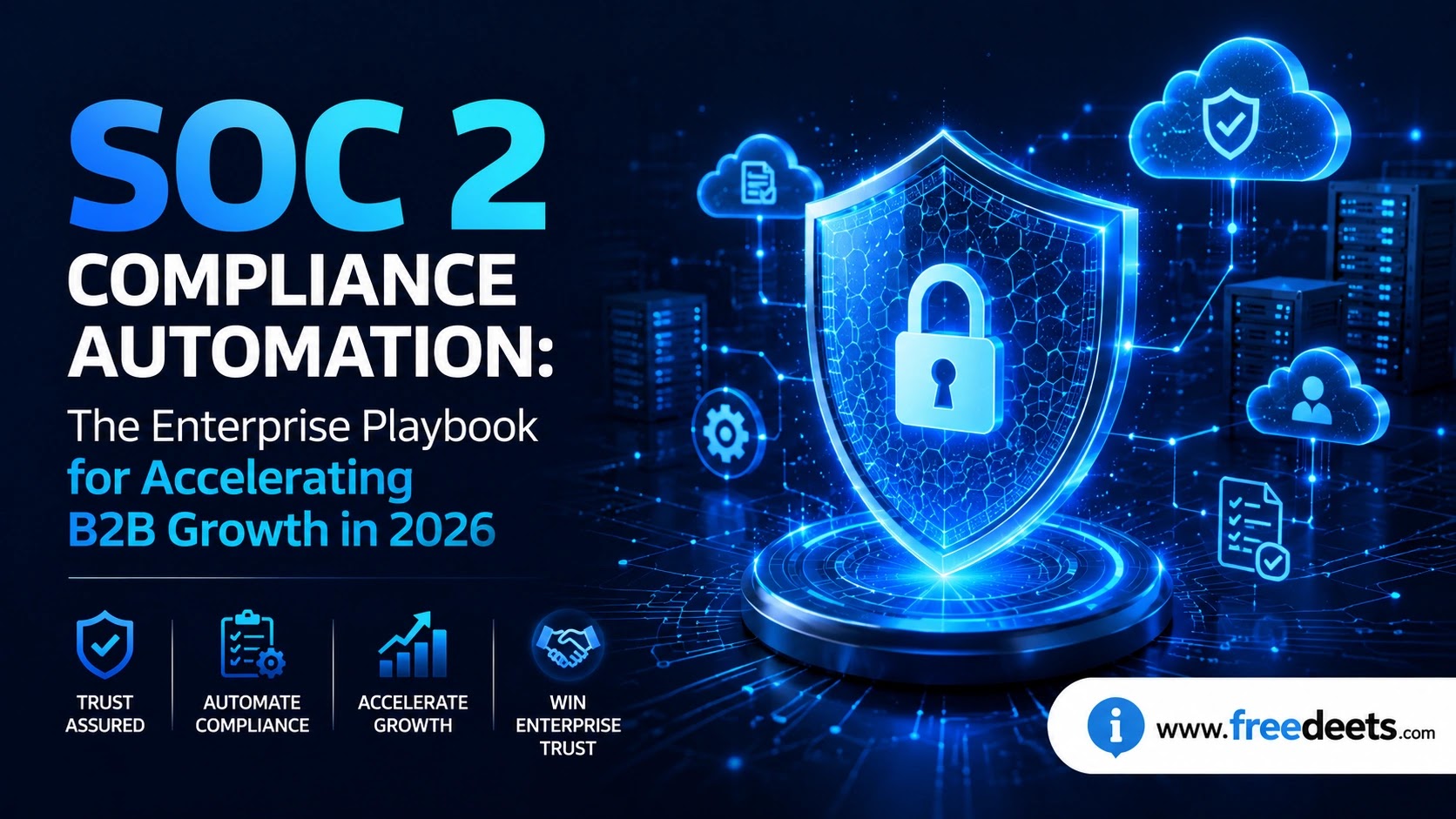
  • Why Choosing a Google Email Domain is Key to Your Business Success

    Why Choosing a Google Email Domain is Key to Your Business Success

    As a business owner, you know that having a professional and reliable email address is crucial to your success. But did you know that choosing the right email domain can make all the difference? If you want to establish a strong online presence and build trust with your customers, then using a Google email domain is the way to go. Not only does it offer a high level of security and reliability, but it also comes with a suite of powerful tools that can help streamline your business operations. 

    In this article, we’ll explore the many benefits of using a Google email domain, and why it’s the smart choice for any business looking to stay ahead of the competition. Whether you’re a small startup or a larger enterprise, investing in a Google email domain is a smart move that can pay off in big ways. So let’s dive in and learn more about why choosing a Google email domain is key to your business success.

    What is a Google email domain?

    What is a Google professional email domain?
    Image credit goes to Freepik

    First, let’s define what we mean by a Google email domain. When you sign up for a Google email domain, you’re essentially creating custom email addresses that use your own domain name (e.g. yourname@yourbusiness.com). This is different from a free email service like Gmail or Yahoo, where you use a domain owned by the email provider (e.g. yourname@gmail.com).

    By using a Google email domain, you can create a professional email address that reflects your business name and brand. This can help you establish credibility with your customers and partners, and make it easier for people to remember and find your email address. Plus, with a custom email domain, you have greater control over your email accounts and can easily manage them from a single dashboard.

    Benefits of using a Google email domain

    Benefits of using a Google email domain
    Image credit goes to Freepik

    So why should you choose a Google email domain over other email hosting options? Let’s take a look at some of the key benefits:

    1. Professional appearance

    As mentioned earlier, using a custom email domain can give your business a more professional appearance. When you use a free email service like Gmail or Yahoo, it can make your business look less established and less trustworthy. But with a custom email domain, you can create email addresses that match your business website and branding, which can help build trust with your customers and partners.

    2. High-level security

    Another key benefit of using a Google email domain is that it comes with a high level of security. Google has some of the best security measures in place to protect your email accounts from hackers and other threats. This includes two-factor authentication, spam filters, and anti-phishing protection. Plus, Google is constantly updating its security features to stay ahead of new threats.

    3. Powerful productivity tools

    One of the biggest advantages of using a Google email domain is that it comes with a suite of powerful productivity tools that can help streamline your business operations. This includes tools like Google Drive, Google Calendar, and Google Docs, which can help you collaborate with your team, store and share files, and manage your schedule.

    4. Easy integration with other Google tools

    If you’re already using other Google tools like Google Ads or Google Analytics, then using a Google email domain can make it easier to integrate these tools with your email accounts. You can also use Google Workspace to manage your email, documents, and other files all in one place.

    The importance of professional email addresses

    The importance of professional email addresses
    Image credit goes to Freepik

    Before we dive into how to set up a Google email domain, let’s talk about why having a professional email address is so important for your business. Here are a few reasons:

    1. Building trust with customers

    When customers see a professional email address, it helps to establish trust. They feel like they’re dealing with a legitimate business, rather than someone who might be running a scam.

    2. Branding your business

    A professional email address also helps to brand your business. When your email address includes your business name, it reinforces your brand and helps to make your business more memorable.

    3. Keeping your personal and professional lives separate

    If you’re still using a personal email address for your business, it can be difficult to keep your personal and professional lives separate. By using a professional email address, you can keep your work emails separate from your personal emails, which can help you stay organized and on top of things.

    Setting up a Google email domain

    Now that you understand the benefits of using a Google email domain and why having a professional email address is important, let’s talk about how to set up your own Google email domain. Here are the steps:

    Setting up a Google email domain - FreeDeets
    Image credit goes to Freepik

    1. Choose a domain name

    The first step is to choose a domain name for your business. This will be the part of your email address that comes after the “@” symbol (e.g. yourname@yourbusiness.com). You can purchase a domain name from a domain registrar like GoDaddy or Namecheap, or you can use a domain name that you already own.

    2. Sign up for Google Workspace

    Once you have a domain name, the next step is to sign up for Google Workspace. This is the service that allows you to create and manage your custom email addresses. The cost of Google Workspace varies depending on the plan you choose, but it typically ranges from $6 to $18 per user per month.

    3. Verify your domain

    After you sign up for Google Workspace, you’ll need to verify that you own the domain name you want to use. This involves adding some DNS records to your domain registrar account. Google provides instructions on how to do this in their setup wizard.

    4. Create email addresses

    Once your domain is verified, you can start creating email addresses for your business. You can do this by logging into your Google Workspace account and navigating to the “Users” section. From there, you can add new users and assign them email addresses.

    5. Set up email clients

    Finally, you’ll need to set up your email clients (like Outlook or Apple Mail) to access your Google email accounts. Google provides detailed instructions on how to do this for each email client.
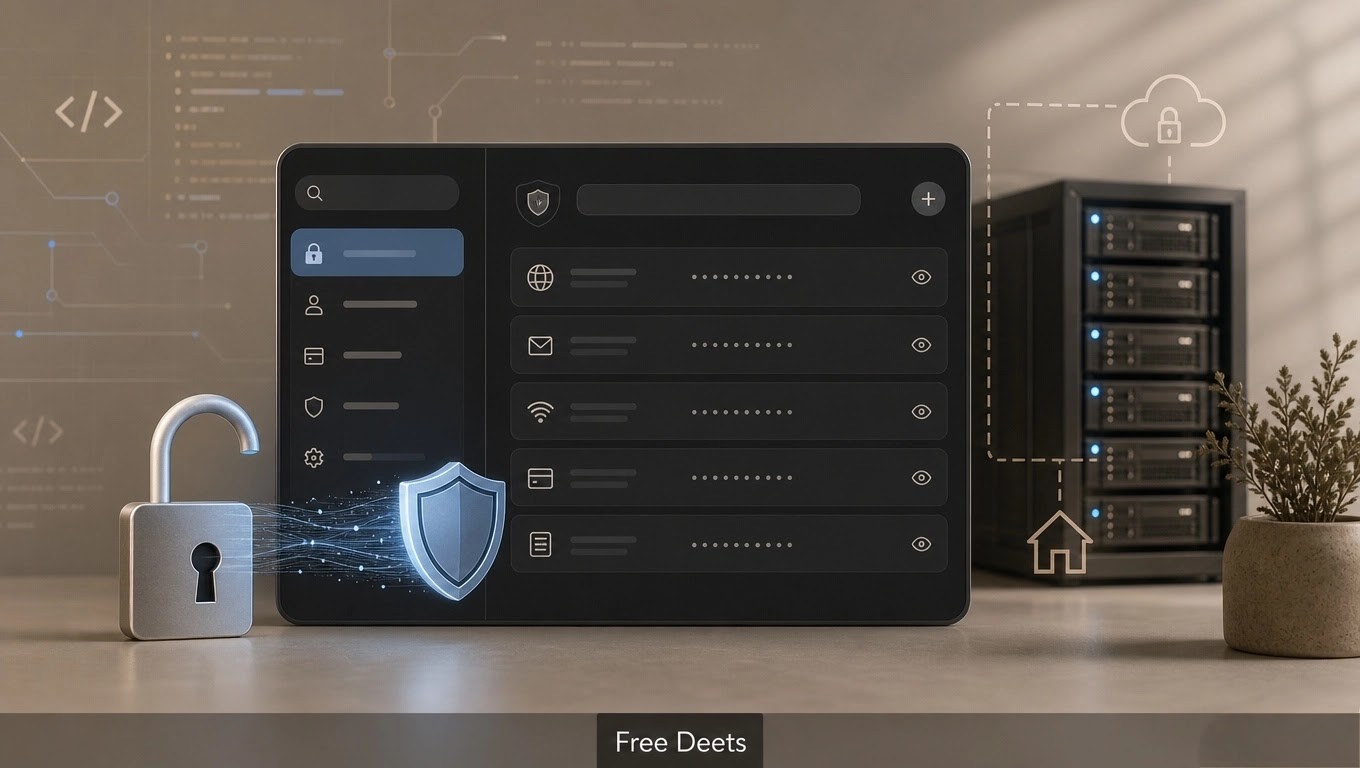
    How to customize your Google email domain

    How to customize your Google email domain
    Image credit goes to Freepik

    Once you have your Google email domain set up, you can customize it to better reflect your business branding and needs. Here are a few ways to do this:

    1. Create email aliases

    If you want to use multiple email addresses for different purposes (like sales@yourbusiness.com or support@yourbusiness.com), you can create email aliases in your Google Workspace account. These allow you to receive emails sent to different addresses in a single inbox.

    2. Customize your signature

    You can also customize your email signature to include your business logo, social media links, and other branding elements. This can help reinforce your brand and make your emails more memorable.

    3. Use templates

    If you frequently send similar types of emails (like invoices or quotes), you can create email templates in Google Workspace to save time and ensure consistency.

    Google email domain security features

    Google email domain security features
    Image credit goes to Freepik

    As mentioned earlier, one of the key benefits of using a Google email domain is the high level of security it provides. Here are a few of the security features you can expect:

    1. Two-factor authentication

    You can enable two-factor authentication on your Google email accounts to add an extra layer of security. This requires you to enter a code sent to your phone or generated by an app in addition to your password.

    2. Spam filters

    Google uses advanced spam filters to help keep unwanted emails out of your inbox. You can also mark emails as spam or unsubscribe from mailing lists to help improve the filters.

    3. Anti-phishing protection

    Google’s anti-phishing protection helps to identify and block emails that may be trying to steal your personal information or login credentials.

    Integrating Google email with other Google tools

    Another advantage of using a Google email domain is the ability to easily integrate it with other Google tools. Here are a few examples:

    1. Google Drive

    Google Drive allows you to store and share files with your team. You can easily attach files from Google Drive to your emails, and you can also save email attachments directly to your Google Drive account.

    2. Google Calendar

    Google Calendar makes it easy to schedule meetings and appointments. You can create events directly from your email, and you can also view your schedule and RSVP to events from your email inbox.

    3. Google Docs

    Google Docs allows you to create and collaborate on documents with your team. You can easily attach Google Docs to your emails, and you can also edit and share documents from your email inbox.

    Tips for managing your Google email domain

    Now that you have your Google email domain set up and customized, here are a few tips to help you manage it effectively:

    1. Use labels and filters

    Labels and filters can help you organize your emails and keep your inbox clutter-free. You can create labels for different types of emails (like newsletters or invoices), and you can set up filters to automatically apply labels, archive, or delete certain emails.

    2. Use keyboard shortcuts

    Google Workspace has a number of keyboard shortcuts that can help you perform common tasks more quickly and efficiently. You can find a list of shortcuts on the Google Workspace help site.

    3. Set up email forwarding

    If you want to receive your Google email on another email service (like Yahoo or Outlook), you can set up email forwarding in your Google Workspace account. This will automatically forward your emails to another email address.

    Conclusion

    In conclusion, choosing a Google email domain is a smart move for any business looking to establish a strong online presence and build trust with customers. By using a custom email domain, you can create a professional appearance, benefit from high-level security, and take advantage of powerful productivity tools. Plus, with easy integration with other Google tools, managing your email and other business operations is a breeze. So if you haven’t already, consider investing in a Google email domain for your business today.

    Home Page

  • The Great Password Manager Showdown: Which Tool Rules in 2026?

    The Great Password Manager Showdown: Which Tool Rules in 2026?

    The Great Password Manager Showdown of 2026 featuring mobile, laptop, and tablet security dashboards on freedeets.com.

    We’ve all been there: staring at a screen, completely locked out because we can’t remember if the password required a capital letter, a special symbol, or the name of a childhood pet.

    With cybersecurity threats scaling up every year, relying on your memory or a physical sticky note isn’t just risky—it’s an invitation to identity theft. That’s where a dedicated password manager comes in. But with big names like 1Password, LastPass, Bitwarden, Dashlane, Apple Keychain, and Google Password Manager competing for your digital vault, finding the perfect match feels overwhelming.

    Let’s strip away the corporate marketing talk and break down how these six heavy hitters actually stack up in terms of zero-knowledge encryption, cross-platform utility, real-world convenience, and value for your money.

    1. 1Password: The Gold Standard for Families and Power Users

    If you want a polished, incredibly smooth experience across every single device you own, 1Password is consistently a top-tier recommendation.

    Secure digital vault UI on a laptop flanked by a tablet and smartphone showcasing encrypted family password sharing.


    • The Secret Key Advantage: Unlike most managers that rely solely on your Master Password, 1Password utilizes a dual-layer security approach. Your vault is locked via your Master Password plus a unique, 128-bit Secret Key generated locally on your machine. This key never hits the cloud, rendering brute-force server attacks practically impossible.

    • Watchtower Intelligence: 1Password doesn’t just store credentials; its Watchtower dashboard proactively audits your vault. It alerts you to weak parameters, duplicate log-ins, and compromised accounts linked to active data breaches.

    • Travel Mode: Ideal for international frequent flyers, Travel Mode lets you temporarily wipe specific, highly sensitive vaults from your phone or laptop before crossing borders, restoring them with a single click once you arrive safely.

    The Reality Check: There is no free tier. Following global infrastructure investments and currency updates, the individual plan sits at a premium price point, making it a financial commitment.

    2. Bitwarden: The Open-Source Privacy Champion

    For the privacy purist and the budget-conscious tech enthusiast, Bitwarden is the ultimate alternative.

    Open-source cybersecurity interface on a display next to an on-premise local server rack and a secure digital padlock.

    • Radical Transparency: Bitwarden’s core source code is entirely open-source. Anyone can review it, audit it, and inspect it for vulnerabilities, backed by annual professional third-party penetration tests.


    • Unmatched Free Value: Unlike competitors who have stripped down their unpaid offerings, Bitwarden continues to offer a generous 100% free plan that gives you unlimited password storage across an unlimited number of devices.

    • Self-Hosting Capabilities: If you completely distrust cloud servers, Bitwarden allows you to deploy and host your password database on your own home server or private network cloud.

    The Reality Check: While highly functional, the user interface feels structural and minimalist compared to its competitors. It doesn’t have the flashy “magazine-style” visual charm of 1Password or Dashlane, but it works flawlessly.

    3. Dashlane: The Feature-Packed Premium Suite

    Dashlane positions itself as an all-in-one digital privacy control center, focusing on premium security features that look and feel modern.

    A woman reviewing a premium cybersecurity dashboard showing dark web identity threat monitoring maps and biometric settings.

    • Integrated Hotspot Shield VPN: Dashlane packages an unlimited Virtual Private Network (VPN) directly into its premium subscription tier. If you frequently use public Wi-Fi networks, this single bundle can save you money on standalone VPN costs.

    • Live Dark Web Monitoring: Instead of manual database lookups, Dashlane continuously scans the dark web for leaked emails, phone numbers, and financial details, pinging you instantly the moment your information surfaces.

    The Reality Check: Dashlane permanently removed its free tier plan. If you want to use it, you must buy into their premium annual subscription, making it one of the most expensive standalone options on the market.

    4. LastPass: The Rebuilding Legacy Player

    LastPass was once the undisputed king of password management, but historical security incidents have forced the company to undergo massive infrastructure overhauls.

    An online security interface showcasing emergency access setup, trusted contacts, and a robust physical steel safe.

    • Simple Organization: LastPass excels at a highly intuitive, folder-based layout system that makes organizing hundreds of industrial or personal log-ins incredibly simple.
    • Granular Emergency Access: You can assign a trusted legacy contact who can request emergency access to your vault if you are incapacitated, complete with a customizable waiting period to protect your ongoing privacy.
    • The Reality Check: The free tier restricts you to either mobile or desktop access—not both. Due to the high-profile data breaches in its history, security-first users often pass over LastPass in favor of zero-knowledge alternatives like 1Password or Bitwarden.

    5. Apple Keychain: The Frictionless Ecosystem Native

      If you are entirely embedded within the Apple ecosystem (iPhone, Mac, iPad), Apple Keychain is an invisible, blazing-fast security powerhouse.

      • Deep Hardware Integration: It integrates cleanly into iOS and macOS system settings, using on-device biometrics like Face ID and Touch ID to instant-fill passwords and credit card forms instantly.
      • Zero App Maintenance: There is no third-party software to download, update, or pay for. It handles cross-device passkey generation perfectly via iCloud.
      • The Reality Check: Cross-platform utility is incredibly limited. While Apple provides an iCloud Passwords extension for Windows, it lacks native apps or browser extensions for Android and Linux users.

    • 6. Google Password Manager: The Seamless Android & Chrome Standard

        Tied natively to your Google account, Google Password Manager is the go-to utility for standard web browsing and Android mobile environments.

        • Instant Accessibility: If you use Google Chrome as your primary browser, it saves and fills credentials automatically across desktop and mobile devices without requiring extra plugins.
        • On-Device Encryption: Google allows you to turn on on-device encryption keys, which adds an extra layer of protection ensuring Google cannot read your passwords without your system lock screen pattern or pin code.
        • The Reality Check: It lacks dedicated secure vaults for documents, secure notes, or complex password-sharing hierarchies for teams and families.

          Side-by-side comparison of Apple iOS Keychain biometric sign-in versus Google Chrome and Android Password Manager.

    • Head-to-Head Comparison Table

    Brand

    Zero-Knowledge

    Free Plan

    Starting Monthly Price (Approx.)

    Unique Feature

    1Password

    Yes (+ Secret Key)

    No (14-Day Trial)

    ~$2.99 / mo

    Travel Mode

    Bitwarden

    Yes (Open Source)

    Yes (Unlimited Devices)

    ~$1.65 / mo

    Self-Hosting Options

    Dashlane

    Yes

    No

    ~$3.68 / mo

    Built-in Unlimited VPN

    LastPass

    Yes

    Limited (1 Device Type)

    ~$3.00 / mo

    Emergency Access Controls

    Apple Keychain

    Yes

    Free (Apple Only)

    Included with Hardware

    Biometric System Autofill

    Google Password

    Yes (Optional Setup)

    Free (Google Account)

    Included with Account

    Frictionless Chrome Sync

    Final Verdict: Which One Should You Choose?

    • Choose 1Password if you want the most secure, polished user interface for a family or cross-platform professional setup.

    • Choose Bitwarden if you want maximum cloud transparency, advanced data control, or need a stellar free version that doesn’t limit your devices.

    • Choose Dashlane if you want a built-in VPN and don’t mind paying a premium price point for bundled security suites.


    • Stick with Apple Keychain or Google Password Manager if you are firmly locked into one ecosystem, value simplicity, and don’t need advanced cross-platform asset sharing.

    How do I safely export my passwords from Google or Apple and import them into a dedicated manager like 1Password or Bitwarden without exposing data?

    Moving your credentials from a system native manager like Google or Apple to a dedicated, cross-platform vault like 1Password or Bitwarden is a massive upgrade for your digital security.

    However, the transition process carries a major risk: both Google and Apple export passwords in an unencrypted CSV (comma-separated values) text file. If malware is running on your machine, or if you leave that file sitting in your downloads folder, anyone with access to your device can read all of your credentials in plain text.

    Follow this step-by-step blueprint to execute this transfer completely offline and leave zero trace of your unencrypted data behind.

    Step 1: Secure Your Local Environment First

    Before downloading a single file, prepare your computer:

    • Disconnect from the Internet: Turn off your Wi-Fi or unplug your ethernet cable. Running this process entirely offline prevents any active background malware or browser extensions from syncing or uploading the generated CSV.

    • Avoid Shared Folders: Make sure you save the file locally (like directly on your desktop or in a local “Documents” folder) and not inside a cloud-synced folder like iCloud Drive, Google Drive, OneDrive, or Dropbox.

    Step 2: Exporting Your Passwords

    Option A: From Google Password Manager (via Chrome)


    1. Open Google Chrome, click the three vertical dots in the top-right corner, and select Google Password Manager (or go to chrome://password-manager/settings).
    2. On the left sidebar, click Settings.

    3. Scroll down to the Export passwords section and click Download file.

    1. Confirm your identity by entering your computer’s lock screen password (not your Google password).
    2. Save the generated .csv file directly to your desktop.

    Option B: From Apple Passwords / Keychain


    • On macOS Sequoia or newer (via Passwords App): Open the native Passwords app rightarrow Click File in the top menu bar rightarrow Select Export All Passwords… rightarrow Confirm your Mac password/Touch ID and save the .csv file to your desktop.

    • On macOS Monterey/Ventura/Sonoma (via System Settings): Open System Settings rightarrow Click Passwords rightarrow Click the three-dot icon at the top of the password list rightarrow Select Export All Passwords… and save the file.

    Step 3: Import into Your New Dedicated Manager

    Since you are disconnected from the web, you will want to use the native desktop applications of your new manager to perform the import locally, or carefully reconnect just for the brief moment of import.

    Option A: Importing into Bitwarden

    1. Log in to your Bitwarden Web Vault or open the desktop app.

    2. Navigate to Tools (or Settings depending on your app version) and select Import Data.

    3. Under Format, select Chrome (csv) (if importing from Google) or Apple Passwords / iCloud Keychain (csv) (if importing from Apple).
    4. Select or drag-and-drop your saved .csv file.
    5. Click Import Data.

    Option B: Importing into 1Password

    1. Open and log in to the 1Password desktop app or sign in to your account at 1Password.com.
    2. Click your account name in the top-right corner and select Import.

    3. Choose Google Chrome or Apple Passwords / iCloud from the list of options.
    4. Select the target vault (e.g., “Employee” or “Personal”) where you want the log-ins to live.
    5. Drag your .csv file into the upload box to complete the process.

    Step 4: Secure Clean-Up (Crucial)

    Once you verify that all of your credentials have successfully populated in your new manager, you must securely erase the transfer file. Simply dragging the CSV to your desktop trash can/bin does not delete the physical data from your hard drive—it merely hides it until it is overwritten.


    • On a Mac: Click on your Trash bin, hold the Option key, right-click, and select Secure Empty Trash (or use a secure file-shredding utility if you are on an SSD-based Mac, where standard secure empty options are restricted).

    • On Windows: Download a lightweight open-source tool like Eraser or BleachBit. Right-click the .csv file on your desktop, select your secure erase tool, and run a 3-pass secure overwrite (DoD 5220.22-M). This completely shreds the physical sectors of your hard drive where the unencrypted file lived.
    • Clear Browser Cache: Clear your web browser’s download history to remove the logged path showing where the file was briefly stored.