Beyond the Chatbot: How Enterprise Agentic AI is Redefining Customer Experience in 2026
Deploying enterprise agentic AI has fundamentally redefined how modern companies design and scale their customer journeys. The era of clunky, rigid decision-tree chatbots that endlessly loop visitors through scripted FAQ menus is officially over. Today’s commercial ecosystem relies on autonomous digital agents capable of understanding situational context, executing live API actions, and predicting customer intent to deliver frictionless, real-time resolution across enterprise touchpoints.
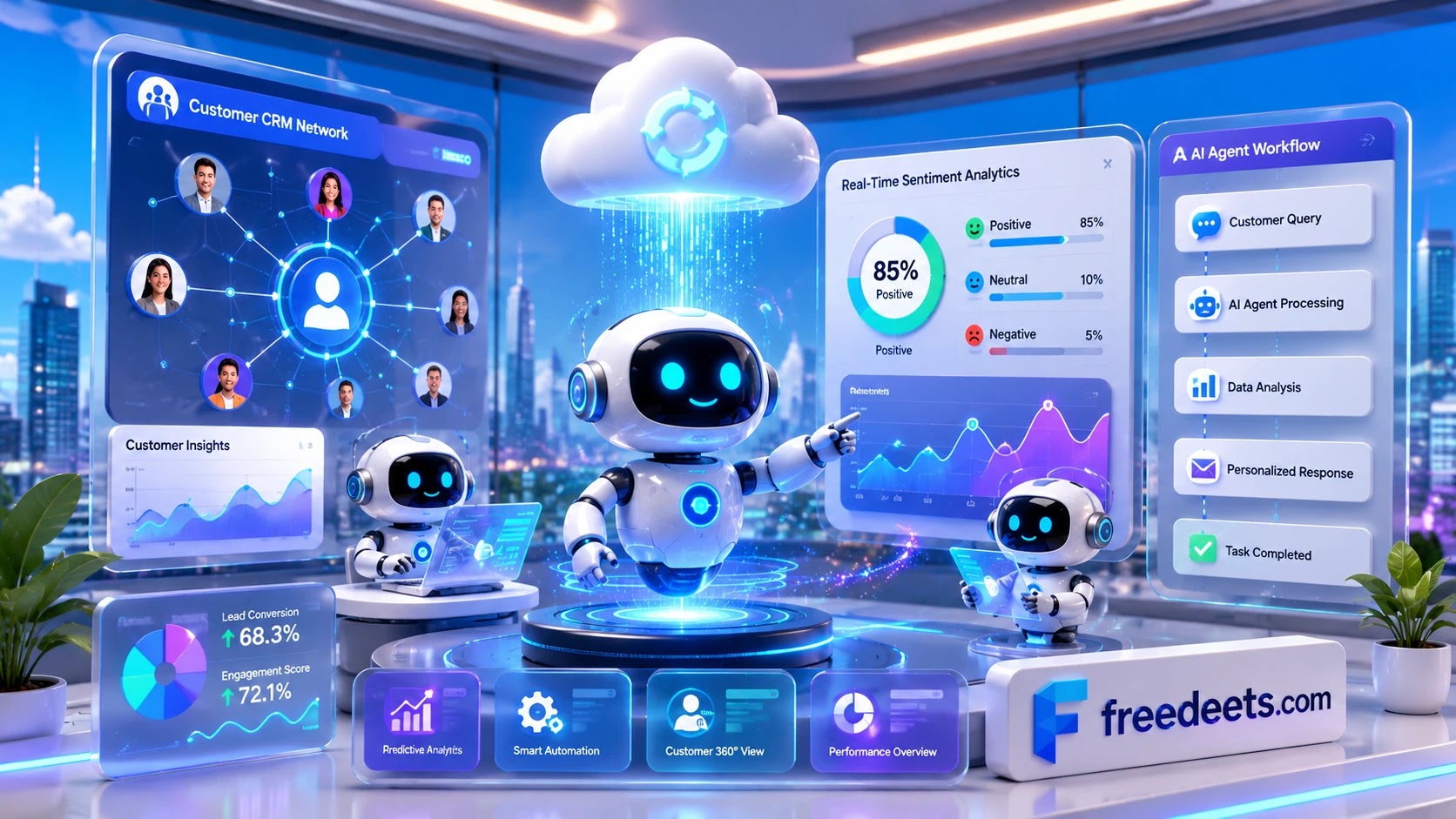
For modern commercial enterprises—ranging from high-velocity retail platforms to multi-tenant B2B SaaS corporations—customer experience (CX) represents a primary driver of customer lifetime value (LTV). According to technology trends published by Gartner Research, organizations embedding autonomous agents into their service desks report significant reductions in customer churn and operational overhead, transitioning support departments from cost centers into proactive retention engines.
Executive Takeaway on 2026 CX Strategy
Customer support has evolved from reactive ticket handling to autonomous agentic workflows. Enterprise agentic AI systems autonomously query ERPs, execute refunds, and personalize live product offerings without requiring human agent intervention.
1. From Scripted Chatbots to Enterprise Agentic AI
Historically, customer support operated under a purely reactive paradigm: a customer encountered an issue, opened a support ticket, and waited hours for a human representative to manually review database records. Early chatbots offered minimal improvement, merely querying basic knowledge bases for static keywords.
Enterprise agentic AI flips this structure upside down. Instead of generating passive conversational responses, agentic systems use autonomous reasoning loops to plan multi-step actions, call external APIs, verify outputs, and resolve complex issues end-to-end:
- Legacy Rule-Based Bots (2018–2022): Keyword-matching trees, static FAQs, fragmented data silos, and rigid business-hour handoffs.
- Early Generative Chatbots (2023–2024): Fluid natural language drafting, automated ticket summaries, and conversational responses without true backend operational autonomy.
- Enterprise Agentic AI (2025–2026+): Multi-modal understanding, dynamic tool usage, proactive anomaly detection, and automated database read-write execution across CRM platforms.
2. Strategic Business Benefits of Enterprise Agentic AI
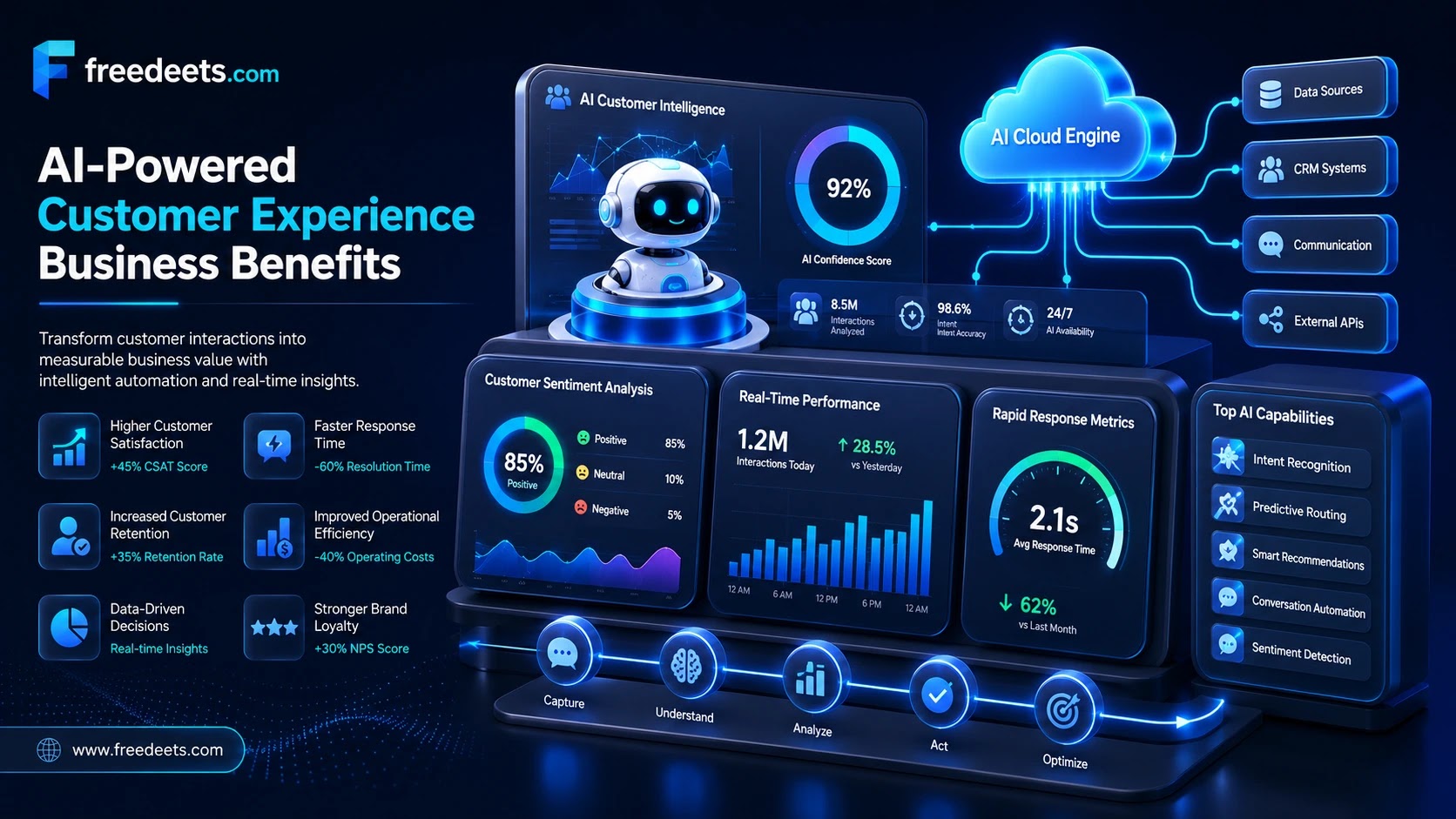
Implementing autonomous AI workflows across customer interaction channels delivers measurable commercial and operational returns:
Hyper-Personalization at Scale
Traditional personalization often amounted to inserting a user’s first name into an automated email template. Modern agentic systems analyze user session context, past transactional history, behavioral browsing signals, and geographic data to tailor recommendations and self-service paths to each individual user in real time.
Continuous 24/7/365 Autonomous Execution
Modern consumers demand instantaneous answers. Autonomous agents operate without shift limits or holiday downtime, processing high inquiry volumes during peak promotional periods like Black Friday without degrading response times or customer satisfaction.
Radical Ticket Cost Optimization
By automating routine tier-1 inquiries—such as shipping status updates, order modifications, and billing verification—enterprises reduce cost per resolution significantly while freeing human agents to resolve complex, emotionally sensitive customer escalations.
| Operational Performance Metric | Legacy Human-Only CX | Enterprise Agentic AI |
|---|---|---|
| Average First-Response Time | 15 Minutes to 24 Hours | Under 2 Seconds |
| Average Cost Per Resolved Ticket | $6.00 – $15.00 | $0.25 – $1.20 |
| Operational Availability | Standard Business Hours | 24/7/365 Continuous |
| Task Capability | Manual database retrieval | Autonomous multi-system API execution |
3. Key Technologies Powering Enterprise Agentic AI
Transforming text processing into active digital execution requires coordinating several technical systems:
- Function Calling & Tool Orchestration: Connects large language models to external enterprise APIs (e.g., Stripe, Salesforce, Zendesk) to complete actual backend tasks.
- Retrieval-Augmented Generation (RAG): Dynamically retrieves real-time, permission-controlled enterprise data from internal vector databases to eliminate hallucinations.
- Real-Time Sentiment Analysis: Monitors speech cadence and message phrasing for frustration signals, automatically escalating sensitive interactions to human supervisors.
- Autonomous Feedback Loops: Evaluates outcome success against baseline satisfaction metrics, updating agent routing logic based on actual resolution rates.
4. Real-World Case Studies in Enterprise Agentic AI
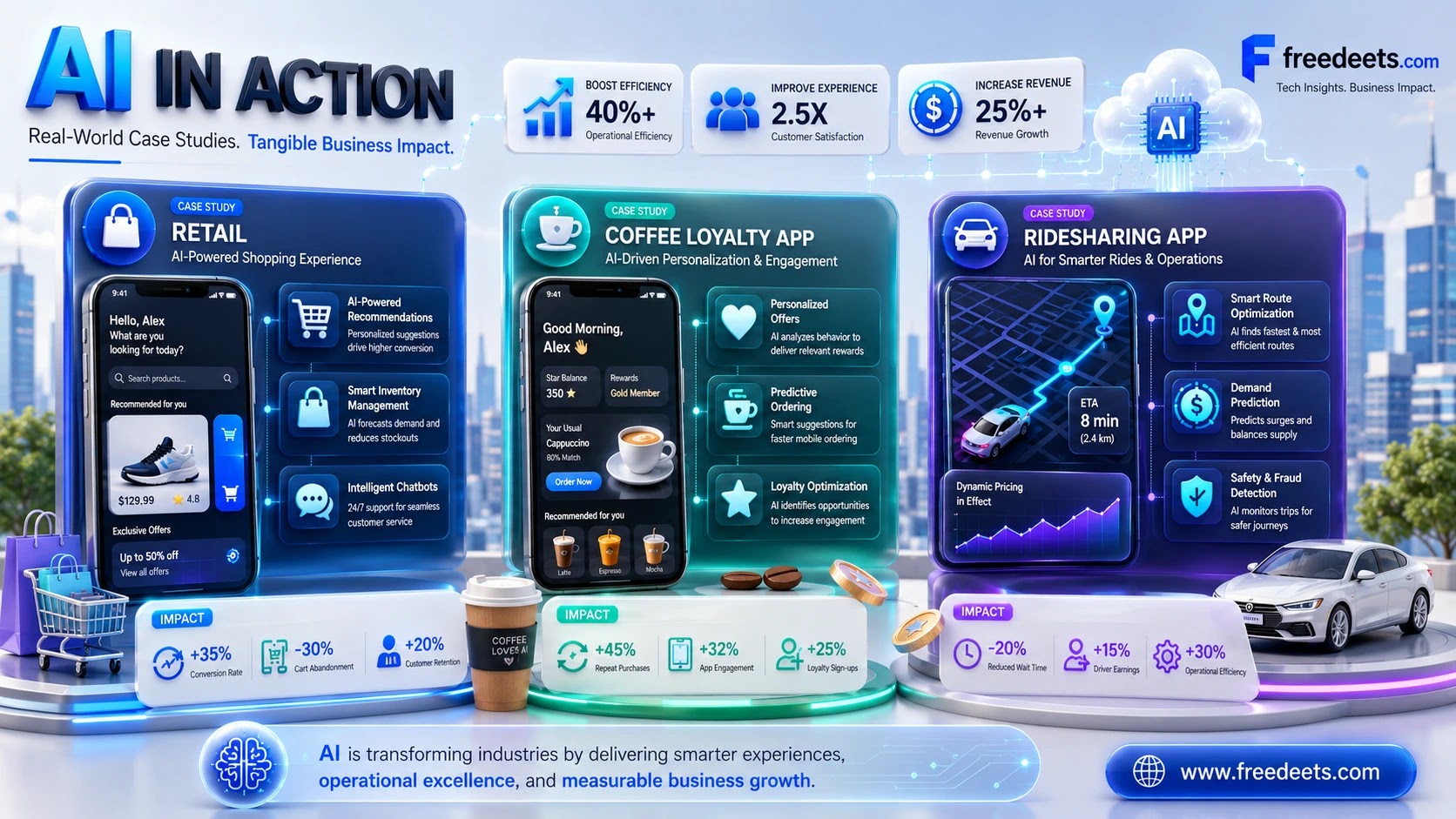
Leading organizations are demonstrating the tangible commercial impact of deploying agentic architectures:
Conversational Commerce & Mobile Order Routing
Global food and beverage retailers use AI agents to manage complex, customized orders via conversational voice interfaces. The system cross-references local inventory availability, past ordering history, and current weather patterns to offer relevant upsells, speeding up drive-thru service while increasing average ticket values.
Computer Vision & Virtual Personalization
Cosmetics and lifestyle brands leverage computer vision models to evaluate skin tones and product matching via smartphone cameras. Autonomous recommendation engines map product combinations to individual shoppers, bridging the gap between digital stores and physical boutiques while decreasing return rates.
Dynamic Logistics & Predictive In-Ride Support
Mobility platforms rely on machine learning to forecast traffic delays, adjust pricing dynamically, and resolve customer support claims. If a vehicle deviates from its scheduled route, autonomous safety systems contact the passenger directly to ensure passenger safety and quality control.
5. Ethical Governance, Data Security, and Regulatory Compliance
Deploying autonomous systems across customer data streams requires strict governance to maintain consumer trust and meet regulatory mandates. According to research published by the MIT Technology Review, responsible AI governance balances system autonomy with clear human-in-the-loop oversight:
- Strict Regulatory Compliance: Guarantee that all automated data ingestion adheres to privacy regulations, including GDPR in Europe and the California Consumer Privacy Act (CCPA), with clear opt-out workflows.
- Algorithmic Auditing & Bias Prevention: Audit models regularly to ensure training data does not produce discriminatory outcomes in credit underwriting, customer verification, or dispute resolution.
- Clear AI Identity Disclosure: Always inform customers when they are communicating with an artificial intelligence agent, and provide a clear, instant path to human assistance when requested.
6. A 4-Step Blueprint for Deploying Enterprise Agentic AI
Implementing an autonomous customer experience strategy requires a phased rollout roadmap:
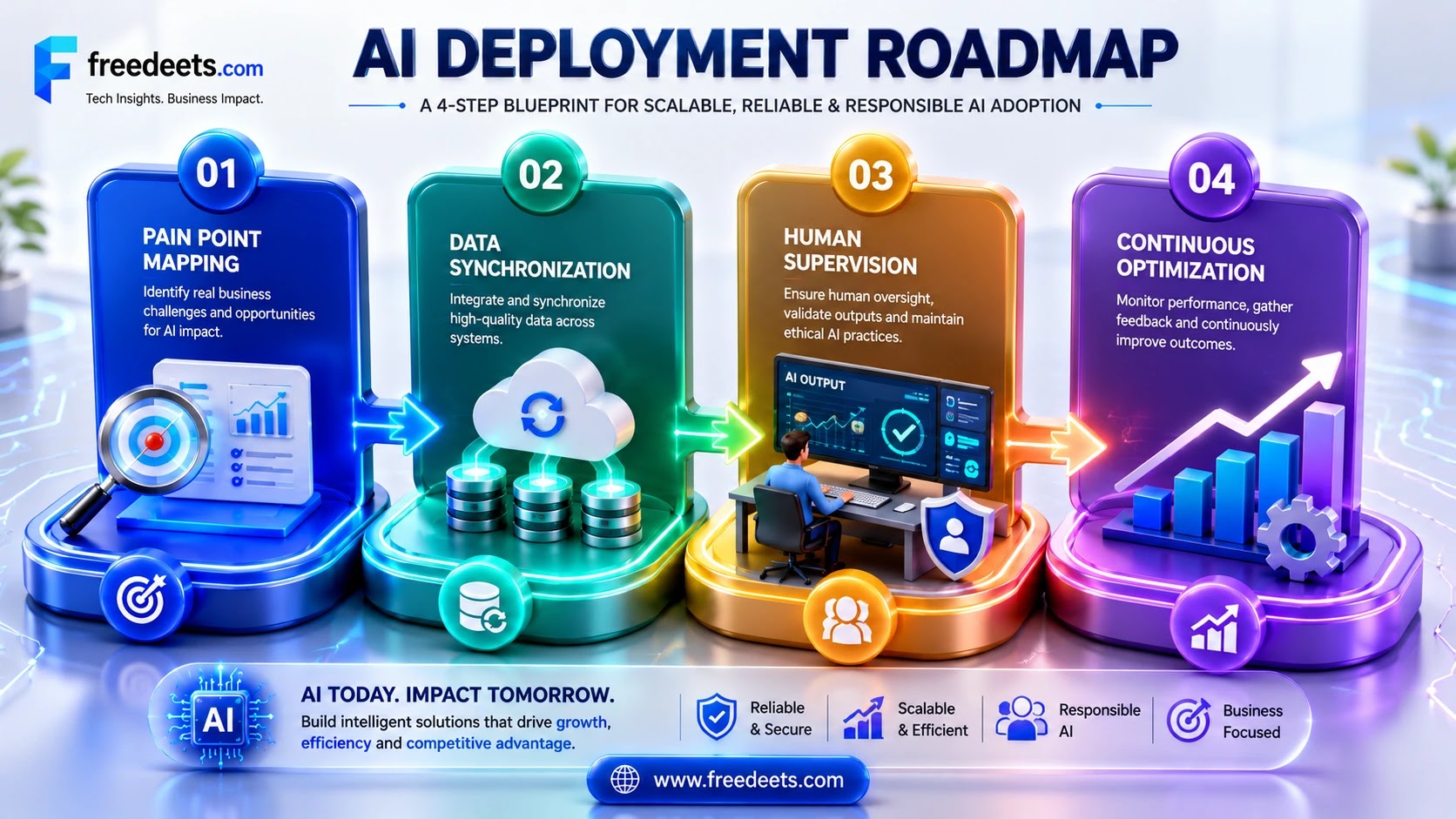
- Step 1: Map High-Volume Friction Points: Audit support ticket queues to identify high-frequency, low-complexity requests (such as tracking lookups, password resets, and return authorizations) that are well-suited for autonomous automation.
- Step 2: Connect Siloed Customer Records: Link your CRM, billing gateways, and inventory databases directly into your AI orchestration platform via secure REST APIs.
- Step 3: Deploy AI Copilots with Human Supervision: Introduce agents alongside human representatives first, allowing staff to review and approve automated actions before granting the AI system full operational autonomy.
- Step 4: Track Sentiment and Model Precision: Continuously monitor Customer Satisfaction (CSAT) scores, resolution times, and model accuracy to refine system prompts and guardrails.
Frequently Asked Questions About Enterprise Agentic AI
What is the difference between a conversational chatbot and an AI agent?
A conversational chatbot provides static, text-based answers based on matching keywords or summarizing documents. An AI agent reasons through complex goals, calls external software APIs, retrieves live records, and completes operational actions—such as processing payments or updating shipping records—autonomously.
Will enterprise agentic AI replace human customer service teams?
No. Agentic AI handles repetitive, transactional requests, freeing human specialists to focus on high-stakes enterprise relationships, complex technical troubleshooting, and situations requiring interpersonal empathy.
How quickly can a business see positive ROI from agentic AI?
Most enterprises see a positive Return on Investment within 6 to 12 months. Savings are driven by lower ticket resolution costs, reduced customer churn, and expanded 24/7 self-service capacity.
Core Takeaways for CX Leaders
- Replace static chatbots with agentic workflows capable of completing backend API tasks.
- Connect CRM and ERP databases to ground AI agents in accurate, real-time records.
- Maintain human-in-the-loop oversight for complex escalations and edge cases.
Conclusion
Customer experience has evolved from a reactive support cost center into a core competitive advantage. Static chatbots can no longer satisfy modern consumer expectations for immediate, personalized resolution. By deploying enterprise agentic AI—supported by unified customer records, disciplined data governance, and smooth human escalation—organizations can scale their operations, lower resolution costs, and build lasting customer loyalty.