Directors & Officers (D&O) Liability Insurance Guide (2026): Executive Risks & Claims
In the regulated corporate landscape of the United States, executive leadership involves navigating complex personal liability exposures alongside daily business growth. For corporate board members and officers, everyday management decisions can lead to allegations of mismanagement, regulatory non-compliance, or fiduciary breaches. Securing specialized D&O liability insurance is critical to safeguard the personal assets of company leaders when lawsuits target individual directors.
When stakeholders, investors, or regulators file legal claims naming board members personally, standard commercial insurance policies will not respond. Standard general liability forms protect the business entity against physical injuries, not executive management decisions. Regulatory enforcement actions monitored by the U.S. Securities and Exchange Commission (SEC) demonstrate that defense costs and securities litigation can quickly escalate into millions of dollars, making dedicated directors and officers coverage an indispensable layer of executive protection.
Executive Summary: Personal Asset Exposure
Corporate directors can be held personally liable for official decisions. If a corporation enters insolvency or is legally prohibited from indemnifying its leadership, personal bank accounts, investments, and home equity remain exposed without standalone Side A D&O insurance protection.
1. Fiduciary Duties and Executive Exposure
Board members and senior officers operate under core legal obligations known as fiduciary duties: the Duty of Care, Duty of Loyalty, and Duty of Obedience. According to legal frameworks outlined by the American Bar Association (ABA), leaders must act in good faith and in the best interests of the company.
When an unexpected financial downturn, merger failure, or operational delay occurs, stakeholders frequently initiate litigation alleging executive missteps. If the company cannot provide indemnification due to corporate bankruptcy or derivative lawsuit restrictions, the personal assets of directors are directly vulnerable to judgments and settlements.
2. What Does D&O Liability Insurance Cover?
D&O liability insurance provides defense cost reimbursement and indemnification when leadership is accused of wrongful acts in an official capacity. Common covered scenarios include:
- Breaches of Fiduciary Duty: Allegations of poor oversight, operational mismanagement, or failure to exercise reasonable business care.
- Misrepresentation or Inaccurate Disclosures: Claims of misleading revenue projections, flawed investor decks, or errors in regulatory filings.
- Regulatory Non-Compliance: Investigations and regulatory actions initiated by government agencies like the SEC, FTC, or state attorneys general.
- Competitor Claims: Allegations of unfair trade practices, intellectual property misuse, or poaching under executive direction.
3. Policy Architecture: Side A, Side B, and Side C Coverage Layers
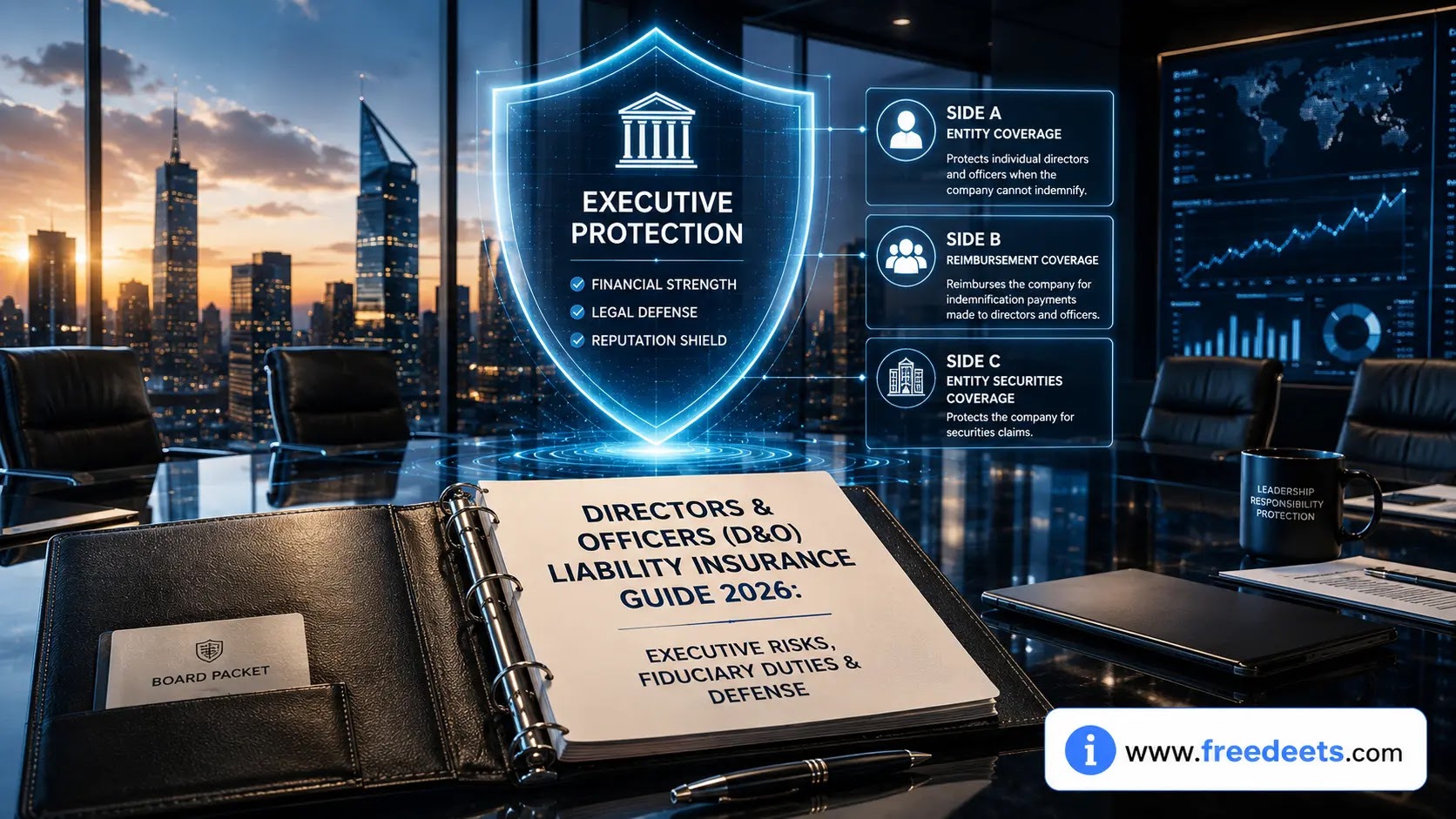
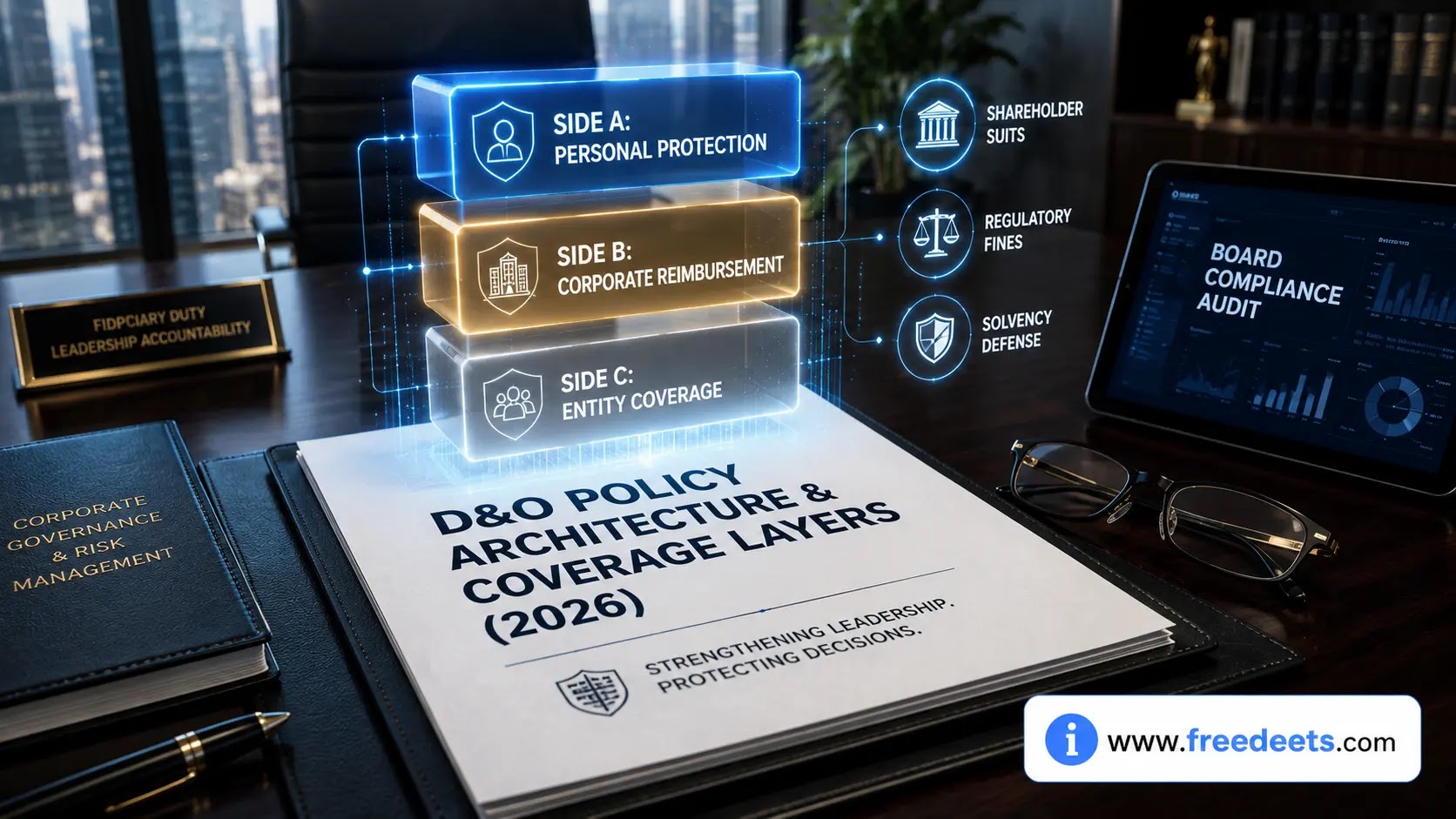
D&O liability insurance is structured into three distinct coverage sections to balance protection between the corporation and its individual executives:
| Coverage Layer | Protected Party | Triggering Circumstance | Deductible / Retention |
|---|---|---|---|
| Side A Coverage | Individual Directors & Officers | Activated when the company is insolvent or legally unable to indemnify executives. | $0 Deductible for executives |
| Side B Coverage | The Corporate Entity | Reimburses the corporation after it pays defense costs to indemnify its officers. | Standard corporate retention |
| Side C Coverage | The Corporate Entity | Protects the business when named as a co-defendant in securities or management lawsuits. | Standard corporate retention |
4. High-Exposure Claim Scenarios in D&O Litigation
Unlike standard liability claims that involve minor property repairs, D&O lawsuits routinely require extensive legal resources simply to manage pretrial document discovery. Consider a standard class-action suit following a disrupted product launch:
A company announces that an anticipated merger has fallen through due to accounting irregularities uncovered during late-stage due diligence. The stock price falls 35%, and institutional shareholders file suit alleging breach of fiduciary duty and disclosure misrepresentations.
- Legal Discovery & Motions (18 Months): $850,000 in specialized legal counsel fees.
- Expert Witness & Forensic Auditing: $400,000 in professional advisory fees.
- Court-Approved Class Settlement: $8,500,000 in negotiated resolution funds.
- Total Exposure: $9,750,000 (exhausting baseline primary limits and triggering excess coverage layers).
5. Key Policy Provisions: Severability and Exclusions
To ensure robust coverage, corporate leaders must look closely at how specific policy clauses are drafted:
- Full Severability of Exclusions: This provision ensures that intentional fraud or knowledge held by one individual executive cannot be imputed to innocent colleagues. Uninvolved board members maintain their defense protections.
- The Fraud Exclusion: D&O policies exclude intentional fraud, criminal acts, and illegal personal profit. However, policies provide defense funding until a final, non-appealable adjudication confirms fraudulent intent.
- Dedicated Side A DIC (Difference in Conditions): Provides an unencumbered excess layer that cannot be frozen by bankruptcy courts during corporate insolvency.
Frequently Asked Questions About D&O Liability Insurance
How much does D&O liability insurance cost per year?
For small private businesses and early-stage startups, baseline policies with $1 million in limits generally cost between $3,500 and $8,000 annually. For publicly traded corporations, annual premiums frequently exceed $40,000 to $100,000+ per million of coverage due to securities class-action exposure.
Are private company boards and startups exposed to D&O lawsuits?
Yes. Private companies face significant exposure from venture capital investors alleging mismanagement, creditors during insolvency, vendors over contract breaches, and regulatory bodies over employment or safety rules.
Can Commercial General Liability or Umbrella policies replace D&O?
No. Commercial General Liability and Umbrella policies strictly handle physical bodily injury and property damage. D&O policies specifically cover economic losses resulting from executive governance decisions.
Core Takeaways for Corporate Leadership
- Prioritize Side A coverage to protect personal bank accounts and real estate from corporate bankruptcy.
- Verify full severability clauses to prevent one executive’s actions from compromising the entire board.
- Secure adequate excess liability layers to cover substantial legal discovery and defense costs.
Conclusion
Leading an organization involves making strategic decisions that balance calculated business risks with fiduciary obligations. When corporate outcomes trigger legal disputes, standard commercial packages offer no personal shelter. Investing in comprehensive D&O liability insurance establishes an essential financial shield that protects personal net worth, attracts top-tier board talent, and ensures resilient corporate governance.