What to Do When Child Birth Goes Wrong: A Parent’s Legal Guide to Birth Injuries
Navigating the aftermath of a delivery room complication requires an authoritative legal guide to birth injuries so parents can understand their rights and hold responsible medical providers accountable in 2026. When childbirth results in severe neonatal trauma, the medical, emotional, and financial burdens can last a lifetime. While unexpected complications arise in obstetrics, many tragic outcomes stem directly from preventable medical errors. Knowing how to differentiate between congenital conditions and provider negligence is the first step toward securing the lifetime care compensation your child needs.

Obstetric standards of care exist to protect both mother and infant during high-risk labor. According to clinical obstetric safety guidelines established by the American College of Obstetricians and Gynecologists (ACOG), continuous electronic fetal monitoring and prompt response to acute fetal distress are essential to prevent prolonged oxygen deprivation. When medical practitioners fail to meet these established standards, affected families possess legal grounds to pursue a medical malpractice lawsuit.
Core Medical-Legal Distinction
A birth defect is a genetic or developmental condition that originates during pregnancy. A birth injury is physical trauma or neurological damage inflicted immediately before, during, or shortly after labor and delivery—frequently caused by delayed medical intervention or improper delivery tool usage.
1. Birth Injury vs. Birth Defect: Establishing Legal Grounds
Determining whether your child’s condition qualifies for financial compensation begins with identifying how and when the trauma occurred:
| Category | Medical Definition | Primary Cause | Legal Recourse |
|---|---|---|---|
| Birth Injury | Physical damage or acute brain trauma sustained during labor, delivery, or resuscitation. | Often preventable; linked to medical error, delayed C-section, or improper tool force. | Actionable through medical malpractice claims against hospitals and clinicians. |
| Birth Defect | Structural or chromosomal abnormalities developing during fetal organogenesis in utero. | Genetic mutations, environmental exposures, or congenital factors. | Rarely Actionable, unless linked to dangerous teratogenic prescription pharmaceuticals. |
2. Common Birth Injury Cases Managed by Legal Specialists
Medical malpractice litigators evaluate delivery records for specific diagnoses that commonly indicate a breach in the standard of care:
- Cerebral Palsy (CP): A chronic motor disorder frequently caused by perinatal asphyxia (oxygen starvation) during labor when clinical staff fail to identify and treat non-reassuring fetal heart tones.
- Hypoxic-Ischemic Encephalopathy (HIE): Severe neonatal brain dysfunction resulting from prolonged restriction of blood or oxygen to the infant’s brain tissue, often leading to cognitive deficits and seizure disorders.
- Brachial Plexus Injuries (Erb’s Palsy): Severe nerve damage in the shoulder and arm caused by excessive traction or twisting forces when clinicians manage a shoulder dystocia delivery improperly.
- Cranial and Skeletal Fractures: Skull fractures, clavicle breaks, or facial nerve trauma resulting from the improper mechanical placement or excessive pull of forceps or vacuum extractors.
3. The 4 Legal Pillars Required to Win a Birth Injury Lawsuit
To secure a settlement or jury verdict, your attorney must prove four distinct elements of tort law:
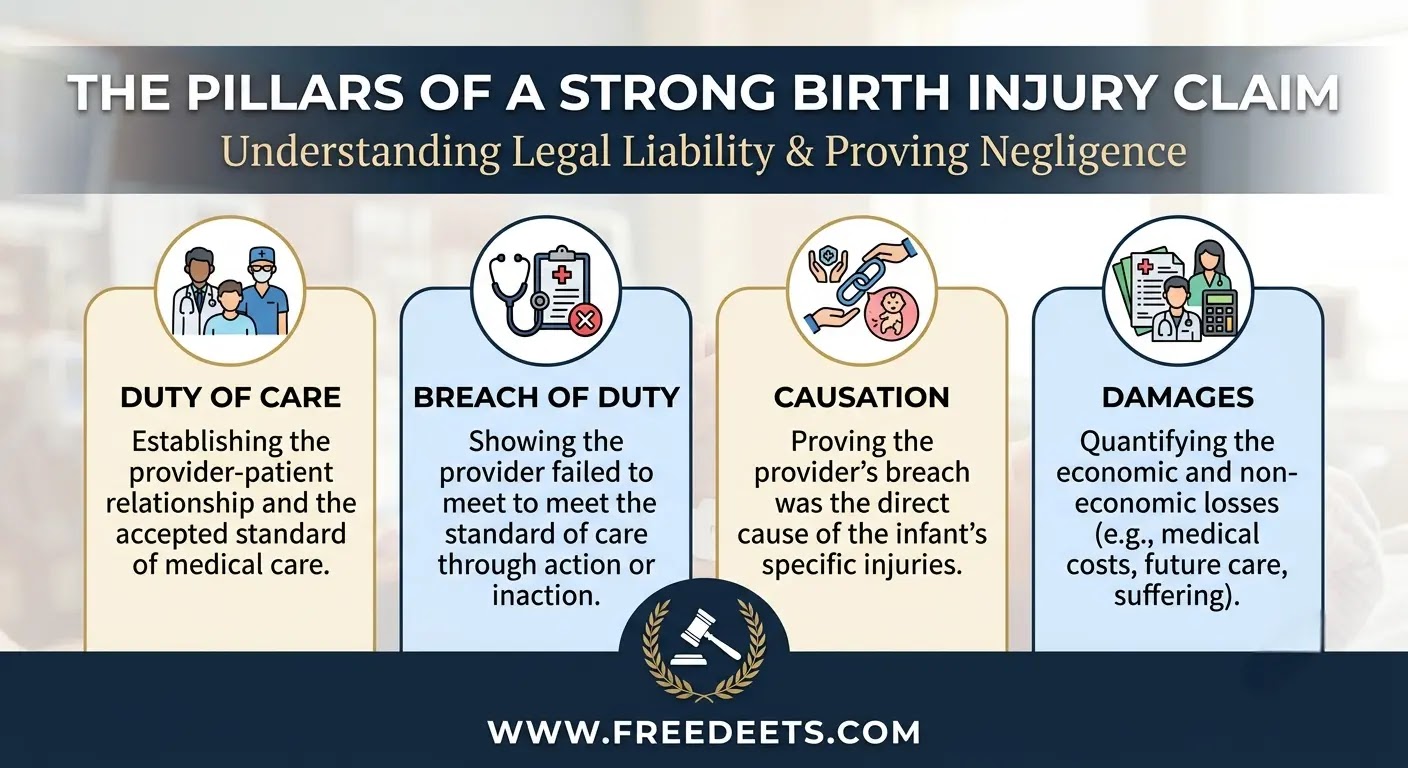
- Duty of Care: Demonstrating that an official doctor-patient relationship existed between the healthcare facility, obstetrician, labor and delivery nurses, and the mother and child.
- Breach of Duty: Proving through independent medical expert testimony that the healthcare team failed to act as reasonably prudent obstetric professionals would have under identical delivery circumstances.
- Direct Causation: Establishing a causal link proving that the provider’s specific oversight or delayed action directly caused the infant’s resulting physical or neurological injury.
- Quantifiable Damages: Calculating the full scope of economic and non-economic losses, including lifetime medical care costs, therapy expenses, and pain and suffering.
4. Financial Compensation Recoverable in Birth Injury Cases
Because severe birth injuries impact an infant for decades, compensation assessments account for lifetime developmental needs:
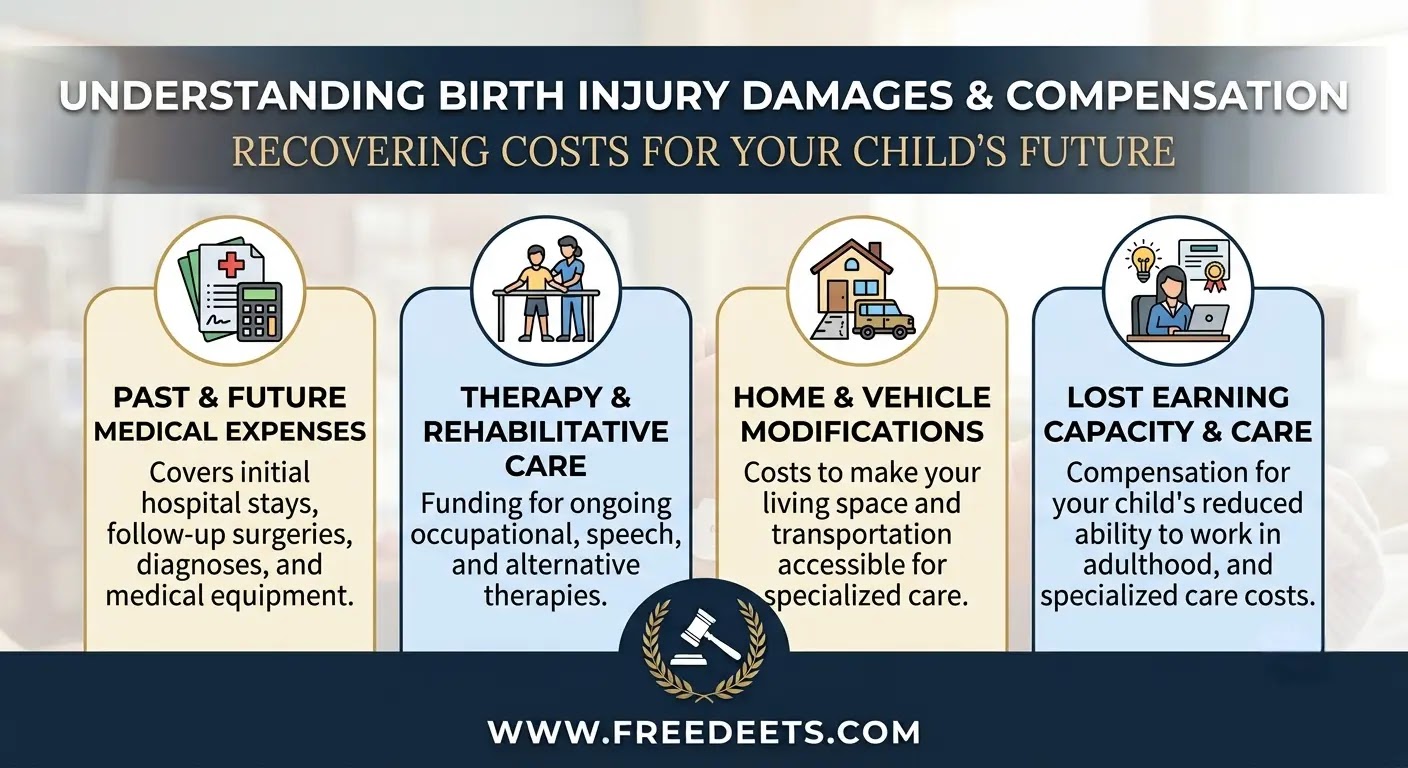
According to civil litigation analysis from the Legal Information Institute (LII), damage awards in birth injury cases are split between economic and non-economic remedies:
- Past and Future Medical Expenses: Covers emergency neonatal intensive care (NICU) hospitalizations, surgical procedures, prescription medications, and durable medical equipment.
- Specialized Therapy and Education: Funds pediatric physical, occupational, and speech therapy, alongside specialized academic tutoring and personal care attendants.
- Home and Vehicle Modifications: Renovations required to make living environments wheelchair accessible, including ramps, widened doorways, and specialized vans.
- Loss of Future Earning Capacity: Quantifies the income your child would have earned over a standard adult working lifetime had the birth injury not occurred.
- Pain, Suffering, and Loss of Enjoyment of Life: Non-economic damages designed to compensate for chronic physical discomfort and emotional distress.
5. 5 Critical Steps for Parents Facing a Birth Injury
If you suspect that your newborn’s trauma or developmental delays resulted from hospital error, follow these immediate procedural steps:
- Obtain Complete Medical Records Immediately: Request certified copies of all prenatal charts, electronic fetal monitor telemetry strips, operative delivery notes, and NICU admission logs before records can be misplaced.
- Seek an Independent Pediatric Evaluation: Have your child evaluated by an independent pediatric neurologist or developmental specialist who is unaffiliated with the delivery hospital.
- Document Every Developmental Symptom: Keep a daily journal tracking your child’s missed milestones, feeding difficulties, abnormal muscle stiffness or floppiness, and seizure activity.
- Avoid Premature Hospital Dispute Discussions: Do not give recorded statements to hospital risk management staff or insurance claims adjusters without legal representation.
- Consult a Dedicated Birth Injury Law Firm: Engage a medical malpractice attorney who operates on a contingency-fee basis (“No Win, No Fee”) to conduct an objective, expert-backed case review.
Frequently Asked Questions About Birth Injury Lawsuits
How long do parents have to file a birth injury claim?
The deadline to file a claim is governed by your state’s statute of limitations. While many jurisdictions extend filing deadlines for minors until their eighth or eighteenth birthday, notice requirements for government-owned or military hospitals can expire in as few as six months. Contacting legal counsel immediately ensures critical electronic fetal monitor evidence is preserved.
How much does it cost to hire a birth injury attorney?
Reputable birth injury law firms handle cases on a contingency fee basis. Parents pay zero upfront retainers or out-of-pocket costs for expert witness fees or court filings. Legal fees and litigation expenses are paid strictly as an agreed-upon percentage of the financial compensation recovered only if your case is won.
Will our family have to appear in a courtroom?
The vast majority of birth injury lawsuits reach confidential financial settlements during pre-trial negotiations, mediation, or depositions before a courtroom trial begins. However, your legal team must prepare every case with thorough trial documentation to give you maximum negotiating leverage against defense insurers.
Core Takeaways for Families
- Birth injuries like Cerebral Palsy and HIE often stem from preventable labor room delays.
- Proving malpractice requires establishing Duty, Breach, Causation, and Damages.
- Contingency fee agreements ensure parents risk zero personal capital when pursuing justice.
Conclusion
Receiving a birth injury diagnosis is an emotionally overwhelming experience that alters your family’s future. While legal action cannot erase physical trauma, holding negligent medical providers accountable provides the financial resources required to secure high-quality medical care, therapy, and adaptive technology for your child. By understanding your legal rights and consulting an experienced birth injury law firm, you can protect your child’s future with confidence and peace of mind.