What is Modern Information Technology? The 2026 Enterprise Playbook for Cloud, AI, and Cyber Resilience
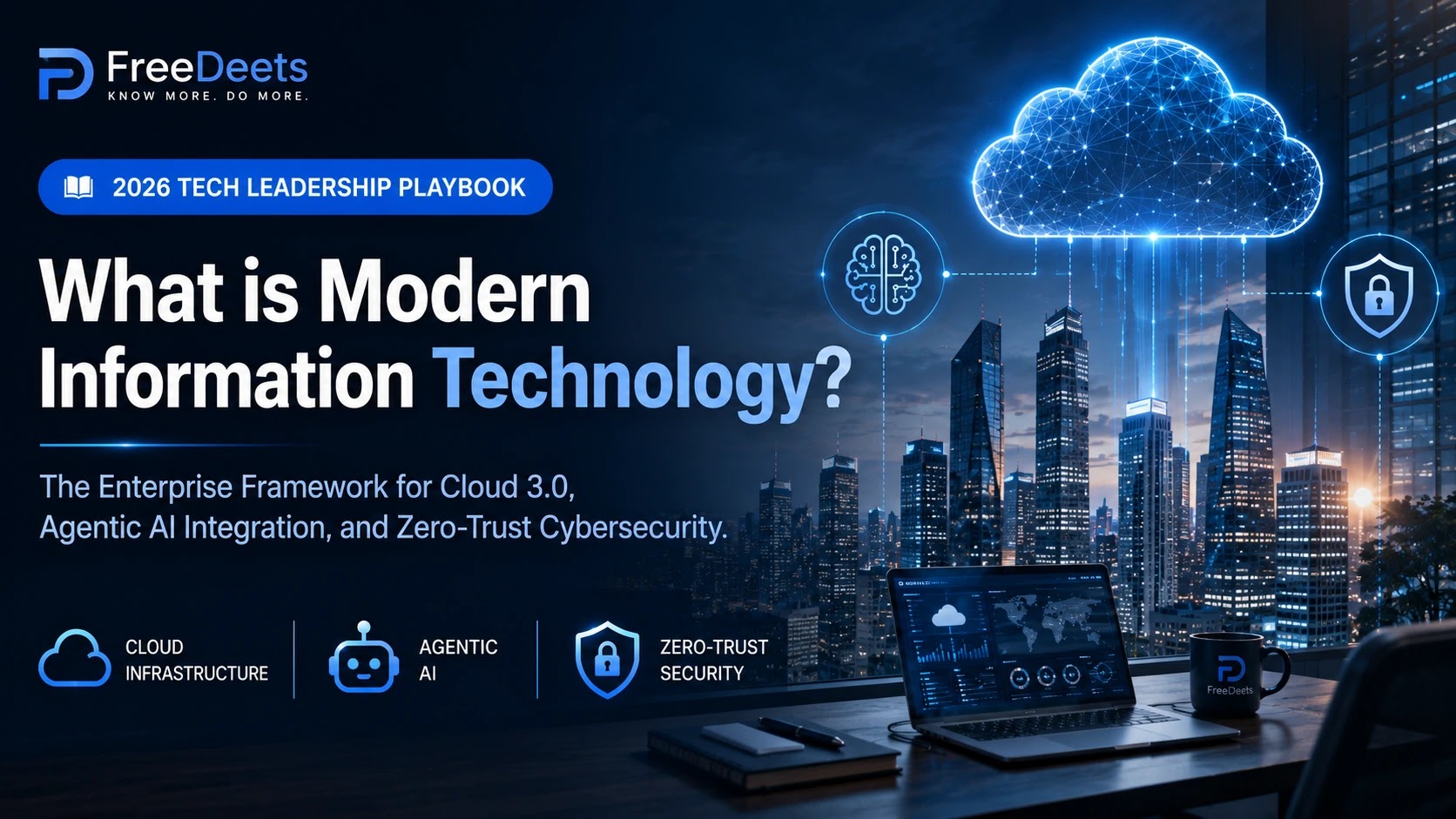
Understanding the architecture of modern information technology is essential for driving corporate valuation, operational resilience, and competitive growth in 2026. IT is no longer just a back-office utility dedicated to troubleshooting desktop computers or maintaining physical server racks. Today, modern information technology serves as the central operational engine that orchestrates multi-cloud ecosystems, autonomous agentic workflows, predictive analytics, and zero-trust cybersecurity defenses across enterprise networks.
From financial banking networks processing instantaneous global transactions to distributed healthcare diagnostics, organizations depend on unified digital infrastructures. According to standards published by the National Institute of Standards and Technology (NIST), modernizing enterprise architectures through micro-segmentation and continuous automated verification directly insulates organizations against system downtime and complex data breaches.
Executive Takeaway on Modern IT Strategy
Modern IT has transformed from an operational cost center into a primary driver of enterprise revenue. Deploying Cloud 3.0 architectures, autonomous AI agents, and zero-trust security postures ensures long-term operational resilience and lower overhead.
1. The 4 Core Pillars of Modern Information Technology
To evaluate how enterprise systems function, it is helpful to look at the IT stack as an integrated multi-layered ecosystem. Every digital platform rests upon four foundational pillars:
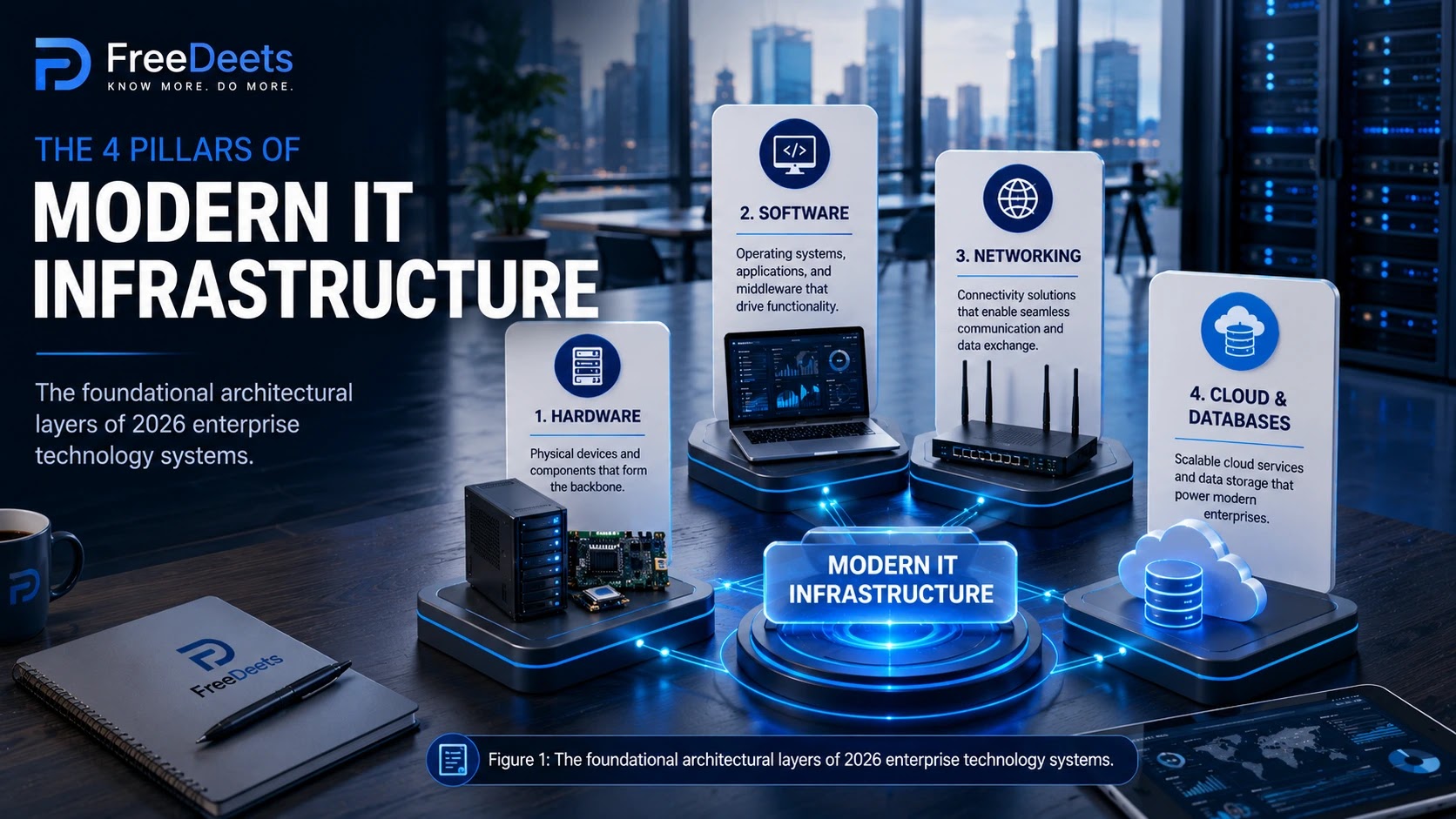
| Stack Layer | Enterprise Components | Operational Role |
|---|---|---|
| 1. Hardware Architecture | Bare-metal servers, Edge appliances, GPU clusters | Delivers high-density compute capacity and ultra-low latency processing. |
| 2. Software & Logic | Microservices, Agentic AI, Cloud ERP/CRM platforms | Automates business rules and powers customer-facing digital applications. |
| 3. Networking & Fabric | SD-WAN, SASE frameworks, Post-quantum encryption | Secures and routes high-speed data across global corporate endpoints. |
| 4. Database Systems | Distributed SQL, NoSQL, Real-time Vector stores | Indexes, queries, and preserves structured and unstructured business intelligence. |
2. Primary Engine Functions Driving Enterprise Operations
Modern information technology fulfills three primary business objectives that replace manual bottlenecks with automated pipelines:
- Automated Data Ingestion & Governance: Centralizes fragmented business data, standardizing entries across financial ledgers, inventory trackers, and billing systems in real time.
- Multi-Channel Network Communications: Provides secure network fabrics using Secure Access Service Edge (SASE) frameworks, enabling distributed workforces to collaborate safely without exposing internal IP.
- Predictive Decision Intelligence: Converts raw analytical data into predictive models, allowing corporate executives to forecast customer demand, supply chain constraints, and operational expenditure accurately.
3. Cloud 3.0, Autonomous Agentic AI, and Edge Computing
The early phase of corporate computing—migrating all workloads to a single public cloud provider—has evolved into a sophisticated, multi-tier strategy:
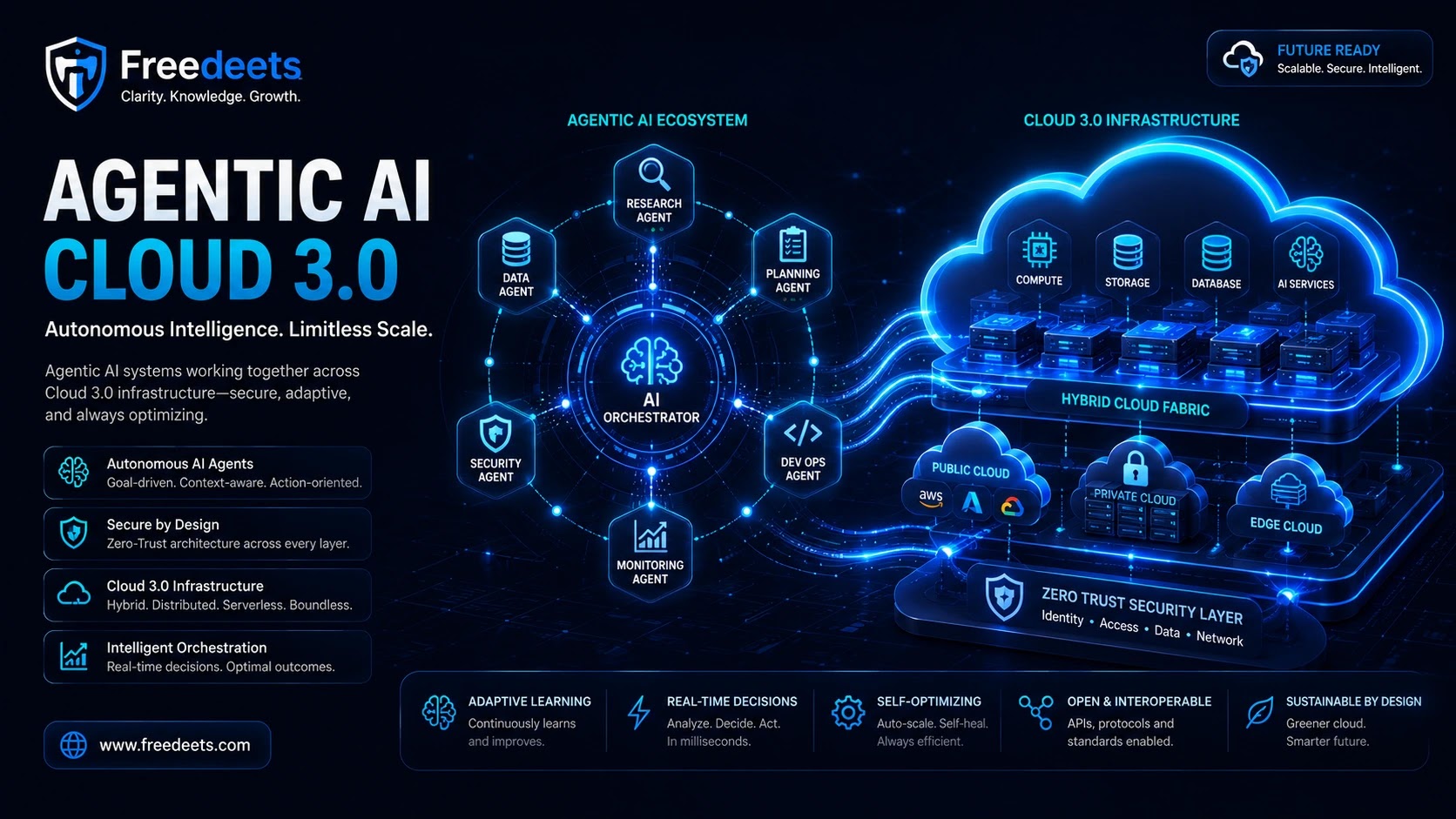
Cloud 3.0: Hybrid & Sovereign Cloud Architectures
Modern enterprises balance their computing loads across private dedicated servers, elastic public cloud capacity, and regionally compliant sovereign clouds. This multi-cloud architecture avoids vendor lock-in, optimizes operational expenditures, and ensures compliance with regional data residency statutes.
Agentic AI: Intent-Driven Automation
Unlike basic conversational chatbots that simply return text answers, agentic AI systems autonomously plan and execute multi-step workflows. Given a high-level corporate directive—such as reviewing security event logs, identifying vulnerabilities, and generating patch scripts—an agentic AI system coordinates external APIs and internal databases to complete tasks with minimal human intervention.
Edge Computing & Industrial IoT
With high-speed connectivity, computational power has moved closer to physical data sources. Edge processors on factory equipment, autonomous transport fleets, and retail terminals process data locally, eliminating round-trip latency to remote data centers.
4. Cybersecurity & Zero-Trust Network Architecture (ZTNA)
As modern organizations become fully digital, cyber risk management becomes central to operational continuity. According to technical documentation from the IEEE Computer Society, traditional perimeter defenses (“castle-and-moat”) are insufficient against distributed threats.

Modern enterprise security is built on Zero-Trust Architecture: “Never trust, always verify.” Essential security principles include:
- Continuous Identity Verification: Requiring hardware-backed Multi-Factor Authentication (MFA) and continuous session token verification for every access attempt.
- Network Micro-Segmentation: Segmenting networks into isolated zones so that a breach on a single workstation cannot spread laterally to core financial or database systems.
- Universal Data Encryption: Encrypting all data continuously, both in-transit across networks and at-rest within cloud storage tiers.
- Immutable Backups: Maintaining off-site, read-only data backups that cannot be modified or encrypted by ransomware, ensuring rapid disaster recovery.
5. High-Demand Careers in Modern Information Technology
The rapid evolution of cloud infrastructure, data engineering, and automated security has created sustained demand for specialized technical roles:
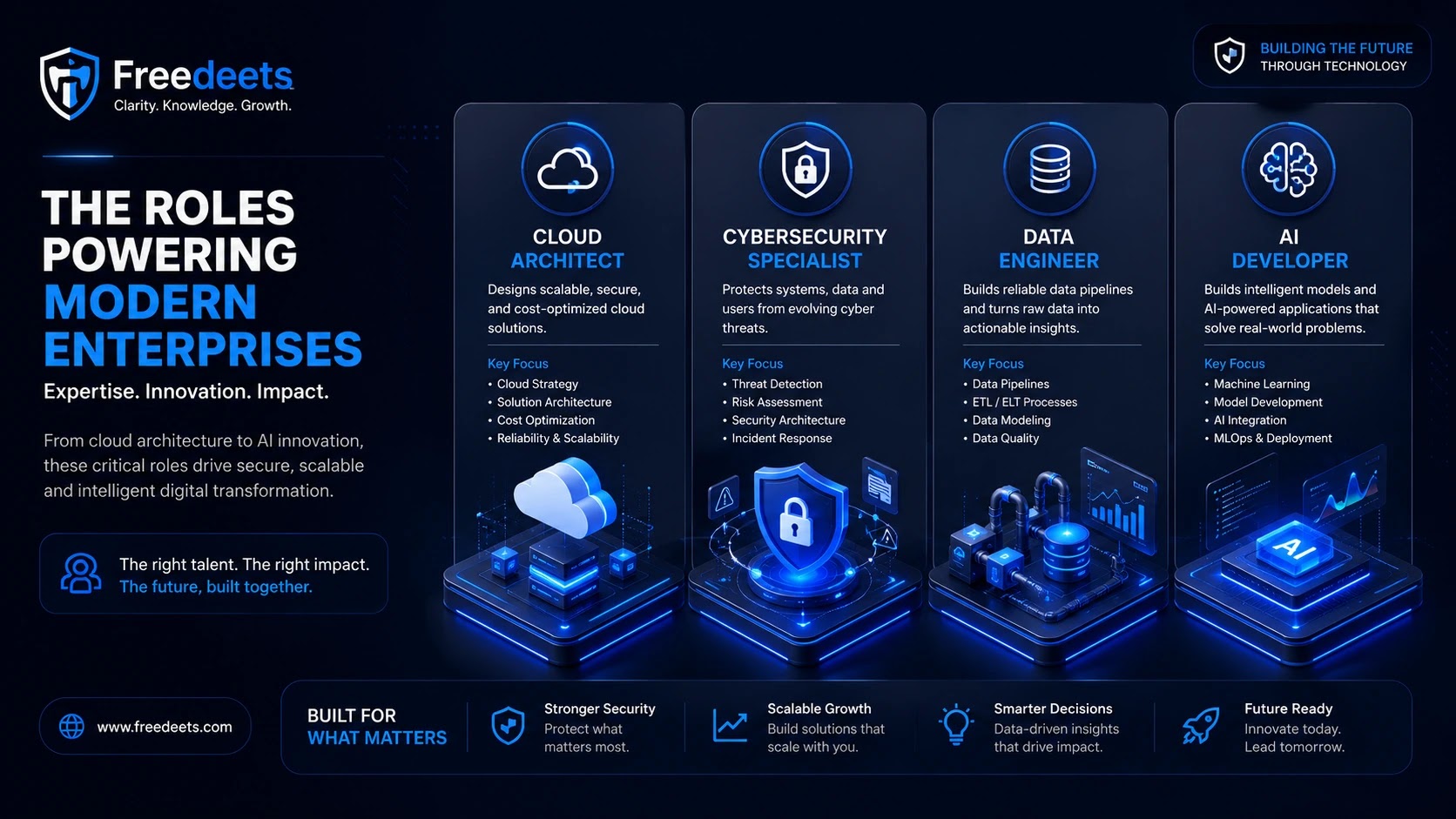
- Cloud Solutions Architect: Designs scalable, multi-cloud environments using AWS, Azure, and Google Cloud, orchestrating workloads via Kubernetes and Terraform.
- Zero-Trust Security Engineer: Configures SASE frameworks, oversees penetration testing, and manages Identity and Access Management (IAM) systems.
- Data Platform Engineer: Builds enterprise data pipelines using Python, SQL, Apache Kafka, and modern vector databases to support machine learning models.
- DevOps / Site Reliability Engineer (SRE): Automates CI/CD deployment pipelines, manages containerized applications, and maintains high infrastructure availability.
Frequently Asked Questions About Modern Information Technology
What is the difference between Computer Science and Information Technology?
Computer Science focuses on the mathematical foundations of computation, algorithms, and software development. Information Technology focuses on the operational application, architecture design, cloud integration, security, and ongoing management of hardware and software systems to solve real-world business challenges.
How does Cloud 3.0 differ from earlier cloud hosting?
Earlier cloud hosting focused simply on moving on-premises physical servers to public cloud vendors. Cloud 3.0 utilizes hybrid multi-cloud orchestration, combining private on-premises infrastructure, high-density GPU clusters, public cloud services, and sovereign regional networks to optimize costs and meet data privacy regulations.
Why are enterprises prioritizing Agentic AI over standard automation?
Standard automation relies on rigid, predetermined rules that break when unexpected data occurs. Agentic AI evaluates situational context, makes autonomous decisions, selects appropriate digital tools, and completes complex multi-step workflows without requiring continuous human prompts.
Core Takeaways for Enterprise Leaders
- Modernize legacy databases to support cloud-native microservices and AI pipelines.
- Enforce a Zero-Trust architecture to protect distributed hybrid workforces.
- Adopt a balanced multi-cloud model to prevent vendor lock-in and optimize compute costs.
Conclusion
Modern information technology is the core foundation of contemporary business success. Moving past the limitations of legacy systems allows companies to scale operations, protect sensitive assets, and leverage autonomous intelligence. By taking an integrated approach to cloud architecture, AI workflows, and zero-trust security, enterprises can build lasting operational resilience in today’s digital economy.