Fashion Merchandiser Salary Range 2026: US Earnings, Specializations & Career Growth
Understanding the full fashion merchandiser salary range in the United States requires examining how retail roles have evolved from traditional apparel buying into data-driven inventory management. Modern fashion merchandisers work at the intersection of trend forecasting, retail analytics, global supply chains, and margin optimization. This comprehensive guide breaks down the fashion merchandiser salary range across all career levels, explores high-paying metropolitan hubs, and outlines proven steps to advance into executive retail leadership.

The global retail landscape has shifted toward omnichannel fulfillment, requiring brands to balance physical flagship boutiques with direct-to-consumer (D2C) online stores. According to occupational wage data published by the U.S. Bureau of Labor Statistics (BLS), wholesale and retail merchandise planners earn competitive compensation, with senior category managers commanding significant bonuses based on gross margin performance and inventory turnover.
Core Industry Insight
Fashion merchandisers proficient in enterprise resource planning (ERP) platforms—such as SAP S/4HANA Retail, Oracle Retail, or Blue Yonder—and data tools like SQL and Tableau earn base compensation 18% to 28% higher than peers focused purely on aesthetic styling.
1. What Does a Modern Fashion Merchandiser Do?
Unlike fashion designers who focus on garment aesthetics, or visual merchandisers who manage in-store displays, a corporate fashion merchandiser acts as the financial planner of product assortments. Key operational responsibilities include:
- Assortment Planning & Open-to-Buy (OTB): Building seasonal purchasing budgets, calculating Gross Margin Return on Investment (GMROI), and balancing core apparel staples against high-risk trend collections.
- Predictive Demand Forecasting: Using past sales velocities, lead times, and regional consumer data to forecast stock keeping unit (SKU) demand months before production runs begin.
- Omnichannel Lifecycle Management: Tracking sales across e-commerce apps, department store wholesale accounts, and physical retail locations to time markdown cadences and inventory re-orders.
- Cross-Department Coordination: Connecting fashion design studios, international textile mills, marketing teams, and logistics directors to bring collections to market profitably.
2. Fashion Merchandiser Salary Range by Experience Level
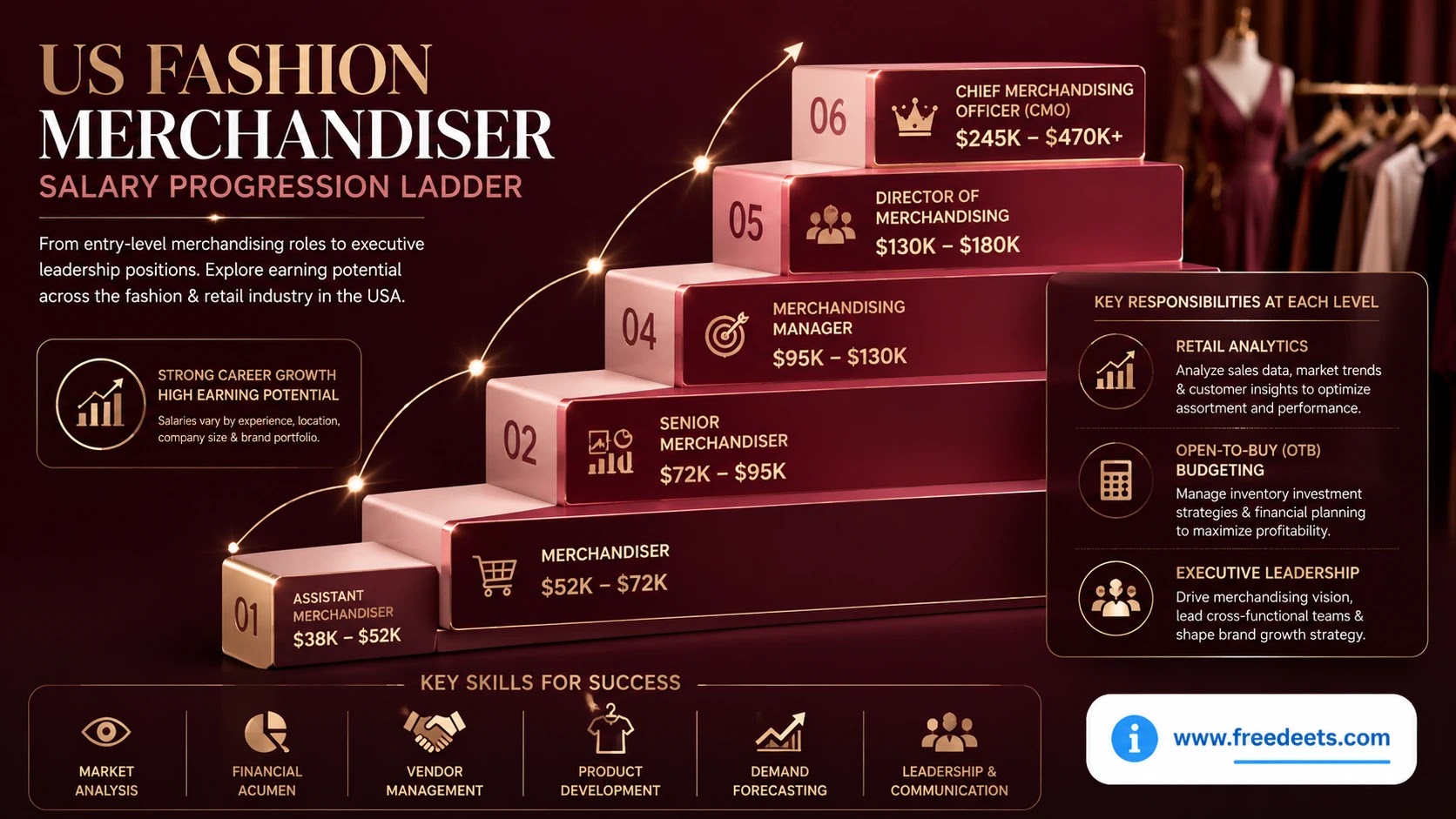
Compensation in fashion merchandising rises steadily as professionals demonstrate their ability to manage larger inventory budgets and protect corporate profitability:
| Career Stage & Title | Typical Experience | US Base Salary Range | Average Annual Bonus | Total Compensation |
|---|---|---|---|---|
| Assistant Merchandiser | 0 – 2 Years | $38,000 – $52,000 | $1,500 – $4,000 | $39,500 – $56,000 |
| Associate Merchandiser | 2 – 4 Years | $52,000 – $72,000 | $3,000 – $8,000 | $55,000 – $80,000 |
| Fashion Merchandiser / Buyer | 4 – 7 Years | $72,000 – $98,000 | $7,000 – $15,000 | $79,000 – $113,000 |
| Senior Category Manager | 7 – 10 Years | $98,000 – $135,000 | $12,000 – $28,000 | $110,000 – $163,000 |
| Director of Merchandising | 10 – 15 Years | $135,000 – $195,000 | $25,000 – $60,000 + Stock | $160,000 – $255,000+ |
| VP / Chief Merchandising Officer | 15+ Years | $195,000 – $320,000+ | $50,000 – $150,000+ Equity | $245,000 – $470,000+ |
3. Key Factors That Drive the Fashion Merchandiser Salary Range
Several market variables explain why two professionals with identical titles can earn very different salaries:
Geographic Hubs and Cost of Living
According to retail research from the National Retail Federation (NRF), corporate headquarters and luxury fashion houses in major design hubs offer significant salary premiums to offset local living expenses:
- New York City, NY: +32% above national average (Luxury brands, department stores, corporate apparel headquarters).
- Los Angeles / Orange County, CA: +26% above national average (Denim, streetwear, activewear, and D2C brands).
- San Francisco Bay Area, CA: +28% above national average (Fashion-tech integrations and sustainable clothing lines).
- Seattle, WA: +18% above national average (Major department store headquarters and outdoor performance wear).
- Midwest / Southeast Regional Centers: Typically within 5% to 12% below national averages, often balanced by lower living costs.
Retail Sector and Business Model
- Luxury & Designer Houses: Higher profit margins allow for competitive base wages, performance bonuses, and generous product allowances.
- Fast Fashion & Mass Retailers: Fast inventory turnover and large volumes require complex logistical management, keeping compensation competitive for senior category leads.
- D2C Apparel Brands: Fast-growing digital apparel companies frequently pair base pay with stock grants or profit-sharing incentives.
4. High-Paying Specializations in Fashion Merchandising
Specializing in high-margin sub-disciplines positions you for the upper end of the fashion merchandiser salary range:
- Digital Shelf & E-Commerce Merchandising: Focuses on online search visibility, conversion rate optimization (CRO), and digital catalog layout. Digital Merchandising Managers earn between $92,000 and $130,000.
- Merchandise Financial Planning (MFP): Focuses on mathematical inventory budgets, margin calculations, and warehouse allocation. Senior planners earn between $105,000 and $145,000.
- Sustainable Sourcing & Circular Merchandising: Manages textile re-commerce, deadstock recycling, and closed-loop lifecycle planning. Specialists in this emerging field command between $85,000 and $125,000.
5. How to Negotiate a Higher Merchandising Salary
Retail leadership evaluates performance using clear commercial metrics. When preparing for salary reviews or job offers, follow these practical steps:
- Quantify Your Gross Margin Impact: Frame your achievements with concrete numbers. For instance: “Assortment rebalancing in Q3 lifted category sell-through by 6% and cut excess inventory markdowns by $140,000.”
- Reference Verified Industry Benchmarks: Use verified compensation reports from the BLS, Glassdoor, and specialized retail recruitment firms to substantiate your requested range.
- Negotiate Total Compensation: If base pay bands are constrained, negotiate for performance bonuses, flexible hybrid schedules, or continuing education stipends for analytics certifications.
Frequently Asked Questions About the Fashion Merchandiser Salary Range
What is the average starting salary for a fashion merchandiser in the US?
Entry-level Assistant Fashion Merchandisers in the United States typically earn between $38,000 and $52,000 annually. Starting salaries depend on your degree, internship experience, and whether you work in a major apparel hub like New York or Los Angeles.
What is the difference between a fashion buyer and a fashion merchandiser?
A fashion buyer focuses primarily on selecting styles, trend evaluation, and vendor negotiations. A fashion merchandiser manages financial budgets, sales forecasting, inventory distribution, and gross profit margins across retail channels.
Do you need a fashion degree to earn a top merchandiser salary?
While a degree in Fashion Merchandising, Business Administration, or Finance provides a solid foundation, advancement into higher-paying roles depends mainly on inventory performance, analytical proficiency, and gross margin results.
Core Takeaways for Fashion Professionals
- Mastering retail analytics software (SAP, Tableau) significantly boosts earning power.
- New York City and Los Angeles offer the highest base compensation premiums.
- Senior merchandisers and category managers frequently exceed six-figure salaries.
Conclusion
The fashion merchandiser salary range reflects the analytical, commercial, and creative importance of the role in modern retail. By mastering retail math, building expertise in enterprise planning software, and documenting your impact on gross margins, you can advance through experience tiers and secure top compensation in the apparel industry.