The Modern Technology Analyst: Bridging Data, Strategy, and Digital Growth
Understanding the role of a modern technology analyst has become essential for organizations navigating digital transformation, multi-cloud architectures, and artificial intelligence integration in 2026. Enterprises today generate unprecedented volumes of operational telemetry and customer data. However, deploying enterprise software without clear strategic alignment leads to software sprawl, cybersecurity vulnerabilities, and wasted capital. A skilled technology analyst acts as the critical bridge between software engineering teams and executive leadership, translating technical metrics into scalable commercial growth.

The demand for professionals who combine systems engineering with business acumen continues to accelerate. According to employment projections published by the U.S. Bureau of Labor Statistics (BLS), computer systems and technology analyst roles are projected to grow significantly faster than the national average through the decade, driven by enterprise investments in cloud infrastructure, cybersecurity protocols, and automated data processing.
Core Operational Value
A technology analyst does not merely maintain existing IT systems; they evaluate software licensing costs, eliminate workflow redundancies, and calculate the Total Cost of Ownership (TCO) before an enterprise commits capital to new software platforms.
1. Core Responsibilities of a Modern Technology Analyst
The primary mandate of an analyst is to ensure that every technology investment directly advances broader corporate objectives. Their day-to-day responsibilities center around five core operational pillars:
- Operational Data Modeling & Performance Telemetry: Analysts collect, clean, and analyze system performance metrics to identify network latency bottlenecks, server utilization spikes, and user churn patterns, delivering clear reports to department heads.
- Vendor Auditing & Total Cost of Ownership (TCO) Assessments: Before an organization signs multi-year enterprise contracts for ERP, CRM, or cloud database hosting, analysts evaluate API documentation, security compliance, and long-term licensing fees.
- Workflow Automation & System Integration: Legacy processes create operational friction. Analysts map cross-departmental workflows and design automated data pipelines that connect siloed marketing, finance, and logistics databases.
- Regulatory & Cybersecurity Compliance Auditing: Working alongside information security teams, analysts verify that data storage practices adhere to statutory frameworks like SOC 2, HIPAA, and GDPR.
- Executive Technology Roadmapping: Analysts translate complex engineering realities into straightforward financial presentations, helping CIOs and CTOs allocate annual technology budgets effectively.
2. Technical Toolkit: The Analyst Software Stack
To audit complex systems and produce executive-level business intelligence, analysts master a versatile suite of data, development, and cloud tools:
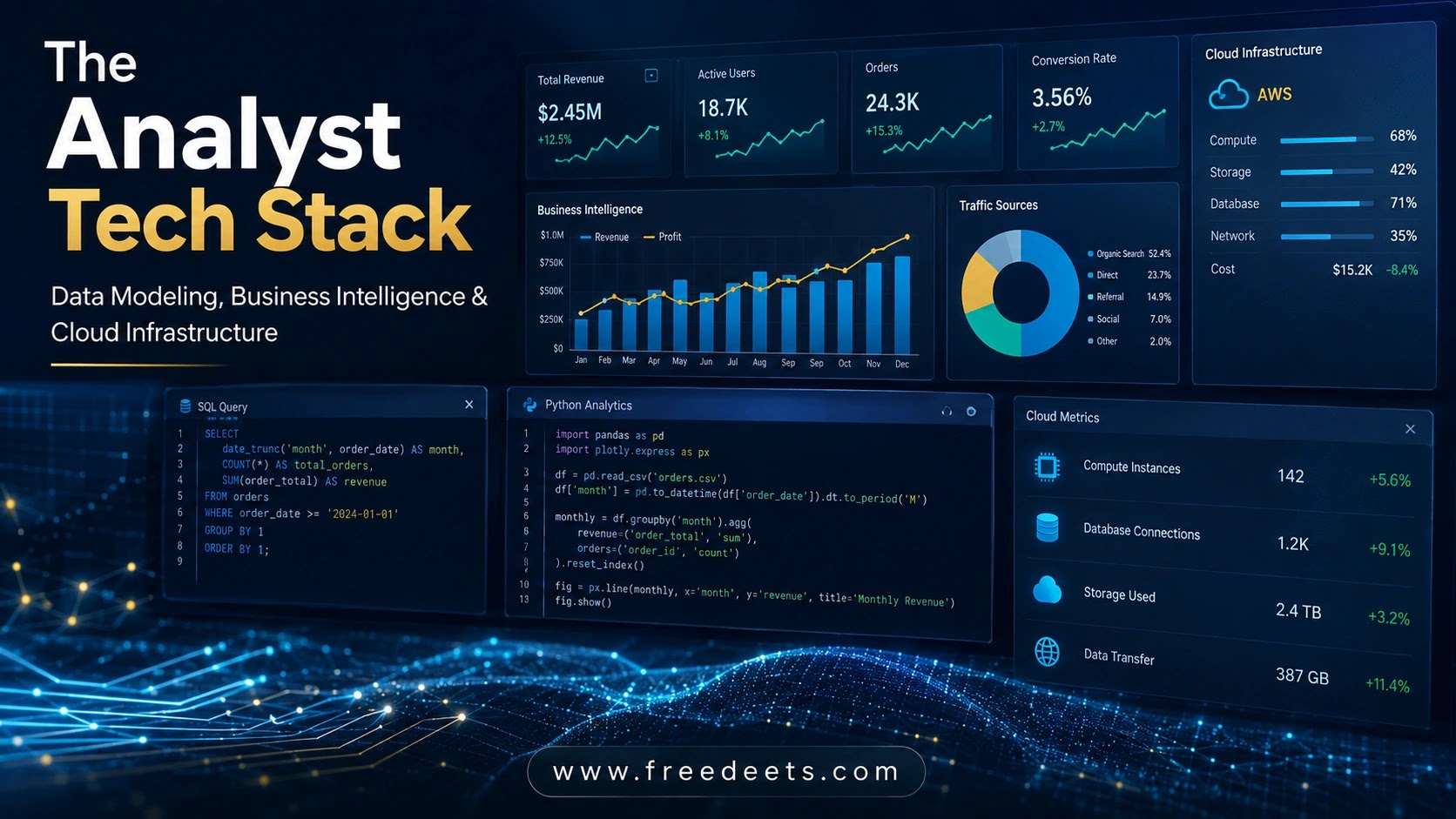
| Functional Category | Standard Industry Platforms | Core Enterprise Application |
|---|---|---|
| Data Extraction & Scripting | SQL (PostgreSQL, Snowflake), Python (Pandas, NumPy), R | Querying relational databases, transforming unstructured data, and building automated statistical models. |
| Business Intelligence (BI) | Microsoft Power BI, Tableau, Looker | Designing real-time operational KPI dashboards and financial reporting models for executives. |
| Cloud Infrastructure & Monitoring | AWS CloudWatch, Microsoft Azure Monitor, Datadog | Tracking compute instance uptime, microservice latency, and cloud consumption expenditure. |
| Project & Workflow Management | Jira, Confluence, Asana | Managing Agile sprint user stories, software feature backlogs, and cross-team system documentation. |
According to technical guidelines published by the National Institute of Standards and Technology (NIST), modern enterprise architectures depend on continuous system auditing and secure API configurations to prevent operational vulnerabilities while maintaining data flow integrity.
3. Essential Competencies: Balancing Technical and Soft Skills
Excelling as an analyst requires blending computational precision with strategic communication:
- Executive-Level Communication: The ability to explain complex technical constraints—such as database normalization or API rate limits—in clear financial terms that non-technical stakeholders understand.
- Root-Cause Problem Solving: Approaching recurring operational failures systematically using Five Whys methodology, event log forensics, and process mapping rather than relying on surface-level patches.
- Financial Literacy & Budget Forecasting: Understanding capital expenditures (CapEx) versus operating expenses (OpEx), software depreciation schedules, and return on investment (ROI) metrics.
- Agile Adaptability: Working fluidly within Scrum or Kanban frameworks to adjust project roadmaps as corporate priorities or market conditions shift.
4. Career Progression: From Junior Analyst to Executive Leadership
The technology analyst career path offers clear vertical advancement across corporate enterprises and consulting firms:
- Associate / Junior Technology Analyst: Focuses on data extraction, running routine SQL queries, building dashboard widgets, and supporting senior staff during system audits.
- Senior Technology Analyst: Manages complex cross-functional audits, leads software vendor selection evaluations, and designs integration blueprints for business units.
- Lead Enterprise Systems Architect: Oversees overall organization-wide IT architecture, directing major migrations to microservice infrastructures and hybrid cloud platforms.
- Chief Information Officer (CIO) / Chief Technology Officer (CTO): Serves in executive leadership, establishing corporate digital strategy, managing multi-million-dollar technology budgets, and steering governance policies.
5. 5 Practical Steps to Break into the Technology Analyst Field
For aspiring professionals looking to establish a career as a modern technology analyst in 2026, follow this strategic roadmap:
- Build a Strong Foundation in SQL and Relational Databases: Master complex joins, window functions, and indexing techniques across PostgreSQL or MySQL.
- Learn Data Wrangling with Python: Gain practical experience with Pandas and NumPy libraries to clean messy real-world datasets and automate routine reporting tasks.
- Earn Recognized Cloud Certifications: Complete foundational cloud certifications (such as AWS Certified Cloud Practitioner or Microsoft Azure Fundamentals) to validate infrastructure literacy.
- Develop a Public Project Portfolio: Build end-to-end projects demonstrating how you solved a business problem—from ingesting raw data to publishing an interactive Power BI or Tableau dashboard.
- Hone Cross-Disciplinary Business Knowledge: Study basic financial accounting, supply chain logistics, and product management methodologies to speak the language of business managers.
Frequently Asked Questions About the Modern Technology Analyst
What is the difference between a Business Analyst and a Technology Analyst?
While a business analyst focuses primarily on organizational processes, market research, and business requirements, a technology analyst examines the underlying software architecture, data pipelines, database queries, and technical infrastructure required to implement those business solutions.
Do technology analysts need to write code daily?
Not necessarily in the manner of full-stack software engineers. However, technology analysts write SQL queries, Python automation scripts, and command-line scripts regularly to inspect databases, extract performance logs, and validate software integrations.
What degree is best suited for a technology analyst?
Degrees in Computer Science, Information Systems, Data Analytics, or Business Administration with an IT concentration provide strong preparation. However, relevant technical certifications and a demonstrated portfolio of analytical projects often carry equal weight with hiring managers.
Core Takeaways for Technology Leaders
- Technology analysts ensure that every software acquisition delivers clear operational ROI.
- Mastering both SQL/Python data tools and executive communication creates high-value career mobility.
- Continuous auditing of cloud infrastructure prevents runaway subscription and hosting overhead.
Conclusion
The modern technology analyst plays a pivotal role in today’s digital economy. By connecting raw data streams with executive decision-making, optimizing enterprise software stacks, and identifying operational risks before they impact the bottom line, analysts ensure organizations remain competitive and efficient. Whether optimizing cloud infrastructure or steering enterprise AI adoption, investing in skilled analytical talent provides companies with the strategic clarity needed to thrive.